Picture a Plymouth dealer in early 1971, standing next to an order form that no longer has a box to check for the car that had been the talk of the lot the previous spring. The AAR Cuda one year story is short on paper and long on the kind of corporate whiplash that defined the muscle car era's sudden ending, a car built for a single model year and then simply gone.
A car built for a rulebook, not a customer
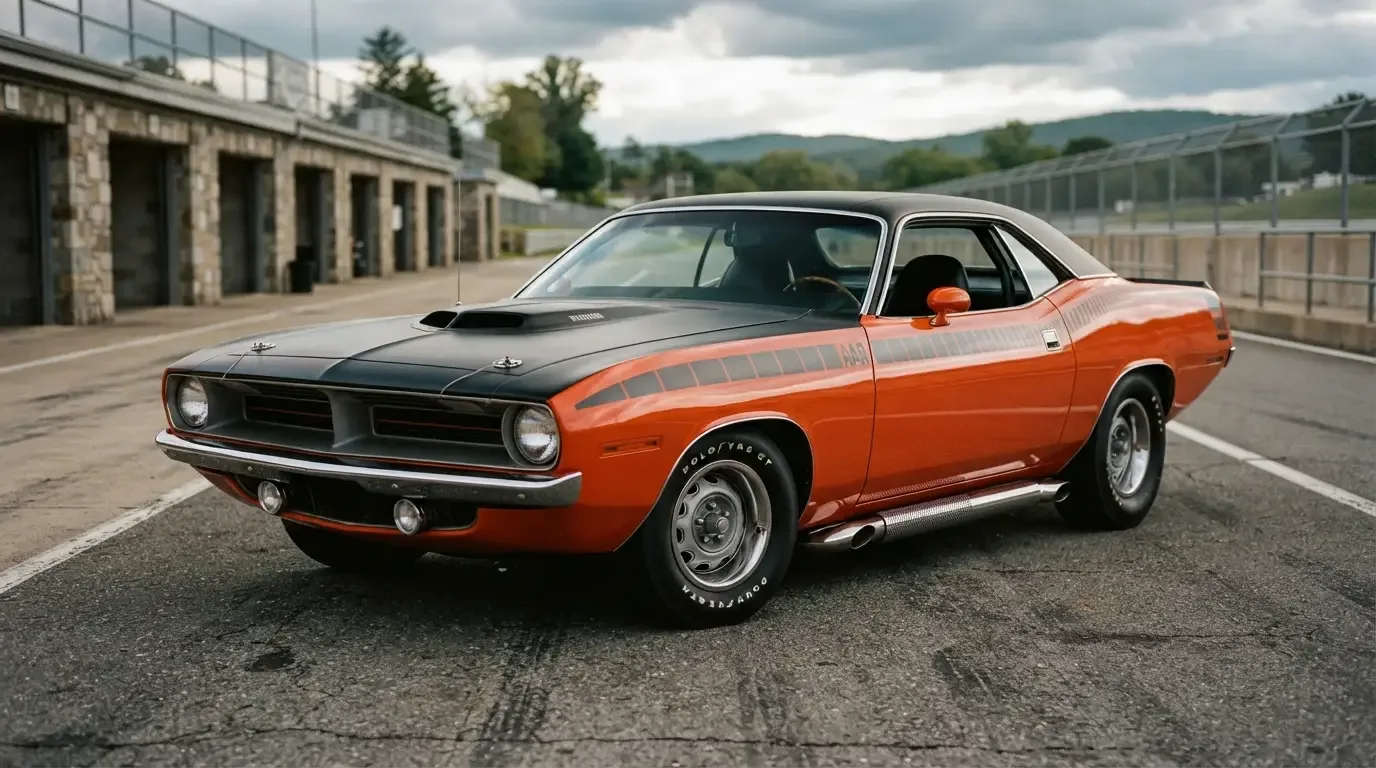
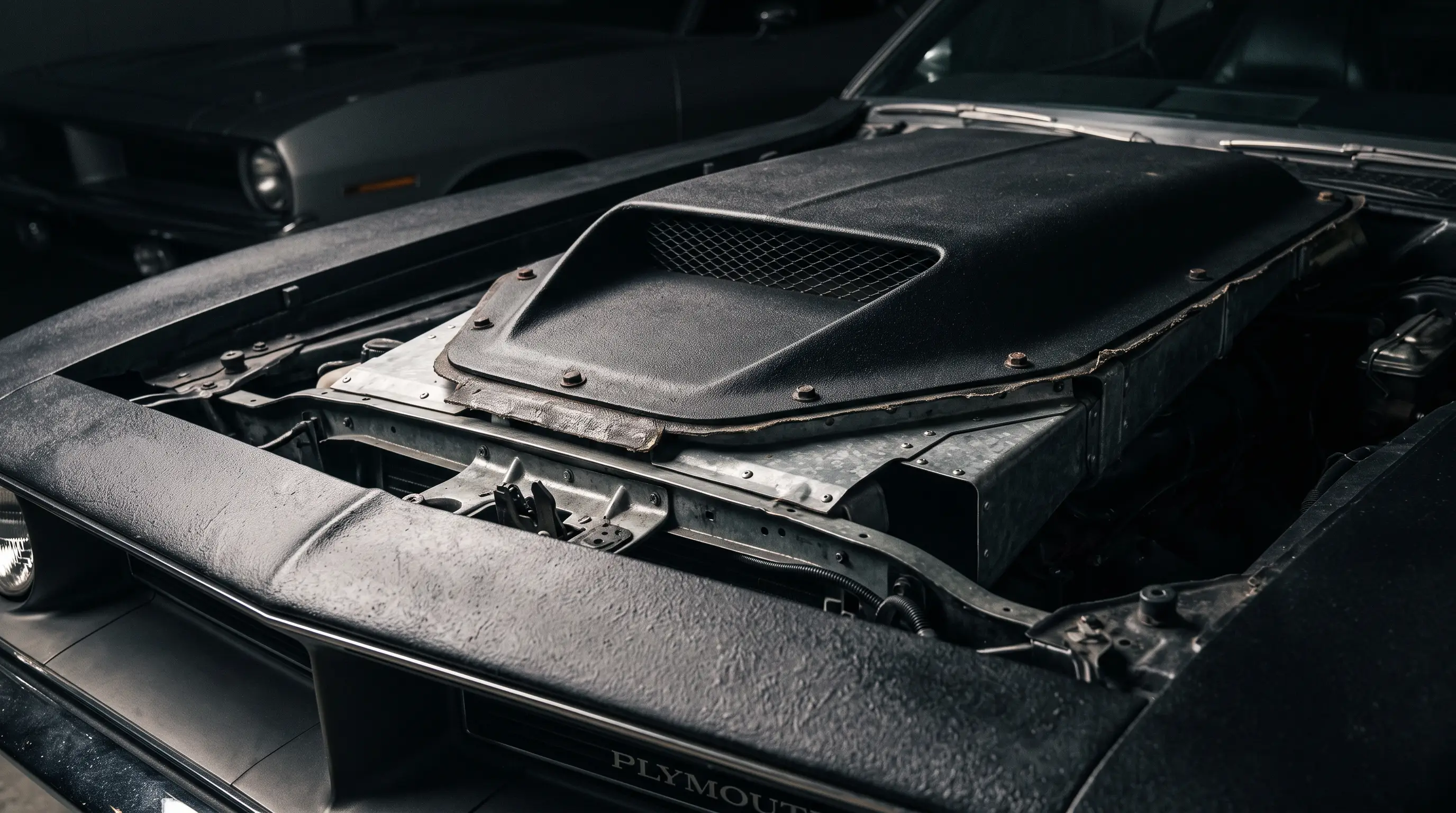
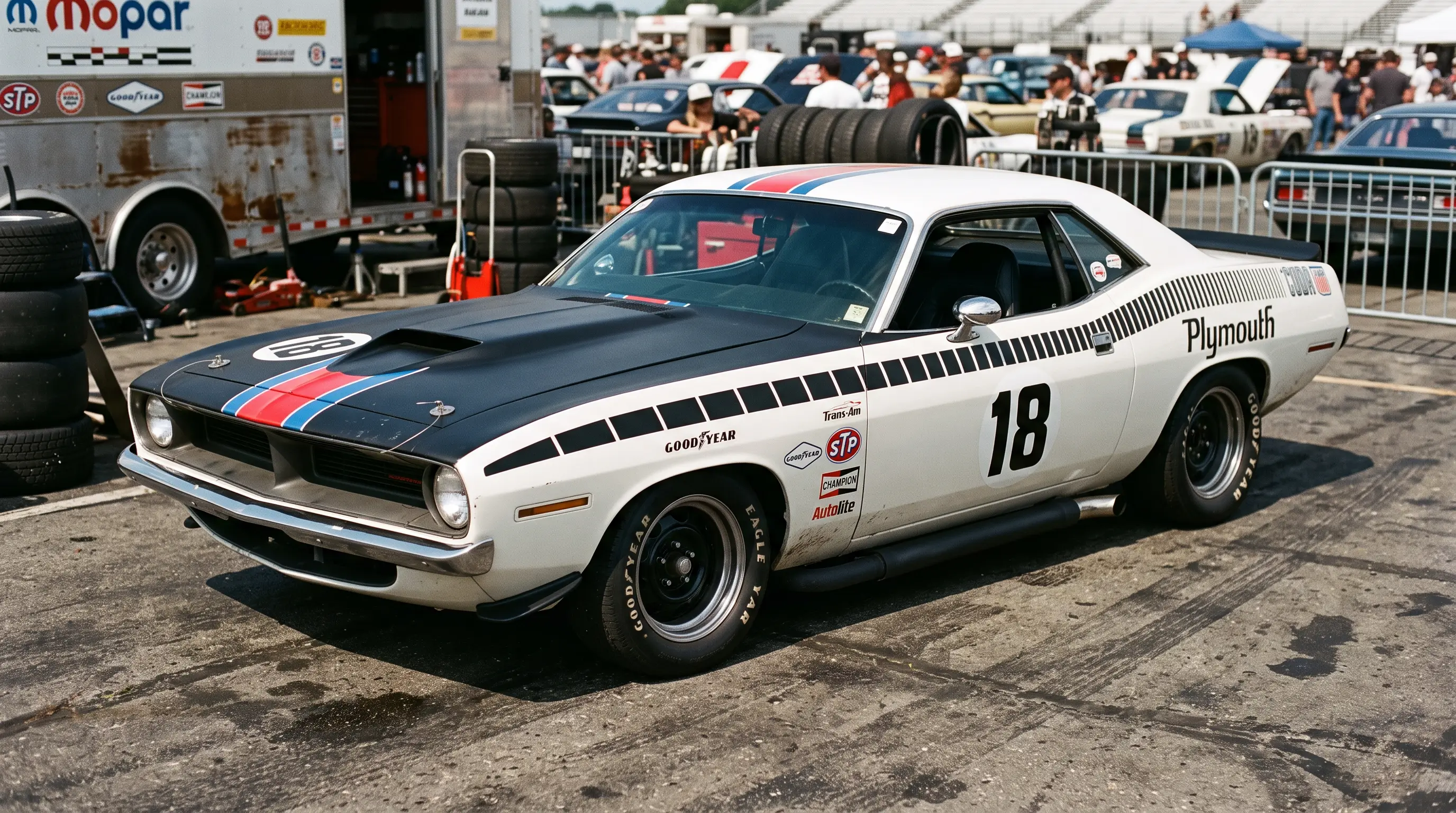
The AAR Cuda was never conceived as a long-term model. Plymouth built it in 1970 specifically to satisfy SCCA Trans-Am homologation rules, which required a minimum street car production run before the racing version could legally compete. That is the entire reason the car exists with a 340 Six Pack V8, side-exit exhaust, and a functional fiberglass hood scoop, a specification lifted almost directly off Dan Gurney's All American Racers team car rather than dreamed up in a design studio.
Once you understand that origin, the one-year lifespan stops looking like a mystery and starts looking inevitable. The car's entire reason for being was tied to a racing program, and racing programs end.
What actually killed the second model year
Chrysler pulled its factory-backed Trans-Am effort after the 1970 season, closing out the racing program that had justified building the AAR Cuda in the first place. Without a car on the Trans-Am grid to homologate for, there was no regulatory reason to keep the street version in production, and Chrysler's broader retreat from factory motorsport funding in that period made the decision an easy one internally.
Layer onto that the industry-wide pressure building through 1971, rising insurance premiums targeting high-performance models specifically, and a general cooling on the kind of high-compression, high-output packages that defined 1970. The AAR Cuda sat at the exact intersection of all those pressures. It was expensive to build, tied to a program that no longer existed, and increasingly hard to insure. None of that fully explains why so many other performance nameplates limped on for another year or two while this one stopped cold, but it explains why nobody at Chrysler fought hard to save it.
How dealers and buyers reacted at the time
Contemporary accounts describe the AAR Cuda as a car that moved fast off the lot for enthusiasts who understood exactly what they were buying, a genuine street-legal piece of a factory racing program, while other buyers simply saw an expensive, oddly loud Barracuda with unusual tires. That split reaction meant the car never built the kind of broad customer base that might have generated internal pressure to keep it going into 1971 regardless of the racing program's fate.
- Chrysler ended its factory Trans-Am racing program after 1970
- Rising insurance costs were already squeezing high-performance models industry-wide
- No second homologation requirement meant no business case for a repeat model year
Why the short run made the car matter more later
A single model year turned what could have been a forgettable performance package into a genuinely scarce collector car, and that scarcity built slowly rather than all at once. It took decades for the AAR Cuda's reputation to catch up with its rarity, as later generations of collectors rediscovered the direct racing connection and started chasing documented, original examples, and the aar cuda story covers how that reputation built over time, from an overlooked homologation special to one of the more sought-after Barracuda variants on the market.
The broader arc of the nameplate, including the years before and after this specific chapter, is covered in the full story, which helps put the AAR's brief existence into context against the Barracuda's longer run.
"There's something almost poetic about a car that existed for exactly one model year because a racing series it was built to satisfy simply stopped needing it. Chrysler didn't kill the AAR Cuda out of spite. They just stopped having a reason to keep making it."
- Patrick Walsh
The dealer floor reality in late 1970
By the time fall 1970 rolled around, dealers already knew there would be no AAR Cuda for the coming model year, and that knowledge shaped how the remaining inventory got handled. Some dealers marked down leftover units to move them before the new model year lineup arrived, while a smaller number of buyers who understood the car's significance actively sought out the last available examples, aware that this was their only chance to own one new. That split reaction, discount pressure from dealers wanting the cars gone against genuine enthusiasm from a smaller group of informed buyers, produced an uneven sales pattern in the car's final months on lots that period sales records only partially capture.
Comparing it to other short-lived performance packages
The AAR Cuda was not alone in disappearing quickly once the market and regulatory environment shifted around 1971. A number of high-output performance packages across the industry either got quietly detuned, discontinued, or reworked into milder versions as insurance surcharges and tightening emissions expectations took hold. What sets the AAR apart from most of those other short-lived packages is the clarity of its ending. Most performance options faded gradually, offered in reduced form for a year or two before finally disappearing. The AAR simply stopped, cleanly, at the exact moment its underlying racing justification ended, which gives its one-year story a defined edge that a lot of comparable packages from the era lack.
That clean stop is part of why the car reads so well as a historical artifact today. There is no muddled middle chapter where the package survived in a watered-down form. It existed at full strength for one year and then it was gone, which makes the story easier to tell and, honestly, easier to sell to a new generation of collectors discovering it for the first time.
What it means for buyers today
Every AAR Cuda on the market today is, by definition, a 1970 model, which simplifies one part of the shopping process but raises the stakes on everything else. There is no later, cheaper model year to fall back on if a specific car's price or condition does not work for you. It is this one year or nothing, and that reality shapes both the asking prices and the seriousness with which buyers approach documentation. For a look at what is currently available, classic Barracudas on the market is worth checking to see how this single-year rarity is reflected in real listings.
| Detail | Fact |
|---|---|
| Model years produced | 1970 only |
| Reason for ending | End of factory Trans-Am racing program |
| Industry pressure | Rising insurance costs on performance models |
| Sibling car, same fate | Dodge Challenger T/A |
The one-year run is not a footnote to the AAR Cuda's story. It is the story, a car whose entire existence was tethered to a racing program, and whose disappearance was written into its purpose from the very first build sheet.