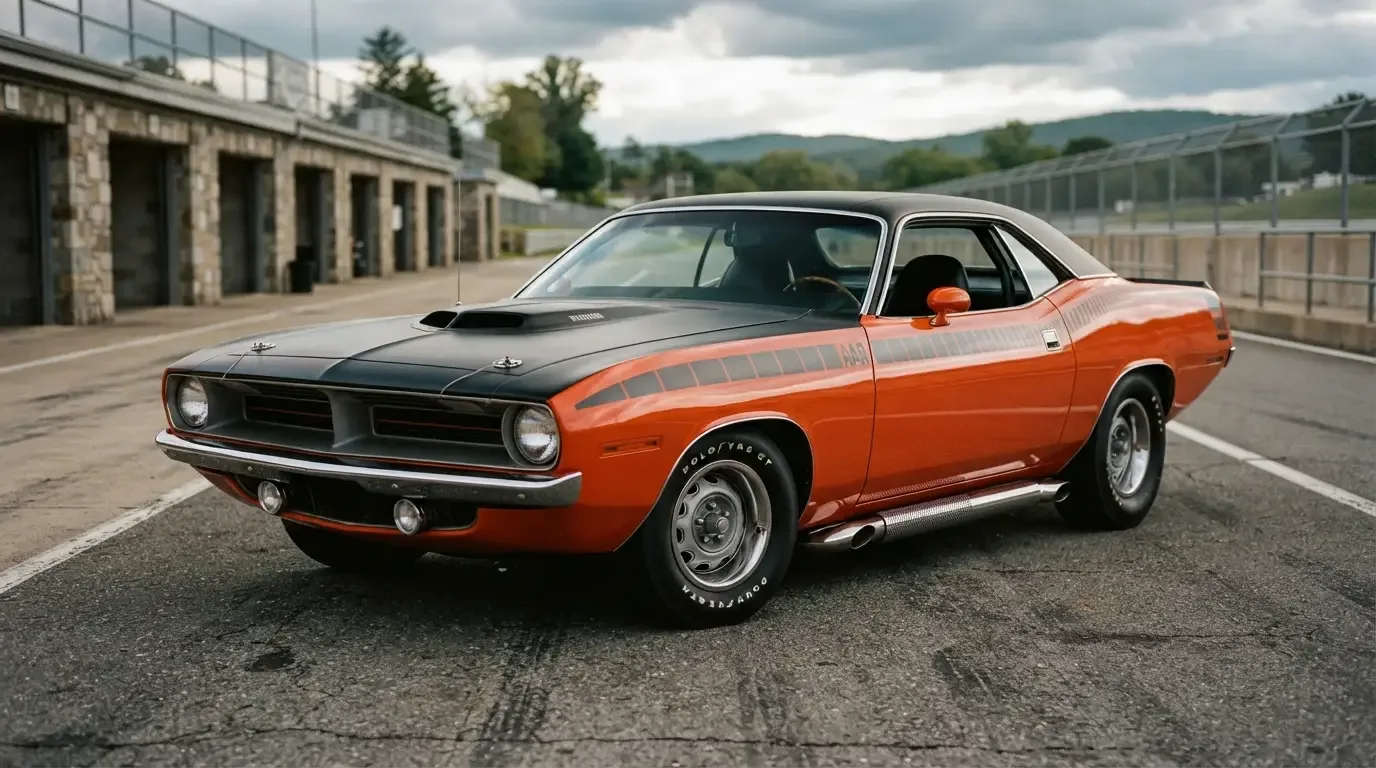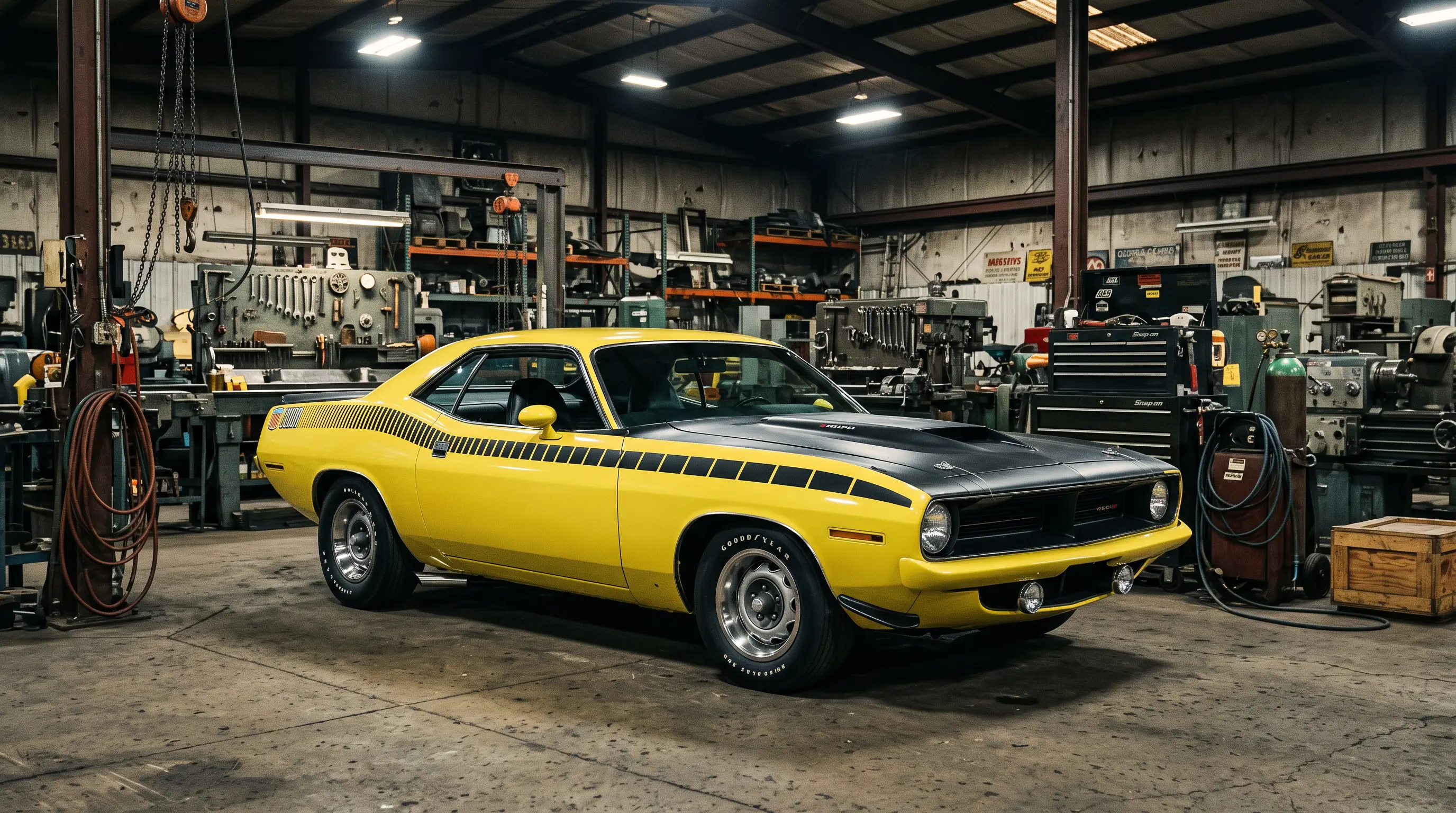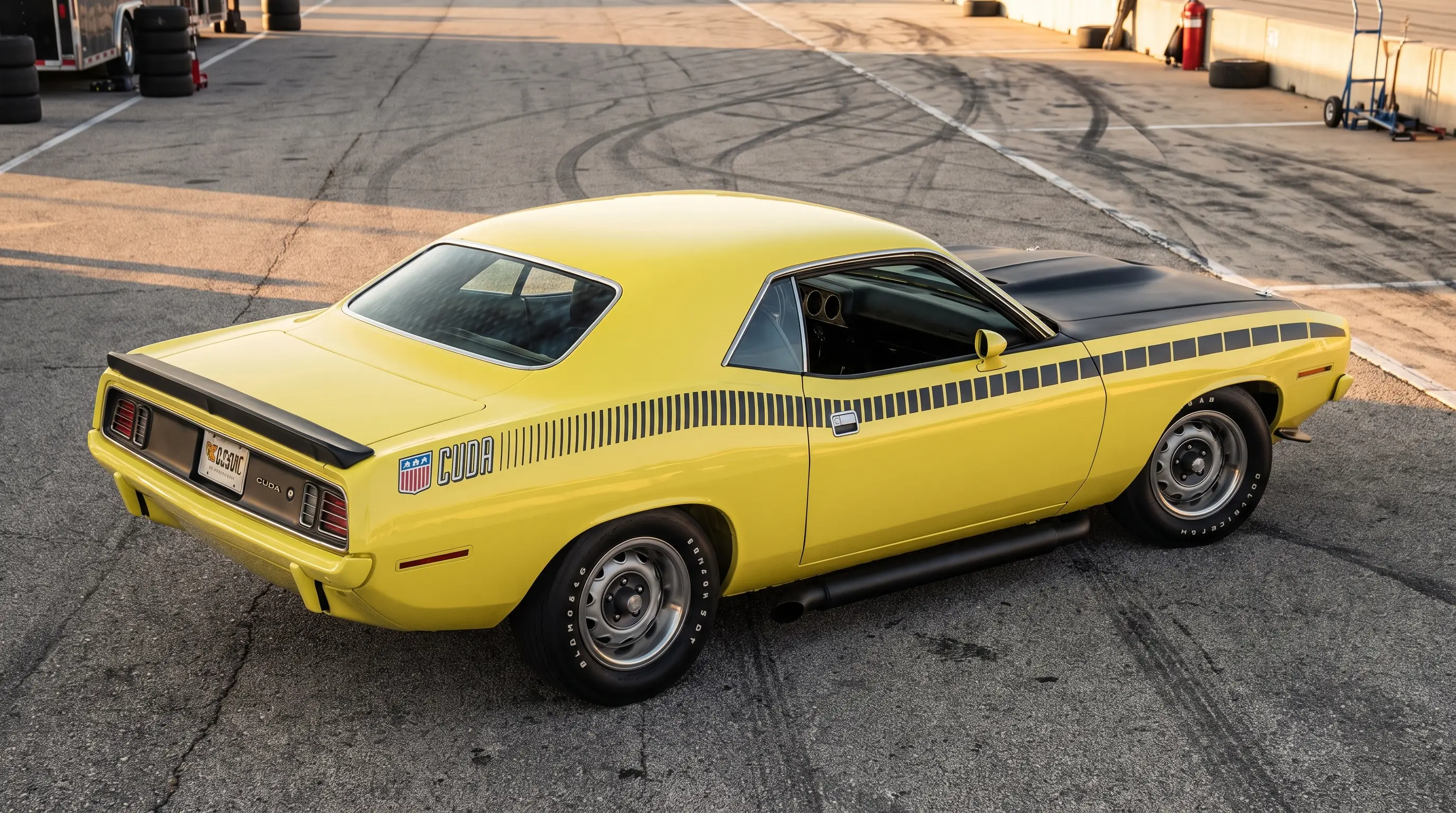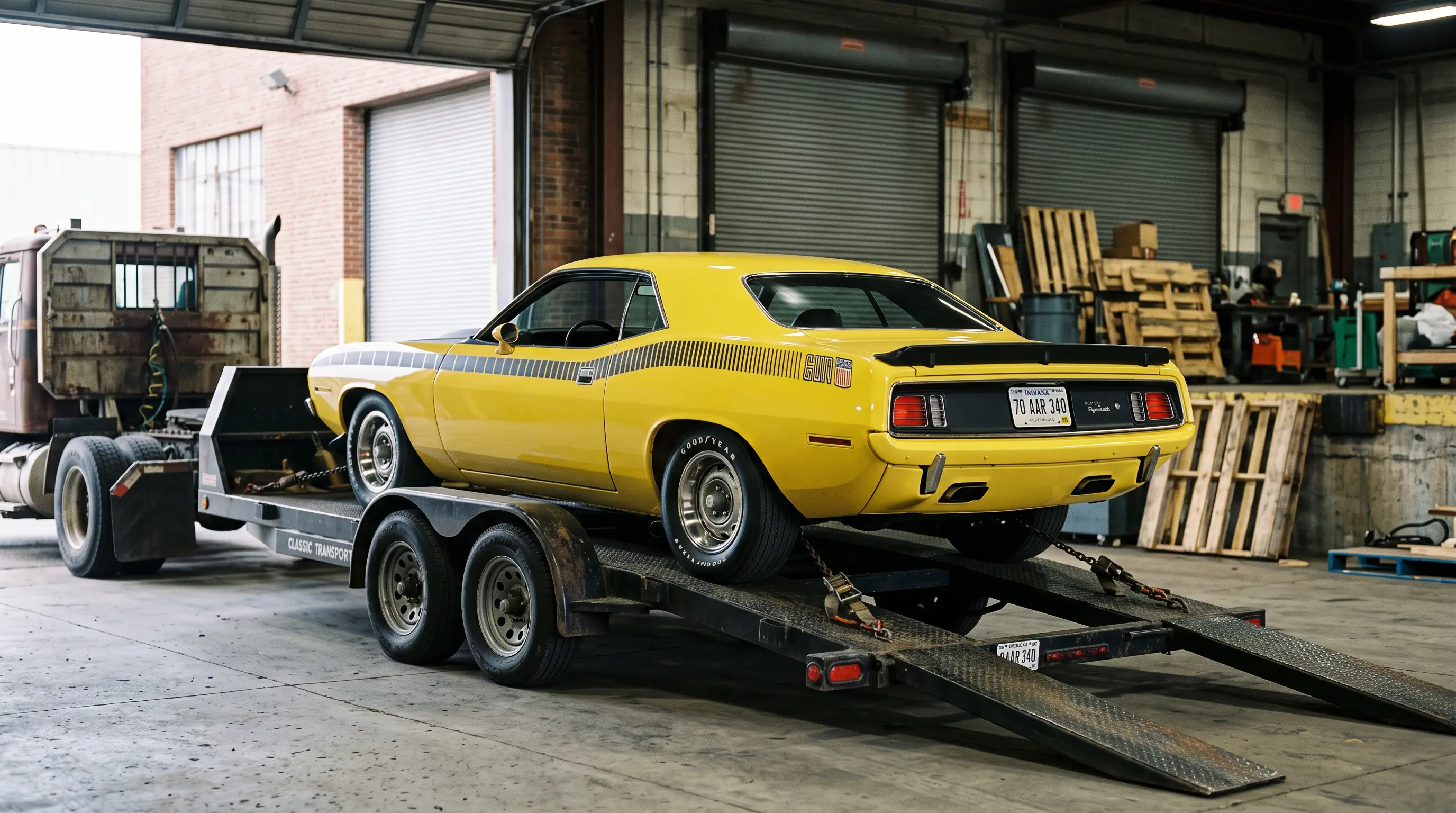
The Plymouth AAR Cuda existed for one model year, 1970, and that narrow window is exactly why aar cuda production numbers get argued about in parking lots and forum threads to this day. Plymouth built the car to satisfy SCCA Trans-Am homologation rules, which meant a minimum run had to reach dealers before the car could legally race. The paperwork trail from that requirement is the closest thing historians have to a hard count, and it still leaves gaps.
Why a production number even had to exist
SCCA rules for the Trans-American Sedan Championship required manufacturers to build a set minimum of street cars matching the racer's specification before the model could compete. This is homologation in its plainest form: no production run, no eligibility. Plymouth's engineering office at Highland Park treated the AAR Cuda as a compliance exercise first and a showroom halo car second, which explains why the build sheet reads like a checklist rather than a marketing brief, from the 340 Six Pack V8 down to the staggered tire sizes.
Dodge ran the identical exercise with the Challenger T/A that same season. Both cars shared a platform, a racing series, and a rulebook, and both exist today largely because a sanctioning body needed a number on paper before June 1970.
The commonly cited figure
Most reference sources put total AAR Cuda production at 2,724 units for the 1970 model year, built across a run that started in spring and wrapped by early summer. That number is pulled from Chrysler production data reconstructed after the fact rather than a single contemporary press release, which is why slight variations show up between books and registries. Some tallies separate the cars by broadcast sheet completeness, others count every VIN stamped with the AAR-specific fender tag regardless of whether all documentation survived.
What is not in dispute is the order of magnitude. This was never a high-volume car. Plymouth moved tens of thousands of standard Barracudas that year; the AAR variant was a rounding error by comparison, and that scarcity is baked into the model's reputation before you even get to the mechanical specification.
Reading a production number correctly
A single total tells you almost nothing useful for buying or valuing a car. What matters more is how that number breaks down: how many left the factory with the optional Torqueflite automatic versus the four-speed manual, how many were built in each of the handful of high-impact colors offered that year, and how many still carry their original 340 Six Pack engine rather than a replacement block installed sometime in the last five decades.
Those sub-counts are where documentation earns its keep. A broadcast sheet, the fender tag, and the trim tag together tell a buyer whether a specific car matches its claimed configuration, and that match matters more to value than the bare aar cuda production total ever will.
- Fender tag: confirms paint code, trim, and the AAR-specific option designation
- Broadcast sheet: the build order paperwork, when it survives, showing exact factory options
- Engine block casting numbers: cross-referenced against known 1970 340 Six Pack casting dates
Why the run stopped after one year
Plymouth did not walk away from the AAR Cuda because it sold poorly. It walked away because Chrysler's entire factory-backed Trans-Am program ended after the 1970 season, and without a racing program to homologate for, there was no reason to keep building a car whose entire specification existed to satisfy a rulebook. The corporate calculus of 1971, rising insurance costs on high-performance models and a broader retreat from factory motorsport, closed the door on a second model year before anyone seriously proposed one.
That abrupt stop is part of why aar cuda production stayed a single-year event rather than settling into a multi-year model line the way other performance packages did. Collectors researching the car often start with where this started, since the production story only makes sense once you understand the racing mandate that created the car in the first place.
"You can argue about the last digit of the production total all day. What you cannot argue about is that Plymouth built this car because a rulebook told them to, and that is a completely different origin story than most muscle cars get."
- Tom Ramirez
Comparing the count against other Barracuda variants
Set the AAR total next to other 1970 Barracuda performance packages and the scale difference becomes obvious fast. The standard Barracuda and Gran Coupe lines moved in far larger numbers that year, and even the better-known 'Cuda 440 and Hemi variants, while genuinely low-volume themselves, were built as ongoing performance options rather than a one-shot homologation requirement. The AAR sits in its own category almost by definition, a car built to satisfy a racing sanctioning body rather than to fill dealer order banks, and that distinction shows up directly in how few examples exist relative to demand today.
It also explains why registries treat the AAR differently from other Barracuda trims. Clubs devoted to the model track individual VINs where possible, because the population is small enough that doing so is actually feasible, something that would be impractical for a mainstream trim built in the tens of thousands.
Regional survival and attrition
Low original production is only half of what makes a genuine, unmodified AAR Cuda hard to find. Attrition over five decades of daily use, salt-belt corrosion, and a long stretch in the 1980s and 1990s when muscle cars from this era were cheap and unfashionable took a real toll on the surviving population. Cars that were not stored carefully, or that got parted out when values were low, reduced the pool further than the original build number alone would suggest.
What is left today is a fraction of an already small run, spread unevenly by region depending on climate and how well individual owners understood what they had. That uneven survival is part of why prices vary so widely between a documented Sun Belt car and one that spent decades exposed to road salt further north.
What low production means for the market today
A tight build number does not automatically inflate value on its own, but it does shrink the pool of legitimate original cars a buyer can choose from, and it raises the stakes on documentation. Clone AAR Cudas, standard Barracudas dressed up with AAR-style stripes and a scoop, have existed for decades because the visual package is not hard to replicate. The production paperwork is the only reliable way to separate a genuine car from a well-done tribute.
Anyone shopping this segment should expect to pay a real premium for a documented, numbers-matching example over a car with a thin paper trail, and that gap has only widened as the surviving population ages and fewer unrestored, fully documented cars surface. If you are looking at the current market rather than the history books, a classic Barracuda for sale listing is the fastest way to see what condition and documentation actually cost today.
| Detail | Figure |
|---|---|
| Model year | 1970 only |
| Total production | 2,724 units |
| Standard engine | 340 cid Six Pack V8 |
| Homologation series | SCCA Trans-American Sedan Championship |
The short answer to how many were built is a number with an asterisk attached, because the paperwork that created that number was never meant to satisfy historians. It was meant to satisfy a racing sanctioning body, and once that job was done, Plymouth stopped counting.