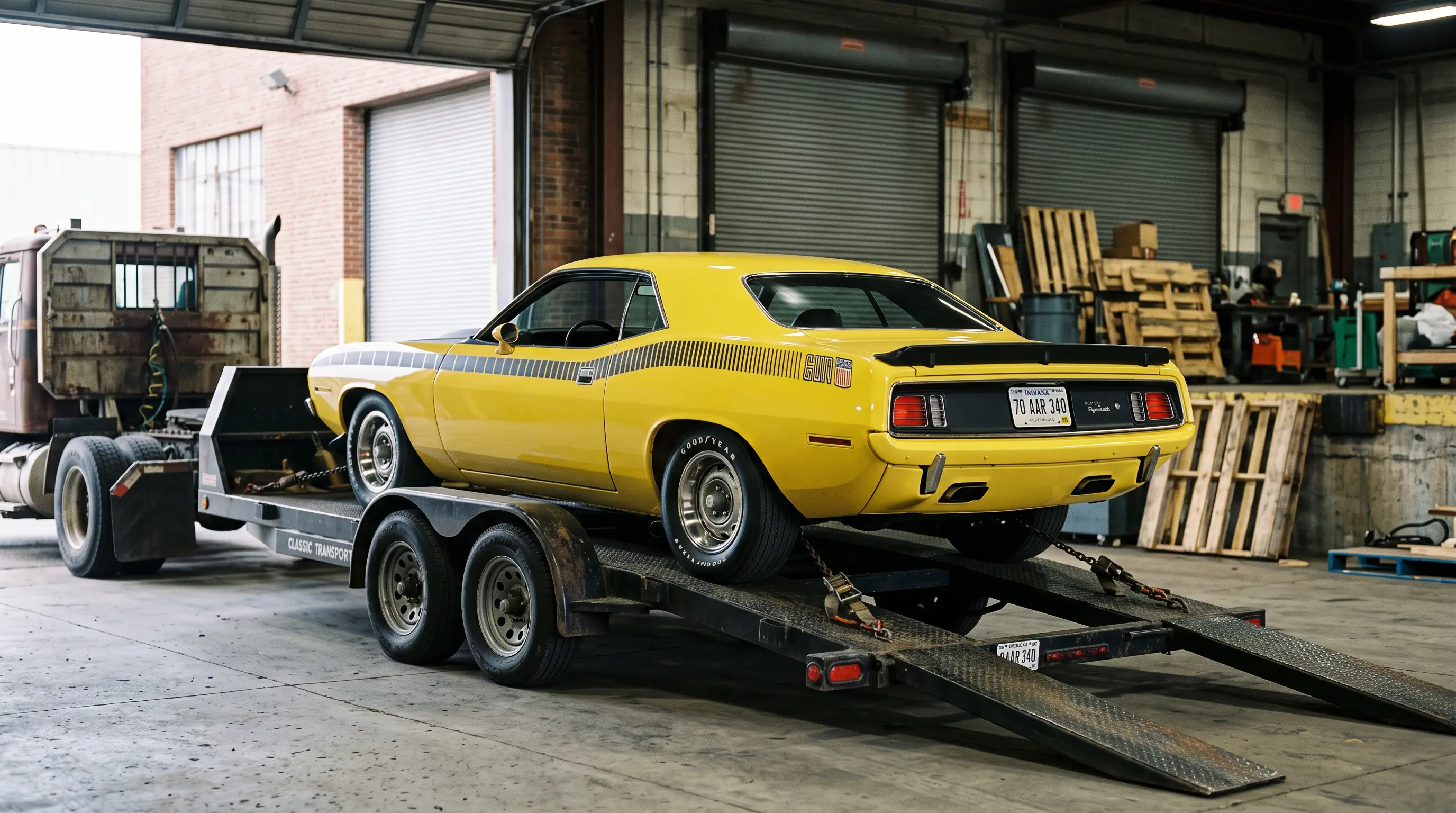
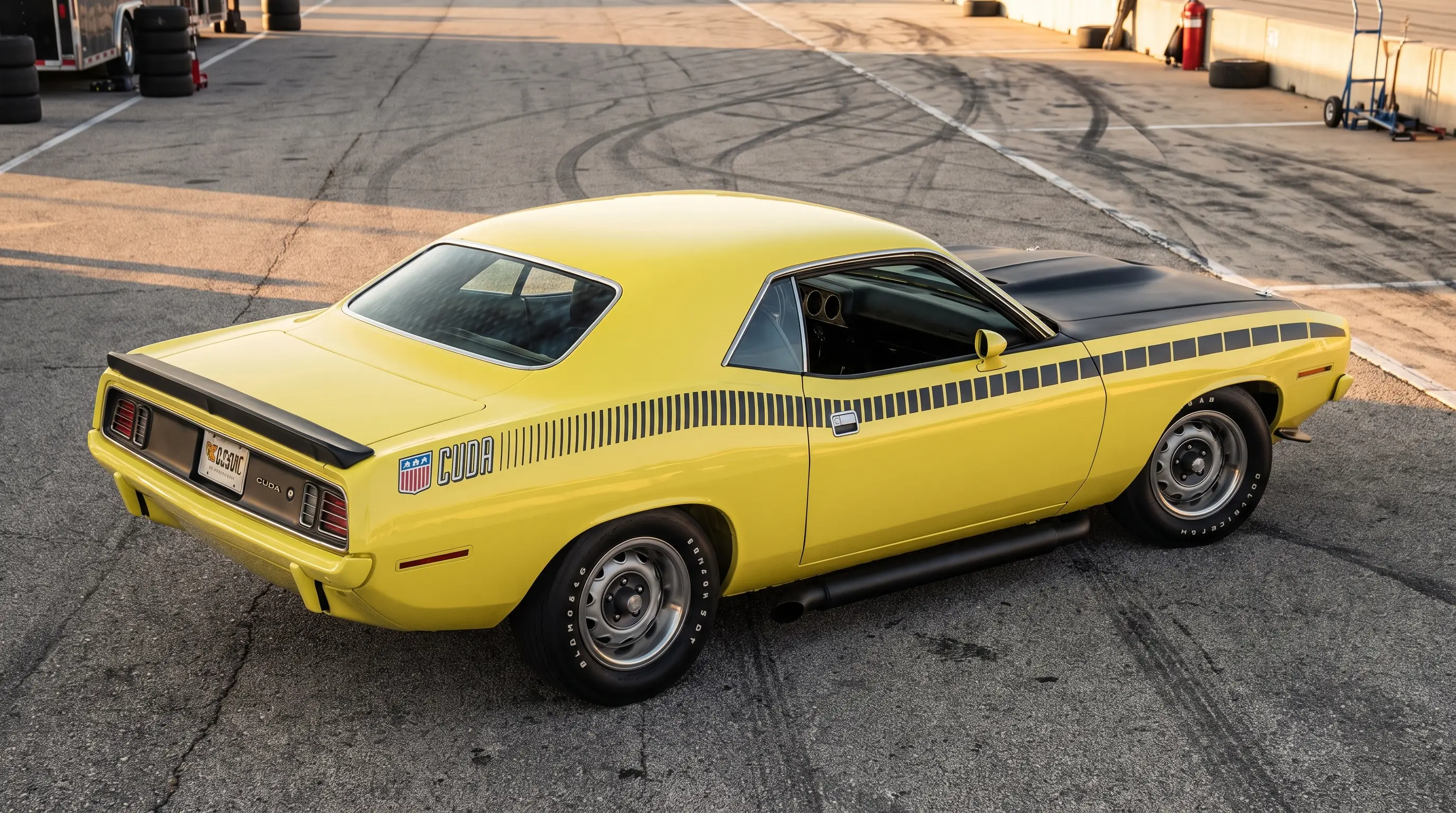
Walk up to a 1970 Plymouth AAR Cuda from the rear quarter and the first thing that reads wrong, in the best way, is where the exhaust exits. No tailpipes poking out the back. Instead you get a pair of chrome-tipped megaphones dumping out ahead of the rear wheels, low and loud, and that single detail does more to explain the aar cuda exhaust setup than any spec sheet line item.
Where the idea came from
Side-exit exhaust was not a styling department invention. It came straight off the Trans-Am race cars that Dan Gurney's All American Racers team campaigned in 1970, where routing exhaust out ahead of the rear axle kept the system shorter, easier to package around a stiffened chassis, and less prone to the ground clearance problems that come with running pipes all the way to the back bumper on a car set up for road racing. Plymouth's engineers copied the layout onto the street car almost wholesale, right down to the rocker panel cutouts needed to let the pipes exit cleanly.
That is the short version of why this car sounds and looks different from every other Barracuda on the lot that year. It was not decoration. It was a direct transplant from a race program onto a homologation special.
How the plumbing actually works
The system starts at exhaust manifolds feeding into a single transverse muffler mounted ahead of the rear axle, then splits into two short pipes that exit through cutouts in the rocker panels just forward of each rear wheel opening. Chrome trim rings dress up the exit points. It is a genuinely unusual layout for a factory production car of the era, most of which routed everything straight back to the rear bumper regardless of what was happening under the body.
Because the pipes exit so far forward and so low, factory service literature warned about ground clearance on anything but smooth pavement, and owners quickly learned that speed bumps and steep driveway aprons were not the AAR's friend. That tradeoff, race-inspired packaging over everyday practicality, is a theme that runs through this entire car, not just the exhaust.
What it sounds like and why that matters
Exhaust note is subjective territory, but there is a reason the AAR Cuda has a reputation as one of the more distinctive-sounding muscle cars of its era. Exiting the system ahead of the rear wheels rather than behind them changes how the note reaches your ear at speed, and combined with the 340 Six Pack's induction noise under load, the whole car has a rawer, closer-to-the-metal character than a Barracuda running a conventional rear exhaust. Owners describe it less as loud and more as immediate, like the sound is happening right next to you rather than trailing behind the car.
That character is part of what collectors are actually paying for when they shop this model. It is not just a spec line, it is a sensory signature that gets discussed on every forum thread and at every show where an AAR turns up.
Restoration and originality concerns
Because the side-exit system is unusual and low to the ground, it takes abuse that a standard rear exhaust never sees, curb strikes, driveway scrapes, and general road debris all target those chrome tips directly. Finding a car with its original factory system intact and undamaged is genuinely rare, and reproduction pieces have existed for decades to fill the gap, which means shoppers need to look closely rather than assume everything under the car is factory original.
- Check for correct rocker panel cutout shape and finish, not just presence of a hole
- Confirm the transverse muffler position matches factory diagrams rather than an aftermarket workaround
- Inspect chrome exit trim for period-correct pattern versus generic reproduction hardware
Comparing it to the standard Barracuda setup
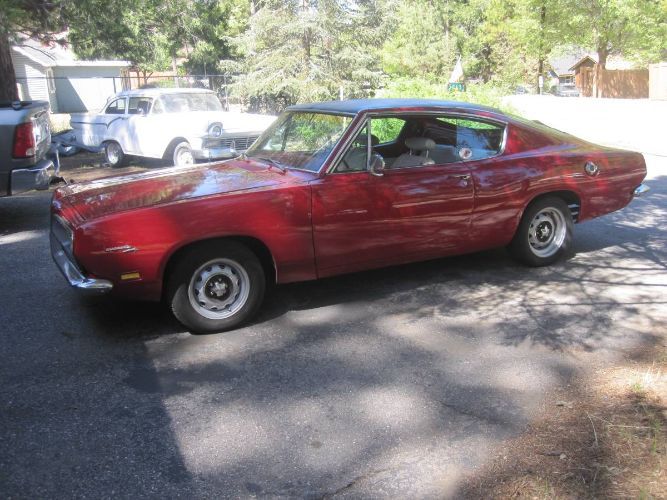
A standard 1970 Barracuda, even a well-optioned 340 or 383 car, ran a conventional exhaust system exiting behind the rear bumper, the layout used across the vast majority of production muscle cars that year. Side by side, the difference in both look and packaging complexity is stark. The conventional system is simpler to manufacture, easier to service, and immune to the ground clearance issues that plague the AAR's setup, which is exactly why Plymouth never extended the side-exit layout to other Barracuda trims. It only made sense on a car specifically built to mirror its racing counterpart.
That tradeoff, packaging complexity and vulnerability in exchange for a genuine motorsport connection, sums up a lot of what makes the AAR different from the rest of the lineup it was based on.
Sourcing correct parts today
Original factory side-exit systems rarely survive intact after five decades, and when they do, they command real money on the parts market precisely because reproduction quality varies so much. Buyers restoring an AAR need to weigh a correct NOS or original used system against a reproduction, and the decision usually comes down to budget balanced against how particular a buyer or judge will be about exact factory fit and finish. A poorly fitted reproduction system is often visually close but mechanically different enough in pipe routing to be caught by someone who has handled several original examples.
The bigger picture
The exhaust is one piece of a car whose entire specification traces back to a racing program rather than a marketing meeting, and it only really makes sense in that context. Anyone digging into this detail should read the full story to see how the side pipes fit alongside the fiberglass hood, the stripe package, and the staggered tires as parts of one coherent Trans-Am homologation package rather than a random grab bag of options.
"Most guys hear it before they see it. That side-exit system was built for a race car, not a boulevard cruiser, and fifty years later it still sounds like it means business."
- Mike Sullivan
Shopping for one today
If the sound and the stance of the side-exit exhaust is what draws you to this car, get underneath any candidate before you get excited about the paint. Rust and impact damage around those rocker cutouts is common, repair costs add up fast, and a car with a compromised system loses a meaningful chunk of what makes it an AAR in the first place. For a look at what is actually on the market right now, you can browse classic Barracuda listings and compare exhaust condition across available cars before you commit to one.
| Feature | Detail |
|---|---|
| Exhaust routing | Side-exit, ahead of rear wheels |
| Origin | Adapted from 1970 Trans-Am race car packaging |
| Body modification required | AAR-specific rocker panel cutouts |
| Common issue | Ground clearance and curb damage |
Fifty-plus years on, the side-exit exhaust remains the single detail that separates an AAR Cuda from every other Barracuda parked next to it, and it is still the fastest way to tell whether a car is genuine before you even open the door.