Strip the paint story down to basics and the aar cuda stripes are a reflective strobe pattern running down each flank, bold enough to read from across a parking lot and specific enough that getting it wrong is one of the fastest ways to expose a fake. I have redone this pattern on more than one project car, and the tolerances people don't think about, spacing, taper, exact color match, are exactly where reproductions and half-hearted restorations fall apart.
What the stripe actually looks like
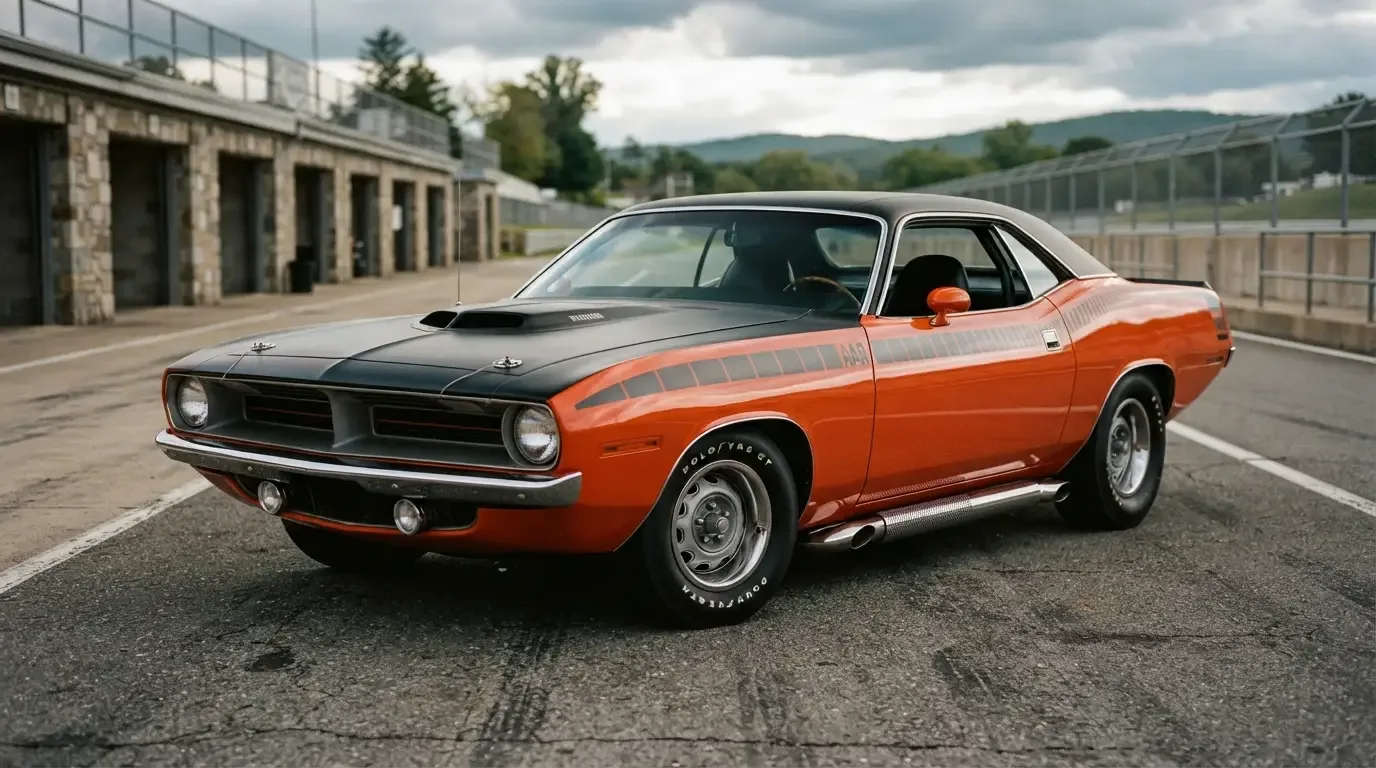
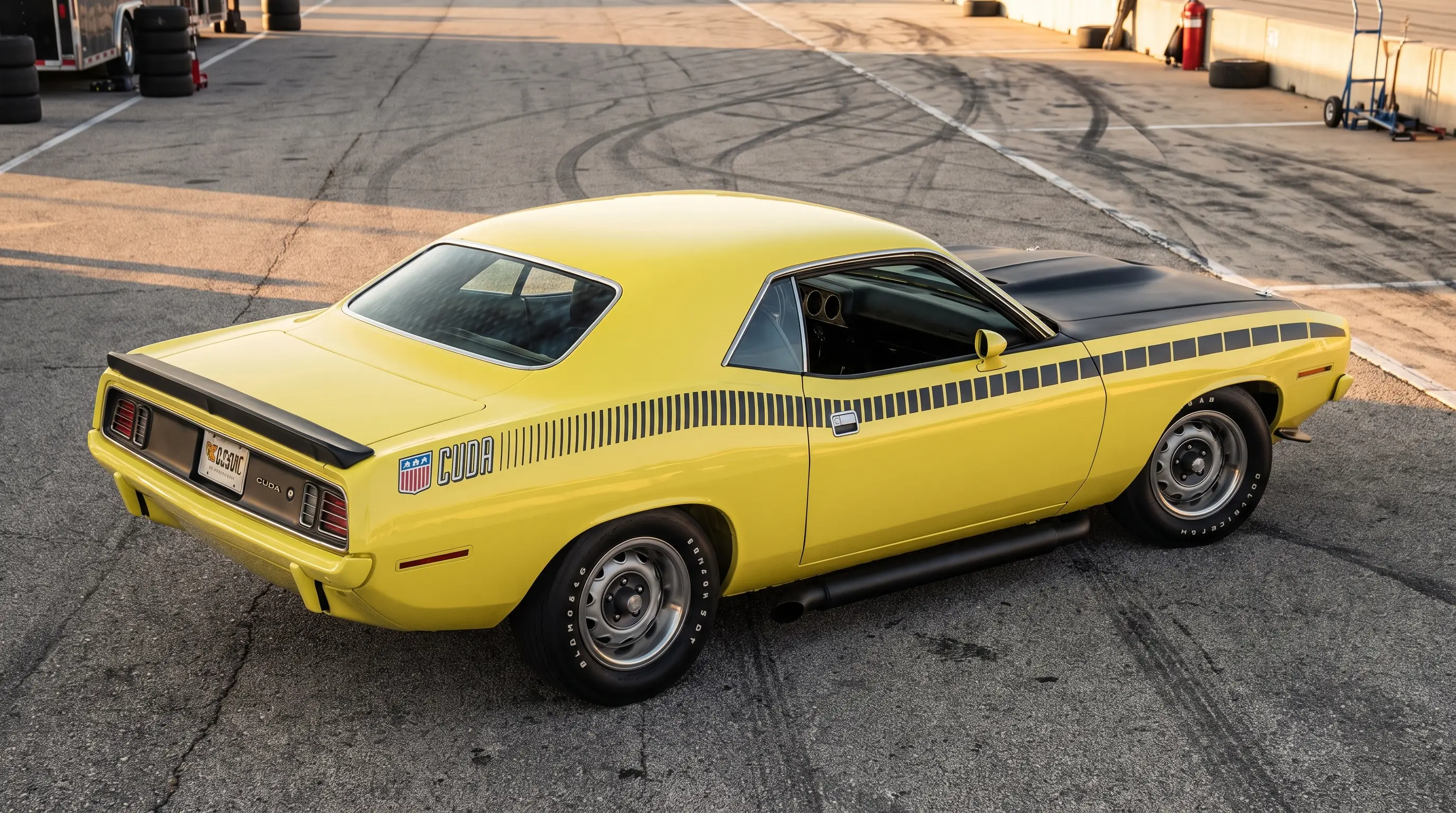
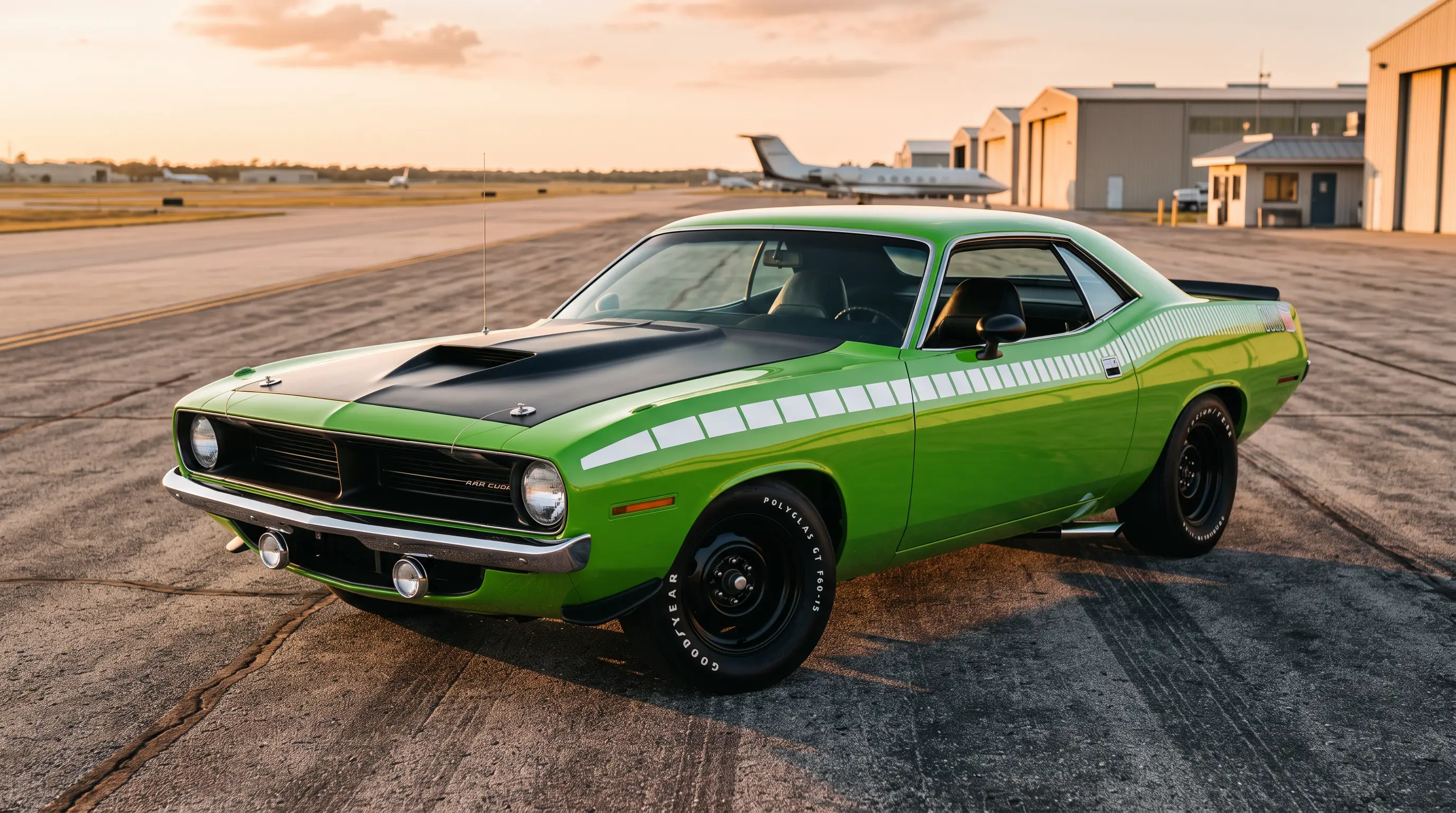
The AAR strobe stripe runs low along the rocker area and lower body, a broad band that tapers and breaks into a graduated pattern rather than a simple straight line. It was offered in a small handful of colors depending on body paint, designed to contrast rather than blend, and it wraps around the front fender area with "AAR CUDA" lettering worked into the design near the front. Paired with the matte black fiberglass hood, the whole package reads as one coordinated graphics scheme rather than a stripe kit bolted onto an otherwise stock car.
That distinction matters to anyone doing bodywork on one of these. The stripe is not an accessory. It is part of how the factory intended the car to be read from ten feet away, low, aggressive, and clearly different from a standard Barracuda.
Getting the pattern right in a restoration
Reproduction stripe kits have been available for decades, and the good ones are close, but "close" is not the standard collectors and judges hold a real restoration to. Taper angle, the exact break points in the graduated pattern, and where the lettering sits relative to the wheel opening all need to match factory photos and surviving original examples, not just look roughly similar from across the shop.
- Confirm stripe taper and graduation matches factory reference photos, not a generic vendor template
- Check lettering placement and size against a documented original car before ordering
- Match stripe color to the correct factory pairing for the body color, not a close approximation
I have seen guys spend real money on paint and bodywork, then slap on a stripe kit that is close enough for a driver but wrong enough to cost points at a real show or credibility with a serious buyer. If you are putting the work in on the metal, put the same care into the graphics.
Why the graphics matter more than they look like they should
On a car built for one model year with a production run in the low thousands, the visual package is doing a lot of work to signal what is actually under the sheet metal. Buyers who cannot verify a fender tag on the spot can at least read the stripe and hood treatment as a first-pass indicator, and sellers who understand that use correct graphics as part of building trust in a listing. Get the graphics wrong, intentionally or through a sloppy repaint, and you are telling an experienced eye that something else in the car's history might not check out either.
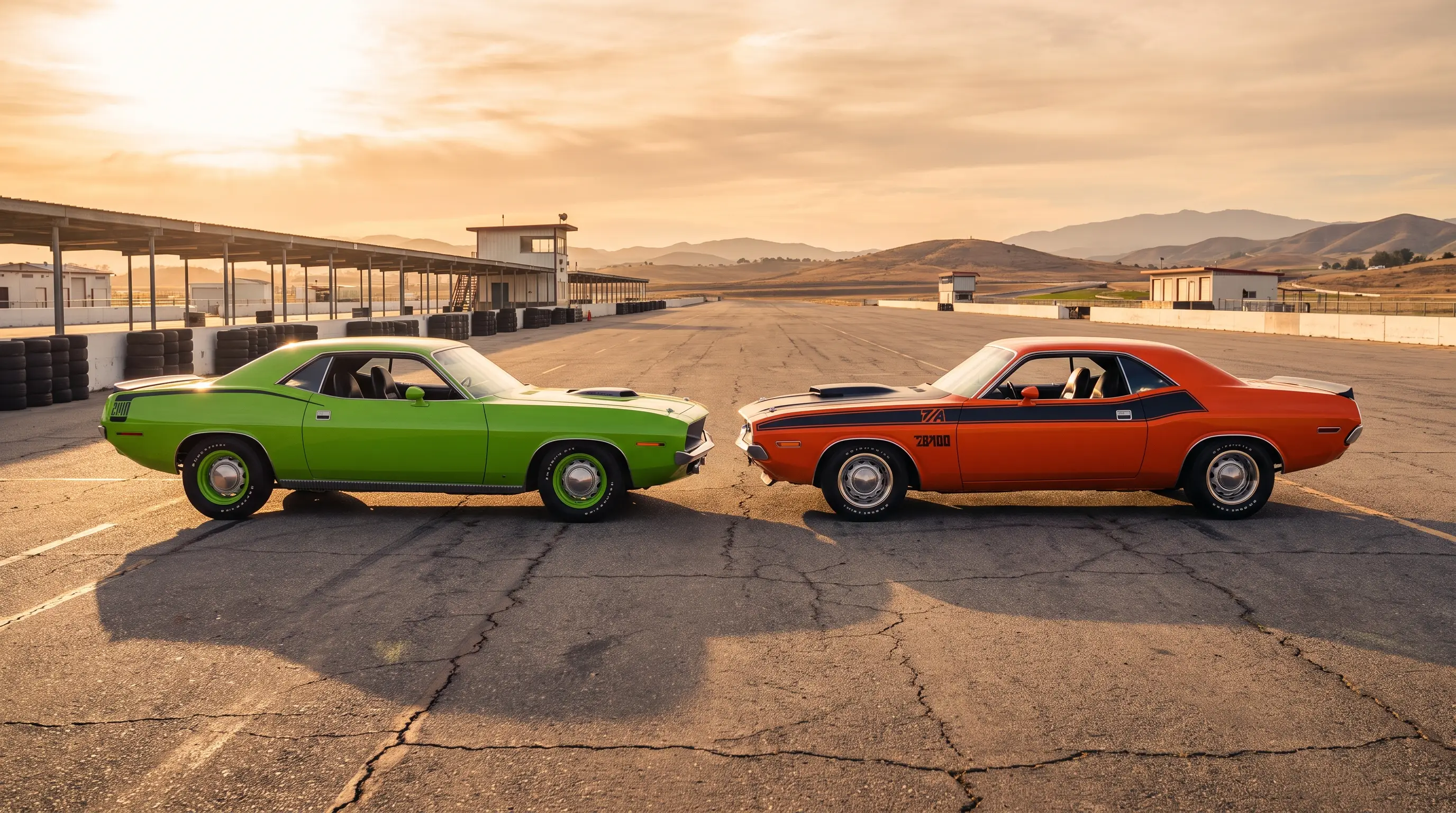
That is one reason this detail keeps coming up whenever the AAR gets compared to its closest rival. If you want the fuller comparison, a related story covers how Dodge's Challenger T/A handled its own version of the same homologation graphics problem.
"Anybody can slap a stripe kit on a fender. Getting the taper, the break points, and the lettering placement right takes a reference photo and patience, and that is the difference between a restoration and a costume."
- Jim Vasquez
Color combinations worth knowing
The factory did not offer the strobe stripe in every body color pairing available on a standard Barracuda that year. A handful of high-impact colors were matched with specific stripe treatments, and knowing which pairings actually left the factory helps a buyer spot a car wearing a combination that never existed on the assembly line. This is a detail that comes up constantly in club discussions, since a repaint job sometimes changes body color without updating the stripe to match a correct factory pairing, leaving a car with a combination that looks fine to a casual observer but reads as wrong to anyone who has studied factory build sheets.
Original paint codes, cross-referenced against the fender tag, remain the most reliable way to confirm whether a car's current color and stripe pairing match what left the factory or reflect a later repaint decision made without regard to originality.
Tools and materials that make the difference
Doing this stripe correctly on a restoration is not a weekend project with a roll of generic vinyl. The reflective material used in period-correct reproductions behaves differently than standard striping vinyl, and getting the graduated fade right in the pattern takes practice, patience, and usually a few test pieces before committing to the actual body panel. I tell guys starting their first AAR restoration to practice the layout on cardboard cutouts shaped to the actual rocker panel curve before ever touching good material, because that curve changes how the taper reads once it is wrapped around the body rather than laid flat on a bench.
Spotting a repaint or a clone
Because the strobe stripe is one of the more visually obvious parts of the AAR package, it is also the most commonly faked detail on a standard Barracuda dressed up to look like something it is not. A car wearing correct graphics but lacking the factory hood pins, the side-exit exhaust cutouts, or a matching fender tag is telling you the graphics were added after the fact, not that the car is a genuine AAR underneath. Read our aar cuda retrospective for the full list of details that need to line up together before a car earns the name.
Graphics alone never confirm authenticity. They are one data point among several, and they are the easiest one for a shop to fake convincingly if a buyer is not looking past the paint.
Buying with the graphics in mind
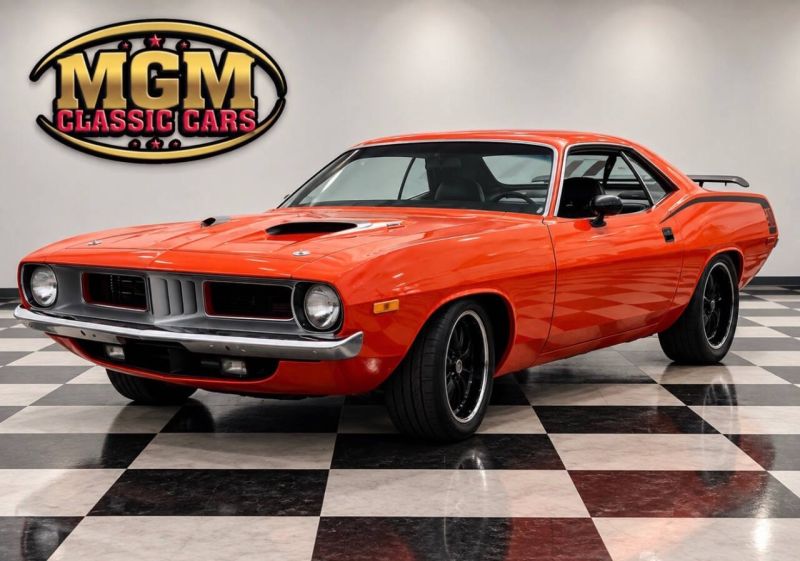
If you are shopping this segment and the stripe package is part of what draws you to a specific car, ask for close-up photos of the taper points, the lettering, and the hood blackout edge before you travel to see it in person. It saves a wasted trip when the graphics turn out to be an aftermarket kit rather than a correct reproduction. For current inventory to compare against, Barracudas for sale now is a good place to see how sellers are presenting graphics condition across different cars.
| Element | Detail |
|---|---|
| Stripe style | Graduated strobe pattern, lower body |
| Lettering | "AAR CUDA" worked into front stripe area |
| Paired treatment | Matte black fiberglass hood |
| Common risk | Reproduction kits with incorrect taper or spacing |
The stripe package looks simple until you try to replicate it correctly, and that gap between looking right and being right is exactly where a careful buyer, or a careful restorer, earns their keep.