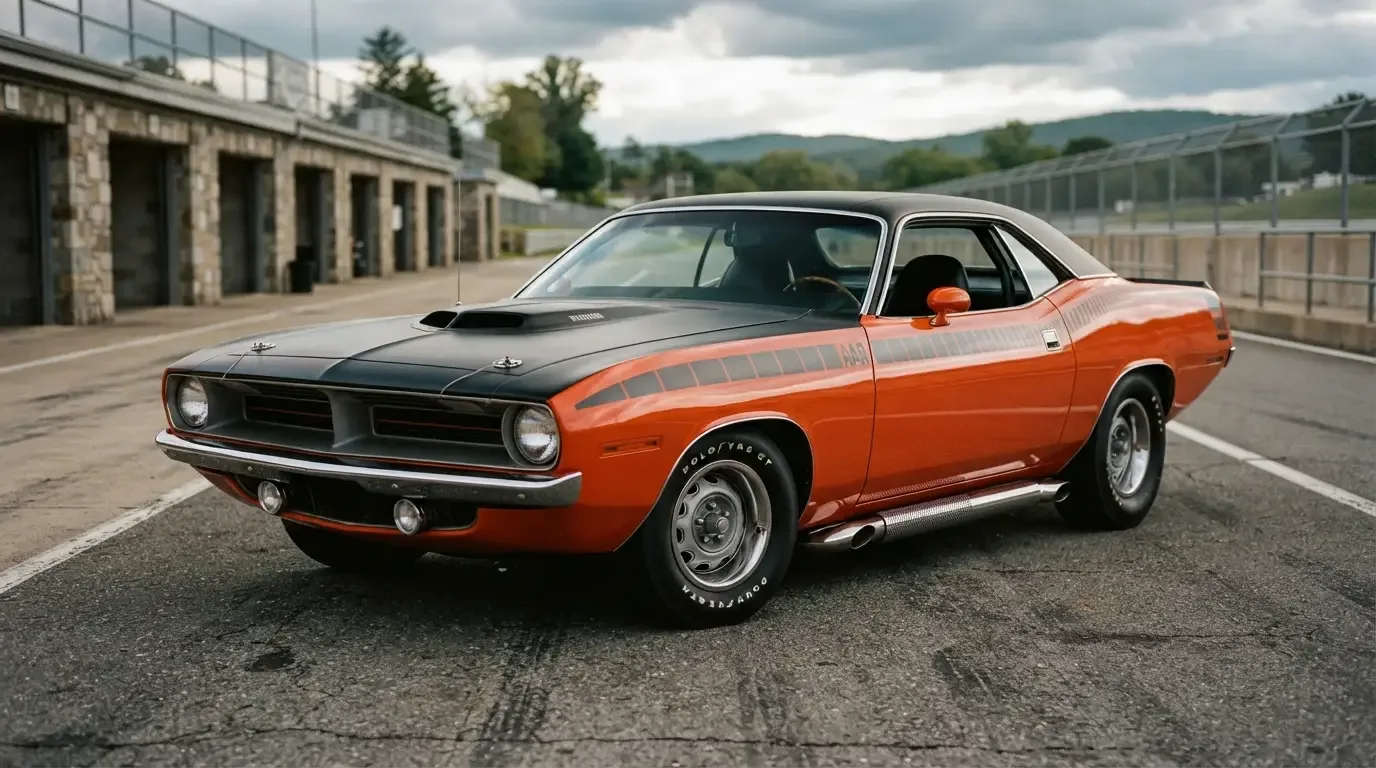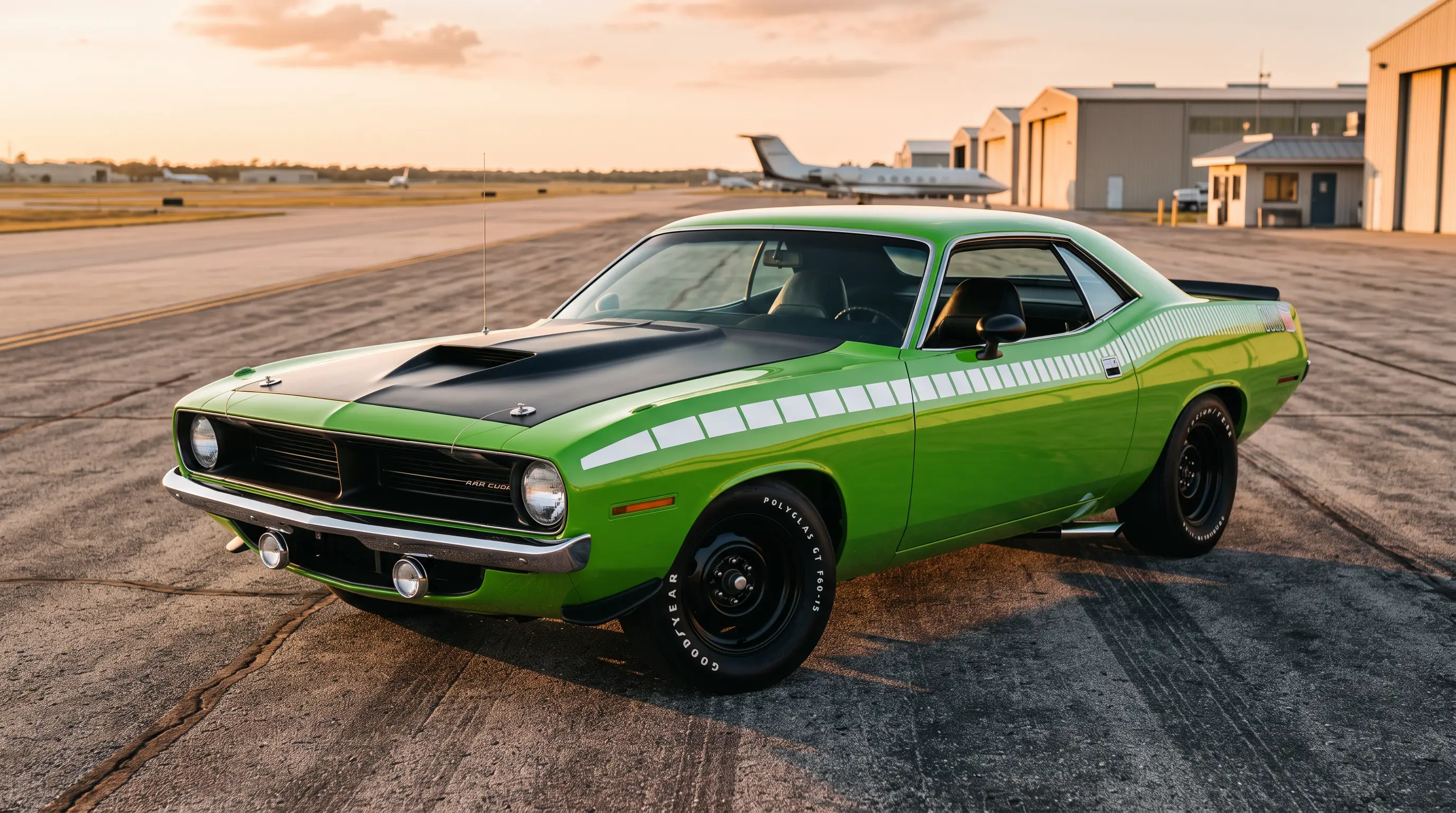
Every car club has that argument that never quite gets settled, and in mine it is the AAR Cuda versus the Challenger T/A. Two guys, two garages, and fifty years of good-natured needling over which homologation special actually deserved to wear the Trans-Am name in 1970. The honest answer, once you dig past the loyalty talk, is that Plymouth and Dodge built the same car wearing two different suits.
Same platform, same rulebook, same season
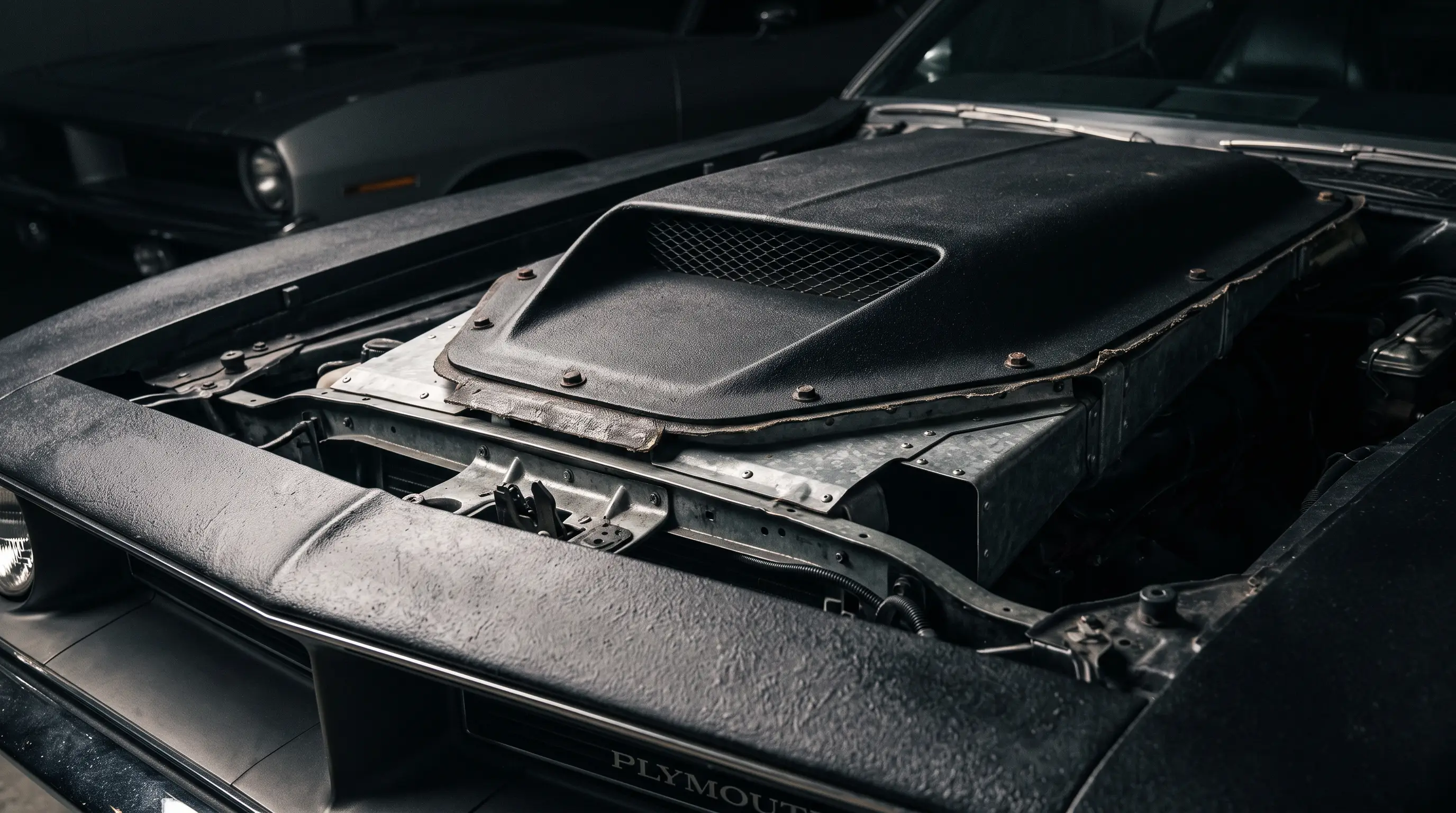
Both cars exist for the identical reason. SCCA Trans-Am rules required a minimum production run of street cars matching the race specification, and Chrysler had two divisions, Plymouth and Dodge, each running its own Trans-Am effort in 1970. Plymouth backed Dan Gurney's All American Racers team, hence AAR Cuda. Dodge ran its own program under the Challenger T/A name. Both street cars share the E-body platform, the 340 Six Pack V8, side-exit exhaust, a fiberglass hood with a functional scoop, and staggered front-to-rear tire sizing.
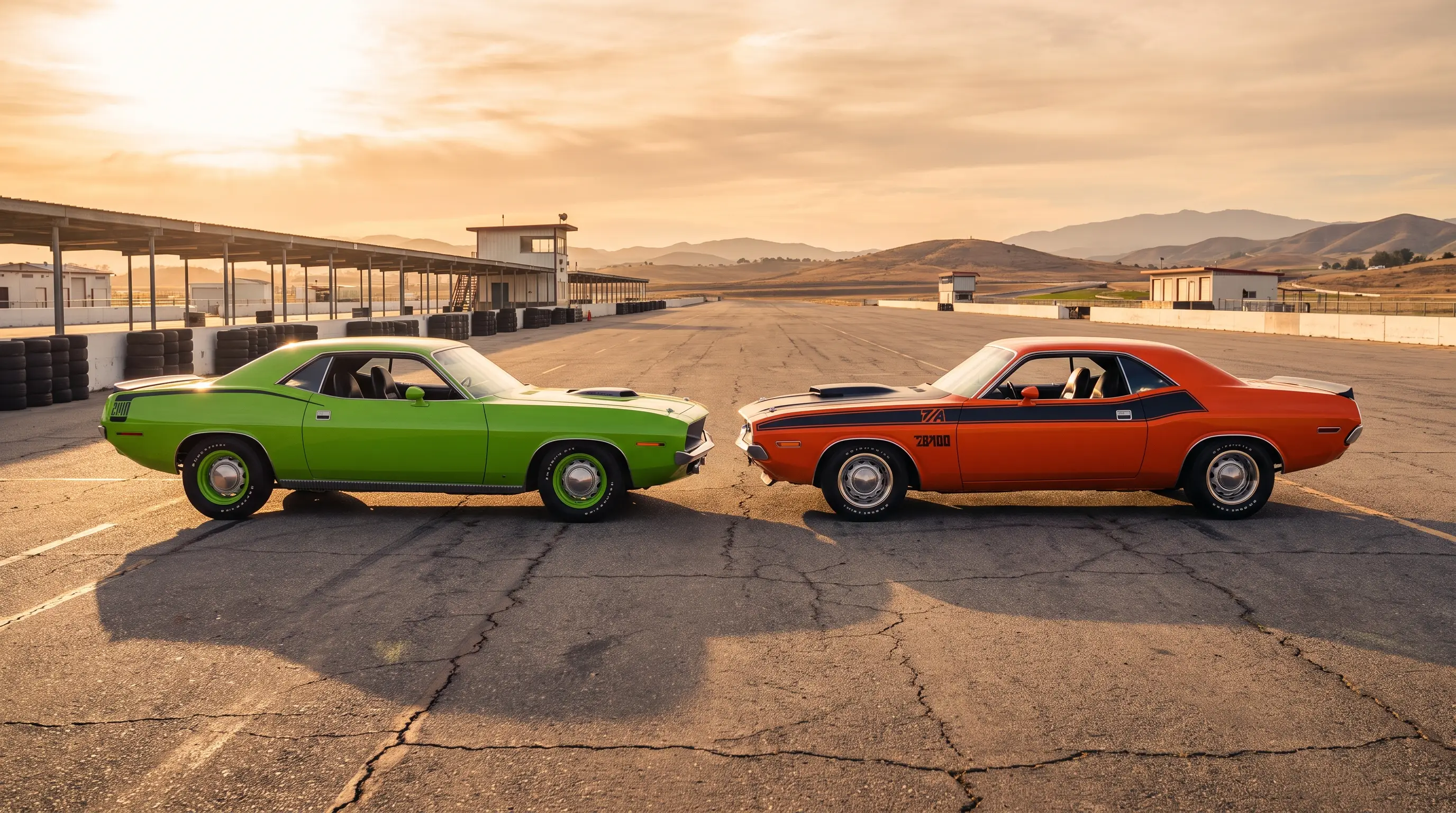
If you park them side by side, the family resemblance is obvious before you notice a single difference. That is not a coincidence. It is two divisions of the same company solving the same racing homologation problem on the same timeline.
Where they actually differ
The differences that matter come down to sheet metal, proportion, and graphics rather than mechanical substance. The Challenger rides on a longer wheelbase than the Barracuda, which changes the visual stance and gives the T/A a slightly different presence at the same curb, longer hood, more space between the front wheel and the cowl. The AAR's fastback-adjacent Barracuda body has a tighter, more compact look by comparison.
Graphics packages differ too. Each car got its own stripe treatment and color options, and neither one borrowed the other's exact pattern, so a knowledgeable eye can separate the two from across a show field even with the hoods closed. I'll admit a soft spot for the Barracuda's lines here, but that is a bar stool opinion, not a mechanical one.
What club members actually argue about
Ask ten owners which car is the better driver and you will get ten confident, contradictory answers, and most of them come down to which car somebody's uncle owned in 1974 rather than a stopwatch. What is not really debatable is that both cars were built to homologate the same racing package, so on paper their performance credentials are close enough that the argument is really about styling preference and nostalgia, dressed up as a mechanical debate.
That said, club gatherings do turn up genuine points of comparison worth knowing before you take a side.
- Production numbers for both cars are in the low thousands, making either one a genuinely scarce find today
- Both share the 340 Six Pack engine and side-exit exhaust layout almost identically
- Wheelbase and body proportion are the clearest visual tell between the two at a glance
The racing history behind each name
Gurney's AAR team ran the Barracuda in the 1970 Trans-Am season with a lineup that included Gurney himself and Swede Savage behind the wheel, giving the street car a direct celebrity connection to an actual driver rather than just a corporate racing division. Dodge's factory Trans-Am effort with the Challenger T/A carried its own driver roster and its own results that season, and club members who favor one car over the other often trace their loyalty back to which racing program they followed as kids or young enthusiasts in period. That emotional throughline is a big part of why the argument never really dies down. It is not just two cars being compared, it is two racing programs and the memories attached to them.
Neither program dominated the 1970 Trans-Am season outright, with Ford and other manufacturers also fielding strong entries, but both Chrysler efforts left enough of a mark that the street cars built to homologate them still carry that racing pedigree as their central selling point today.
Values track together, mostly
In the current collector market the two cars tend to move in the same direction at the same time, since they appeal to overlapping buyers chasing the same era of factory Trans-Am homologation history. Condition, documentation, and originality matter more to price than which badge is on the fender. A rough, undocumented example of either car will sell for less than a clean, numbers-matching one regardless of brand loyalty.
Anyone new to this corner of the hobby should read the background on how the AAR came to exist before jumping into the T/A comparison, since the racing context explains why both cars look and drive the way they do.
"I've had guys nearly get into it over which one is the real Trans-Am car. Truth is they're brothers from the same program, and arguing about it is half the fun of owning either one."
- Wayne Coburn
Interior and creature comfort differences
Step inside either car and the family resemblance holds up, bucket seats, a console-mounted shifter for the four-speed cars, and a dashboard layout that shares its bones across both divisions since they came off the same corporate platform. Small trim differences separate the two on close inspection, badging, some gauge cluster details, and minor switchgear placement, but neither car was built with luxury as a priority. Both were homologation specials first, and the interiors reflect that, functional rather than plush, with weight-saving decisions visible if you know where to look.
Club members who have owned both cars back to back tend to describe the driving position and general ergonomics as close enough that switching between them feels familiar rather than jarring, which reinforces just how closely related these two cars actually are under whatever badge happens to be on the trunk lid.
Which one should you actually buy
If wheelbase and a slightly longer hood appeal to you, the Challenger T/A is the right side of this argument. If the tighter Barracuda proportions and that fastback silhouette do it for you, the AAR wins every time. Mechanically you are choosing between two very close siblings, so let the styling and the badge loyalty decide, because the spec sheets will not settle it for you.
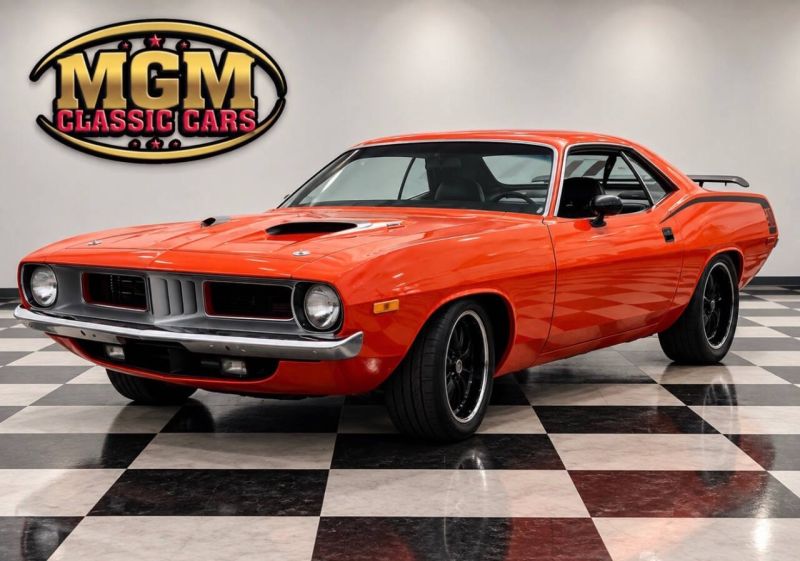
Whichever side of the club argument you land on, both cars are thin on the ground and only getting thinner. If you want to see what is actually out there right now, you can find a classic Barracuda and compare condition and documentation before committing to a purchase.
| Detail | AAR Cuda | Challenger T/A |
|---|---|---|
| Model year | 1970 only | 1970 only |
| Engine | 340 Six Pack V8 | 340 Six Pack V8 |
| Exhaust | Side-exit, ahead of rear wheel | Side-exit, ahead of rear wheel |
| Wheelbase | Shorter, Barracuda platform | Longer, Challenger platform |
Every club has a version of this argument, and honestly, that is the point. Two cars built for the same racing rulebook, wearing two different names, still generating conversation at every cruise night fifty years later.