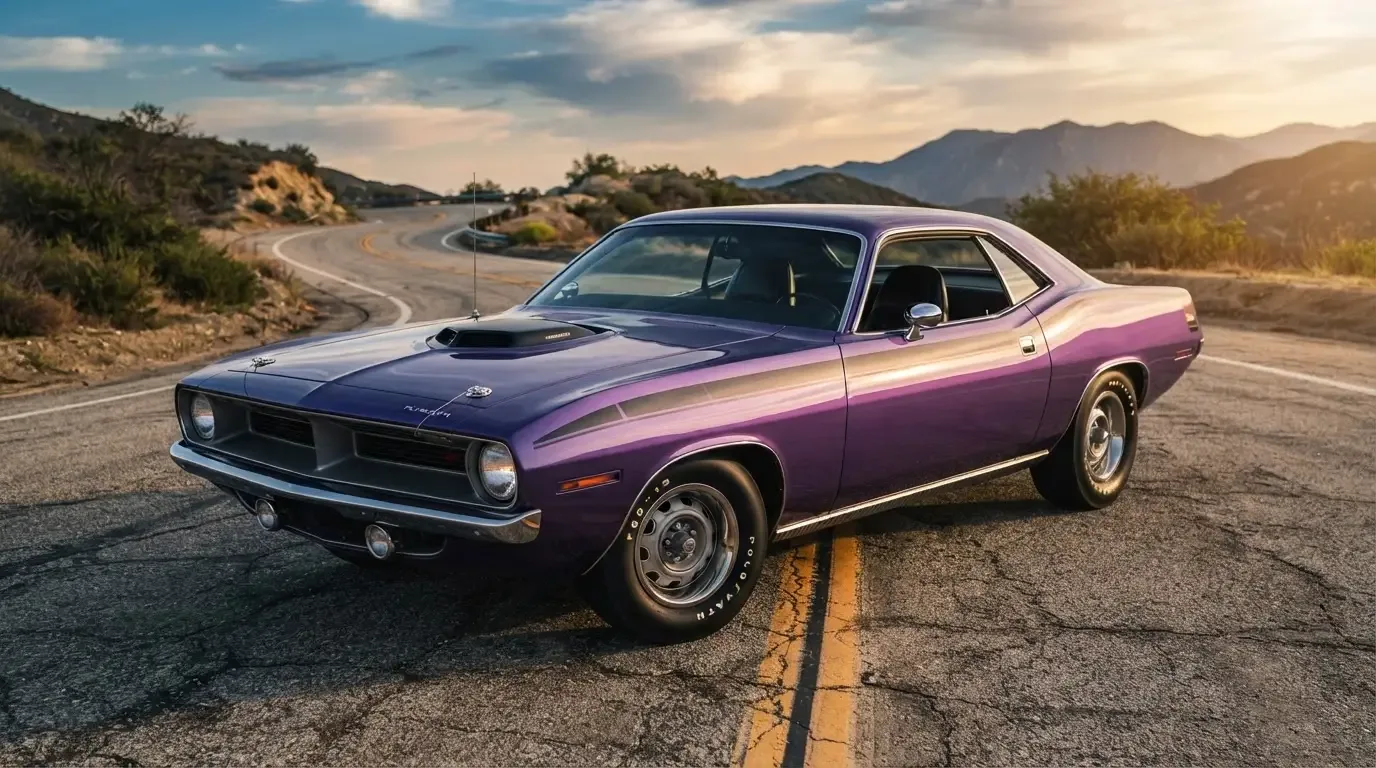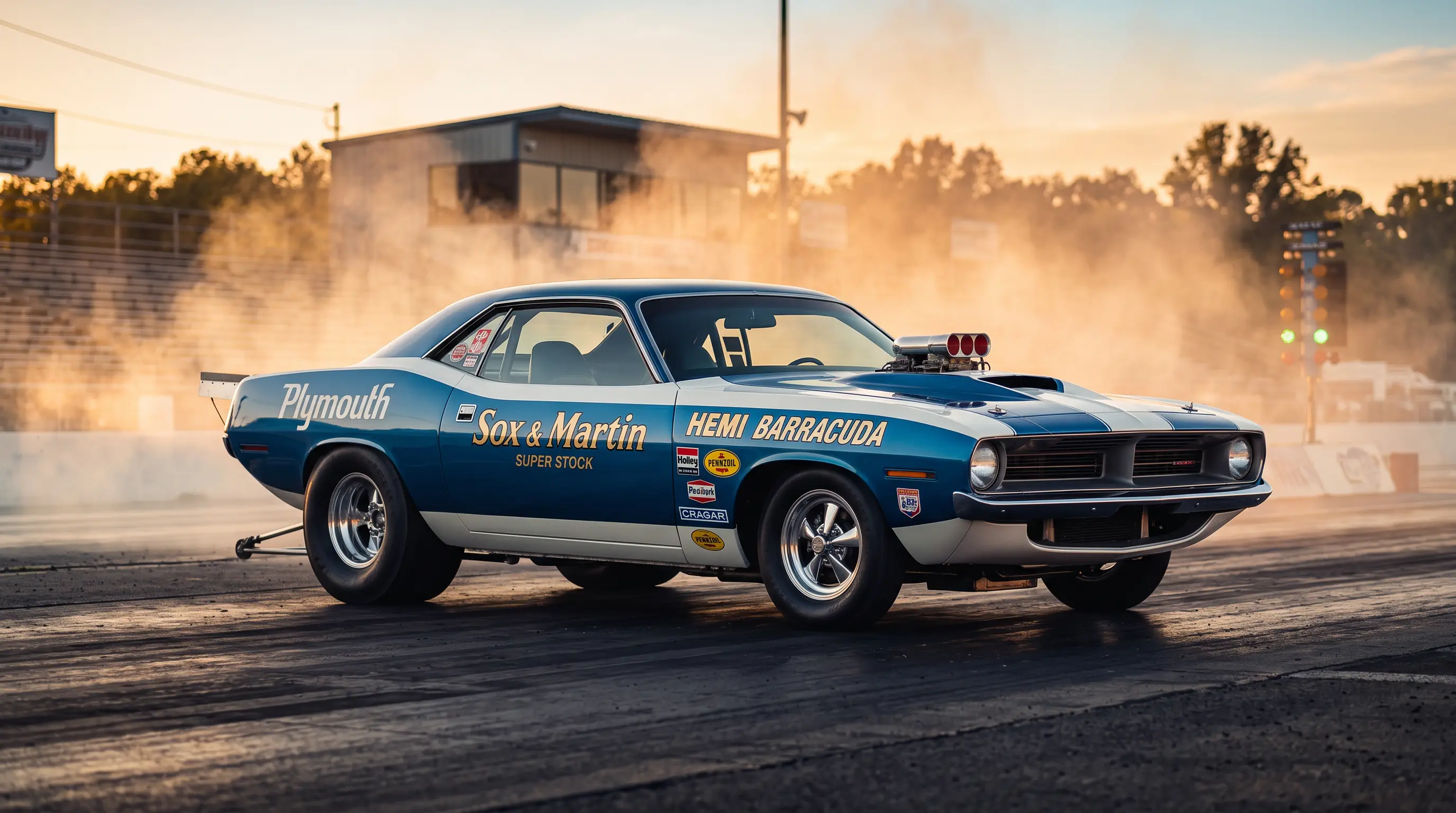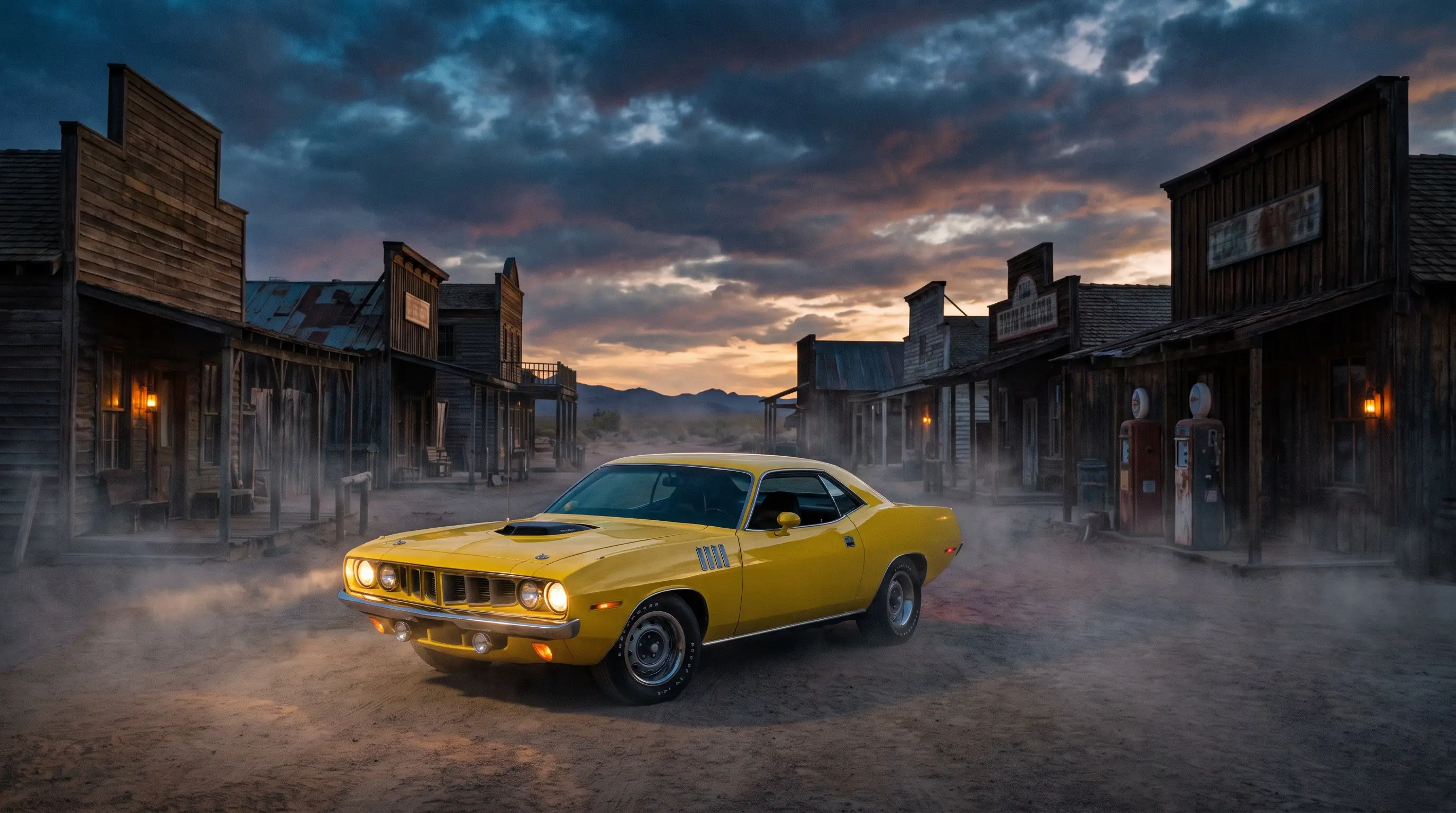
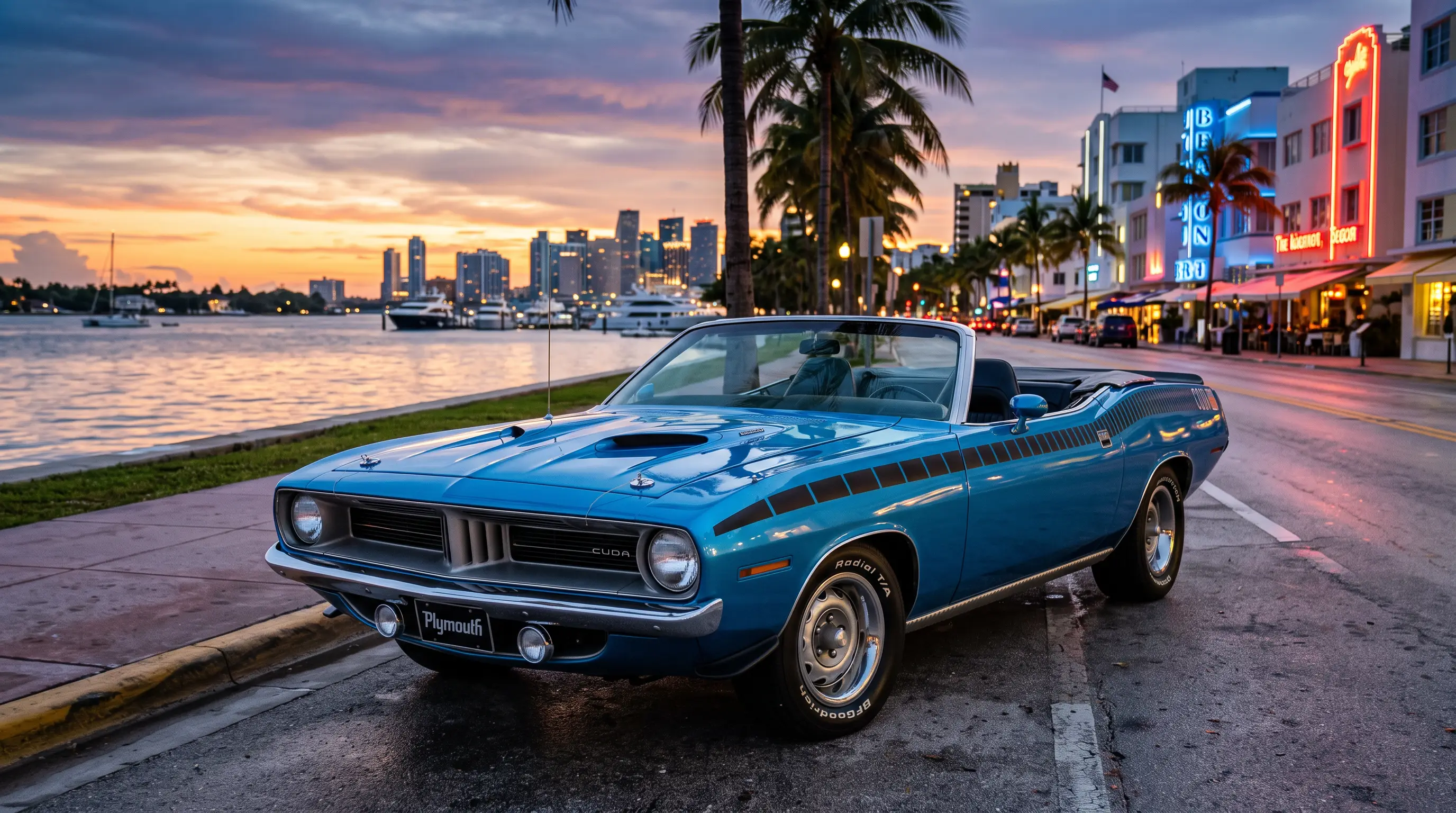
There is a particular blue that people who grew up watching television in the late nineties can still picture without prompting, a bright convertible parked on a San Francisco street corner while Don Johnson leaned against the door frame like the car belonged to him personally. That car was a Plymouth Barracuda, and for six seasons of Nash Bridges it was as much a character on the show as any of the human cast. The nash bridges cuda became one of those rare television vehicles that outgrew its original assignment and became a reason people watched in the first place.
A show built around a detective and his car
Nash Bridges ran on CBS from 1996 through 2001, and the premise was standard cop show territory. What made it stick in people's memory was the pairing of Don Johnson's laid back charisma with a car that photographed like a movie star every time it turned a corner. The Barracuda convertible, painted a bright blue that the production made no attempt to tone down for realism, gave the show a visual signature that separated it from every other detective series airing that decade.
Television producers understand something that car people already know instinctively. A hero car has to read on camera instantly, at any distance, in any light. A muscle car convertible with that much presence does the work that dialogue cannot, telling the audience who this character is before he says a word. Nash Bridges leaned into that completely, and the Cuda became inseparable from Don Johnson's performance for the length of the show's run.
What made this particular Cuda work on screen
The production used more than one example of the car over the course of filming, as most long-running shows do when a hero vehicle needs stunt work, close-up shots, and daily driving duty across dozens of episodes. The production actually built its fleet from 1970 Barracuda convertibles, dressed up to pass as the far rarer 1971 Hemi 'Cuda convertible on screen. The hero car used for Don Johnson's close-ups started life with a 340 cubic inch V8 and was later fitted with a 360 for its television duty, while other units in the fleet ran smaller 318s for stunt and background work.
What mattered for the show was not numbers matching authenticity. It was the silhouette. A Barracuda convertible has a low, wide stance and a roofline that reads as pure muscle car even to viewers who could not name the manufacturer, and that visual clarity is exactly why the production chose it. Cars used in film and television get judged by a different standard than cars judged at a concours show, and by that standard the Cuda succeeded completely.
The ripple effect on how a generation saw the Barracuda
Plenty of people who never read a muscle car magazine still know what a Barracuda looks like because of Nash Bridges, and that kind of exposure changes a car's cultural footprint in ways that specialty press coverage never could. A show airing weekly in prime time introduces a model to an audience many times larger than any car magazine's circulation, and it does so through repetition, week after week, until the shape becomes familiar even to viewers with no interest in cars at all.
That kind of exposure is part of a much larger pattern in how the Cuda earned its place in popular culture, stretching well beyond any single television show. If you want the whole picture of how the car built that reputation across decades of film, television, and music, the wider story fills in just how many touch points fed into the image most people carry around today.
A car that photographed better than it needed to
There is something honest about a production choosing a car for how it looks rather than for its collector value, and Nash Bridges never pretended otherwise. The Cuda on that show was a working prop, driven hard for stunts, repainted and repaired between seasons, and treated the way any production treats its equipment. That is a very different life than the one lived by a carefully preserved example sitting under a car cover in a private garage, and it is worth remembering that both kinds of history are legitimate parts of this car's story.
What the show gave back in return was priceless from a cultural standpoint. A generation of viewers who came of age in the late nineties associate that blue convertible with a specific feeling, a mix of confidence and easy charm that Don Johnson's character wore effortlessly, and the car absorbed some of that same feeling by simple association. Ask someone who was a teenager during the original run what a Barracuda looks like, and there is a good chance the answer in their head is still blue.
"The car never said a line of dialogue and it still stole scenes. That tells you everything about how well a shape can carry a story on its own."
- Nora Beckett
The stunt work that separated the show from ordinary television
Car chases had appeared on network television for decades before Nash Bridges arrived, but the production put real effort into making the Cuda's driving sequences feel earned rather than routine. Stunt coordinators worked the convertible through tight San Francisco streets, across the city's famous hills, and through set pieces that demanded a level of driving precision most weekly television budgets never bother to fund. That investment paid off in how the car felt on screen, confident and planted rather than tossed around for the sake of a quick cut.
Viewers who paid close attention noticed the difference immediately, even if they could not articulate exactly why the chases felt more grounded than typical television fare. A convertible with that much visual weight demands a driver who understands its weight transfer and its limits, and the show's stunt team clearly understood both, giving the Cuda sequences a texture that held up even against feature film chase scenes from the same era.
Why the connection still matters to buyers today
Television and film history adds a layer to how people evaluate old cars, even when the specific vehicle in a listing has no direct connection to a production. Buyers who grew up on Nash Bridges bring an emotional memory to the shopping process that a straightforward spec sheet cannot compete with, and sellers who understand that history have an easier time explaining why a Barracuda convertible still commands attention decades after the show left the air.
That emotional pull is worth honoring rather than dismissing as nostalgia. Cars carry meaning through the stories attached to them, whether those stories come from a family garage or a television soundstage, and a convertible Cuda painted the right shade of blue will always summon a specific memory for anyone who watched that show during its original run. If that memory has you thinking about tracking one down for yourself, you can shop classic Barracuda listings and see what is currently available, whether you are chasing the exact look from the show or simply a well kept example of the same era.
Sources and notes
- Rob's Movie Muscle: The 1971 Plymouth 'Cuda From Nash Bridges - Street Muscle
- What Happened To Nash Bridges' Plymouth Hemi 'Cuda? - Motorious
- 1970 Plymouth Barracuda (as 1971 Hemi 'Cuda) in Nash Bridges - IMCDb
- Unique of the Week: Nash Bridges' 1970 Plymouth Barracuda - CarBuzz
- The Nash Bridges 'Cuda is for sale - For B Bodies Only forum