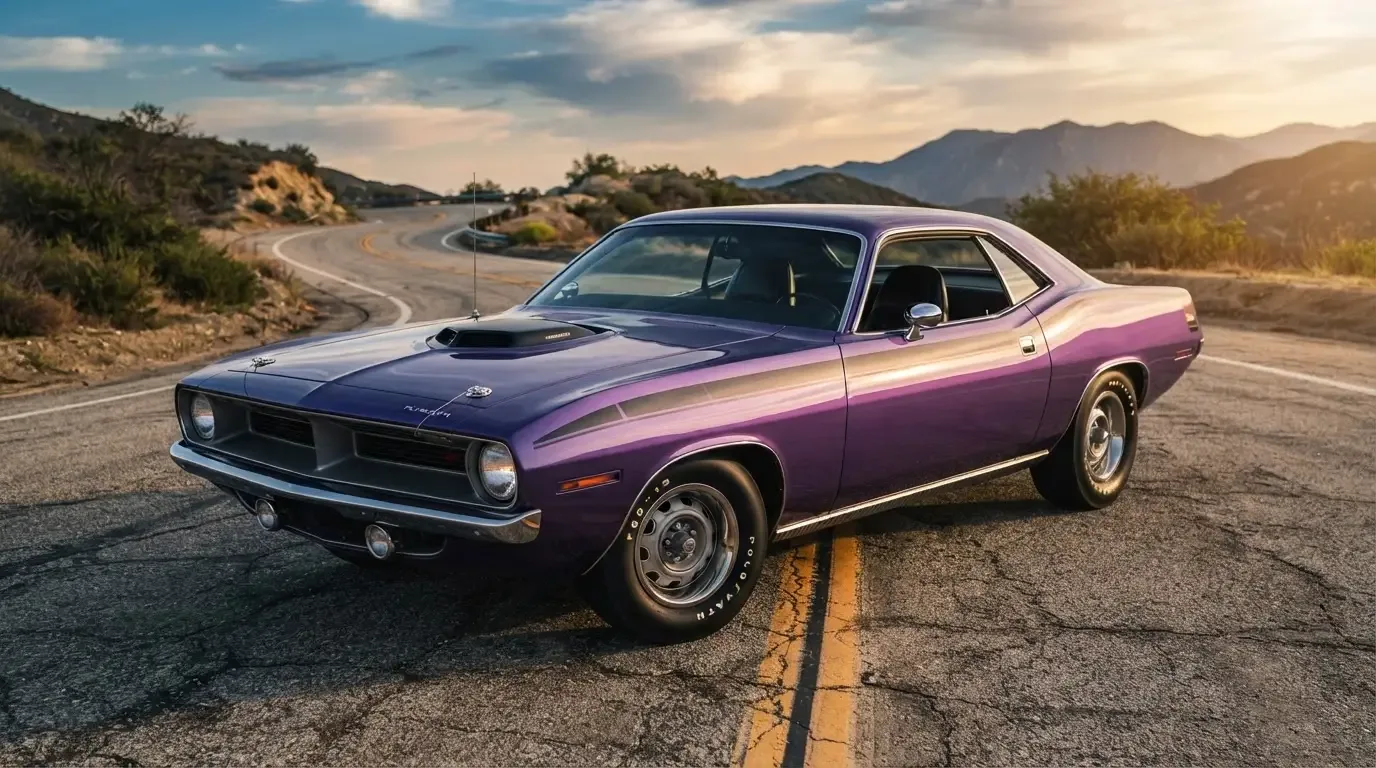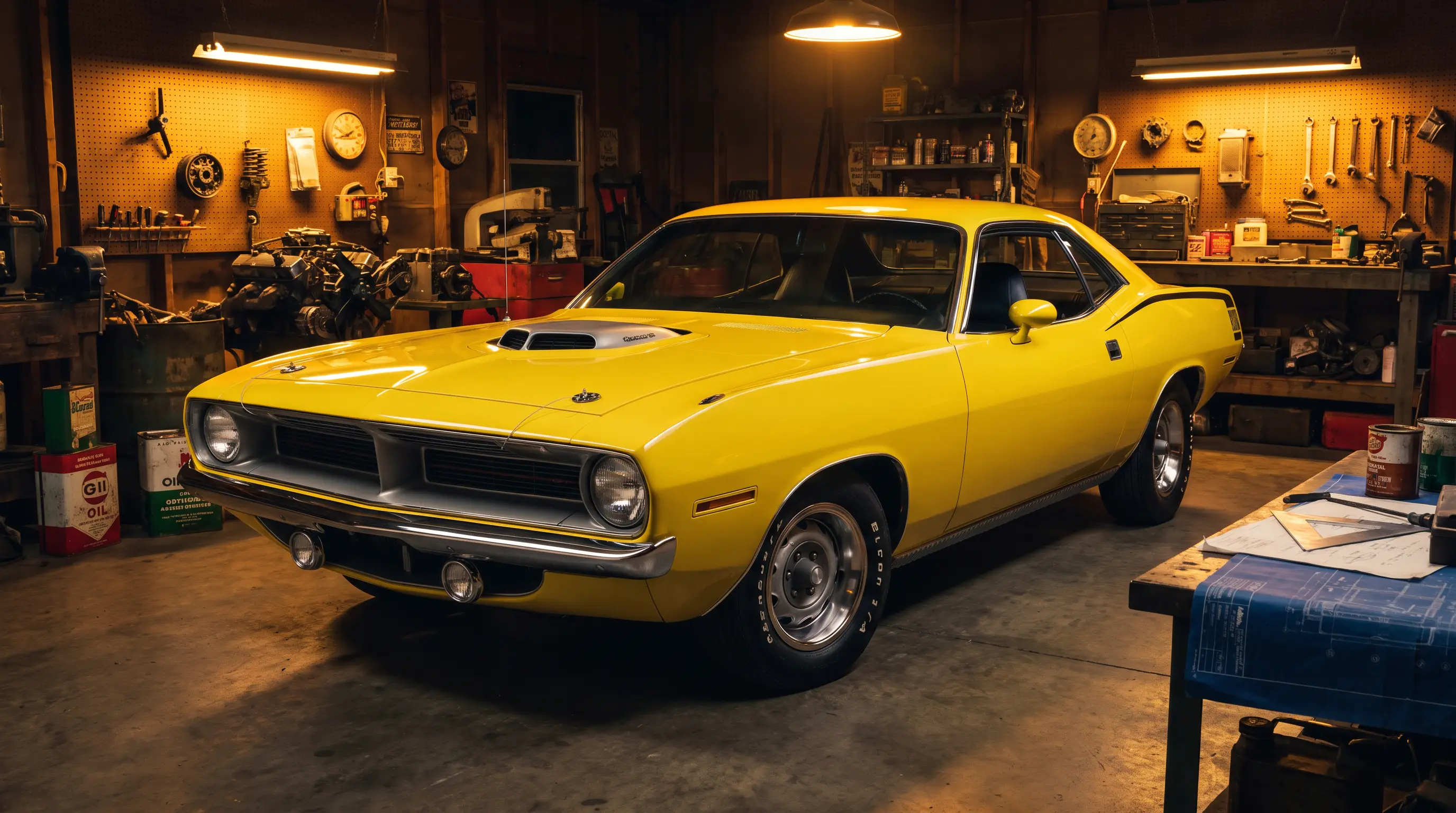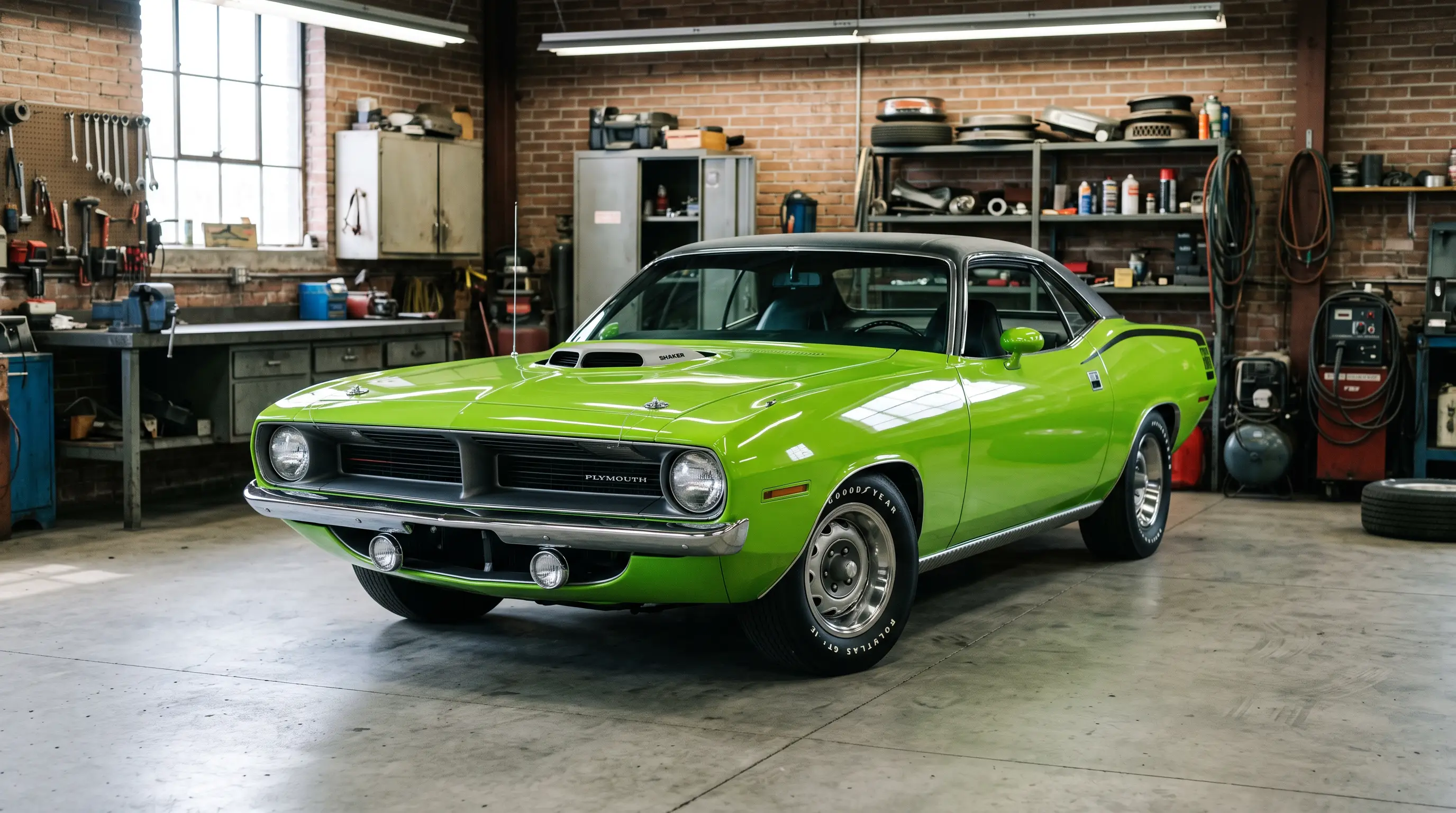
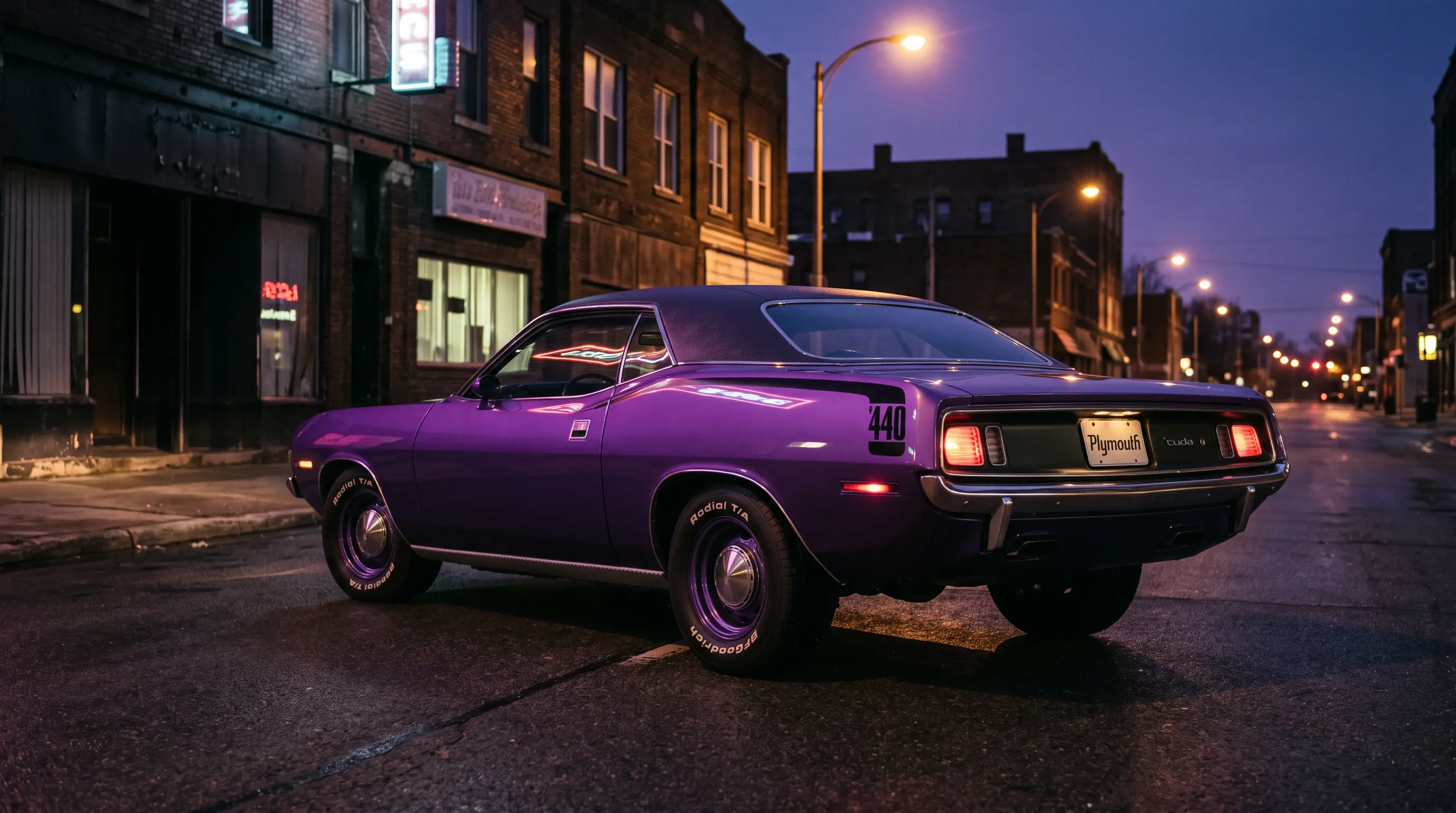
There is a photograph that circulates in Mopar circles of a teenage girl standing next to a purple Cuda outside a drive-in, squinting into the sun like the car itself was the brighter thing in the frame. Nobody seems to know her name anymore, but the color does not need an introduction. Plymouth's paperwork called it In-Violet. Most people today call it Plum Crazy, borrowing the name Dodge used for the identical formula on the Challenger, and either way it is the shade that people who do not know anything else about Plymouth Barracudas can still pick out of a parking lot.
It was never a subtle color. That was the entire idea.
A color built for a specific moment
Plymouth introduced In-Violet as part of the High Impact palette at the start of the 1970 model year, aiming squarely at buyers who were young, loud, and tired of the muted tones their parents' sedans came in. The purple was electric under daylight and almost bruised-looking under cloud cover, a color that changed its personality depending on the hour you looked at it. Salesmen either loved selling it or hated explaining it, depending on how conservative their dealership's usual clientele ran.
What makes the story worth telling fifty-some years later is how quickly the color fell out of favor and how completely it came back. By the mid-1970s, Plum Crazy Cudas were the cars people repainted white or blue because purple felt embarrassing next to the earth tones fashionable at the time. Survivors in original color are rarer for exactly that reason. The color that made the car stand out in 1970 is the same reason so few of them still wear it.
The cars that got left alone
Every original-paint Plum Crazy Cuda that survives has, in some small way, a story about someone who did not repaint it when the fashion turned against them. Sometimes that is a matter of money. Sometimes it is a matter of a car sitting in a barn through the very decade it would have been repainted, saved by neglect rather than devotion. And sometimes, rarely, it is a family that simply refused to change something a parent or a sibling had picked out on purpose.
I have talked to more than one owner over the years who inherited a purple Cuda they did not choose and did not, at first, want. The color grew on them slowly, the way an inherited house does, until it stopped being someone else's taste and became simply the car's.
Why the color still stops people
At a car show, a Plum Crazy Cuda pulls a crowd that a black or white example of the same model never quite manages, even when the black car is objectively more original or better restored. There is something about a color this committed that invites a stranger to walk over and ask a question, and that small social effect has kept the purple cars visible and remembered in a way quieter colors were not.
It is worth saying plainly that the color is not universally loved even now. Some collectors still find it garish, a period fad rather than a design achievement. But even the people who would not choose it themselves tend to admit it did something none of the era's other paint choices managed. It made the car impossible to ignore, and more than fifty years on, it still does that job.
"My father hated that color for twenty years before he admitted, quietly, that he would have missed it if we had ever painted over it."
- Nora Beckett
The people who bought it new
It is easy to imagine the Plum Crazy Cuda as a car for a certain kind of loud young man, and plenty of them did buy it that way. But dealership records and the family stories that circulate at swap meets tell a broader picture. Women bought this color new too, on purpose, sometimes over a salesman's polite suggestion that a more subdued shade might suit them better. A few of the best-documented survivors I have come across started life as a young woman's first new car, bought with her own money, in the color she wanted rather than the color someone assumed she should want.
That detail rarely makes it into the spec sheets and horsepower arguments that dominate most Barracuda writing, but it belongs in the story of this color as much as the marketing campaign does. A paint chip does not know who picked it. It just carries whatever intention put it there, and in this case a surprising number of those intentions were quietly defiant in ways nobody wrote down at the time.
What the color meant by the end of the decade
By the time the last Barracudas rolled off the line in 1974, the High Impact palette itself was gone, replaced by more conventional options as the muscle car era wound down under insurance pressure and tightening emissions rules. Plum Crazy had already been discontinued a few years earlier, which makes every surviving example a snapshot of a narrow window rather than an ongoing option buyers could return to. That narrow window is part of what gives the color its weight now. It was never going to last, and everyone selling and buying these cars in period sort of knew it.
Reading the color as documentation
For anyone shopping one of these cars now, the purple itself has become a form of evidence. A fender tag that matches an original Plum Crazy exterior tells a buyer something a repaint never can, that the car has not been quietly reinvented to chase a more fashionable look somewhere along the way. That kind of continuity carries weight with buyers who care less about horsepower figures and more about a car's honesty.
The wider palette this color belongs to has its own history worth understanding before you go looking for one. You can read our complete history covering how Plum Crazy fit alongside the other High Impact shades and why Plymouth committed to such a loud lineup in the first place.
If a purple Cuda has gotten under your skin the way it got under mine the first time I saw one in person, the search does not have to stay theoretical. You can find a classic Barracuda and start asking sellers the one question that actually matters on a car like this: is the color on it the color it left the factory wearing.
Whatever brought you to this particular shade of purple, whether it is memory, curiosity, or a photograph of a stranger at a drive-in, the color has earned its place in the story of this car. It was never quiet, and it never asked to be.