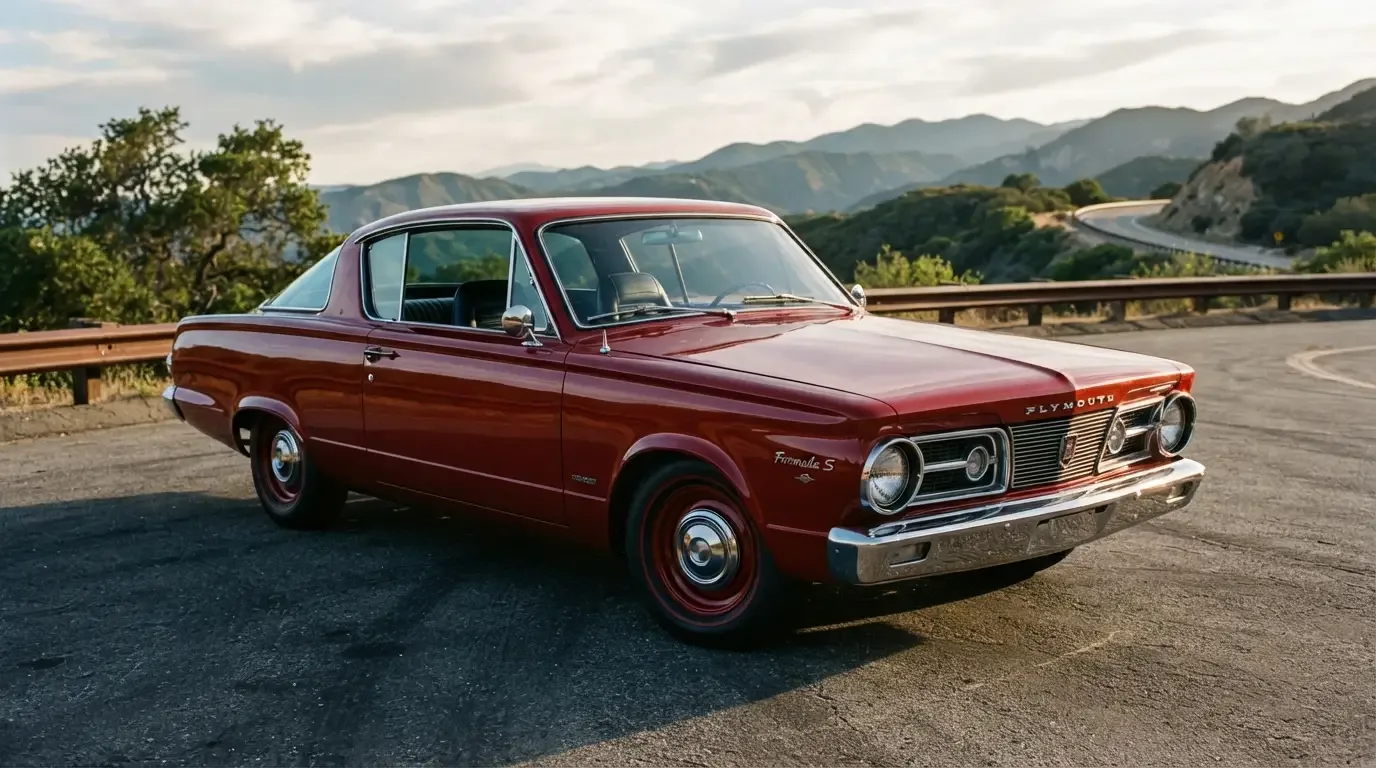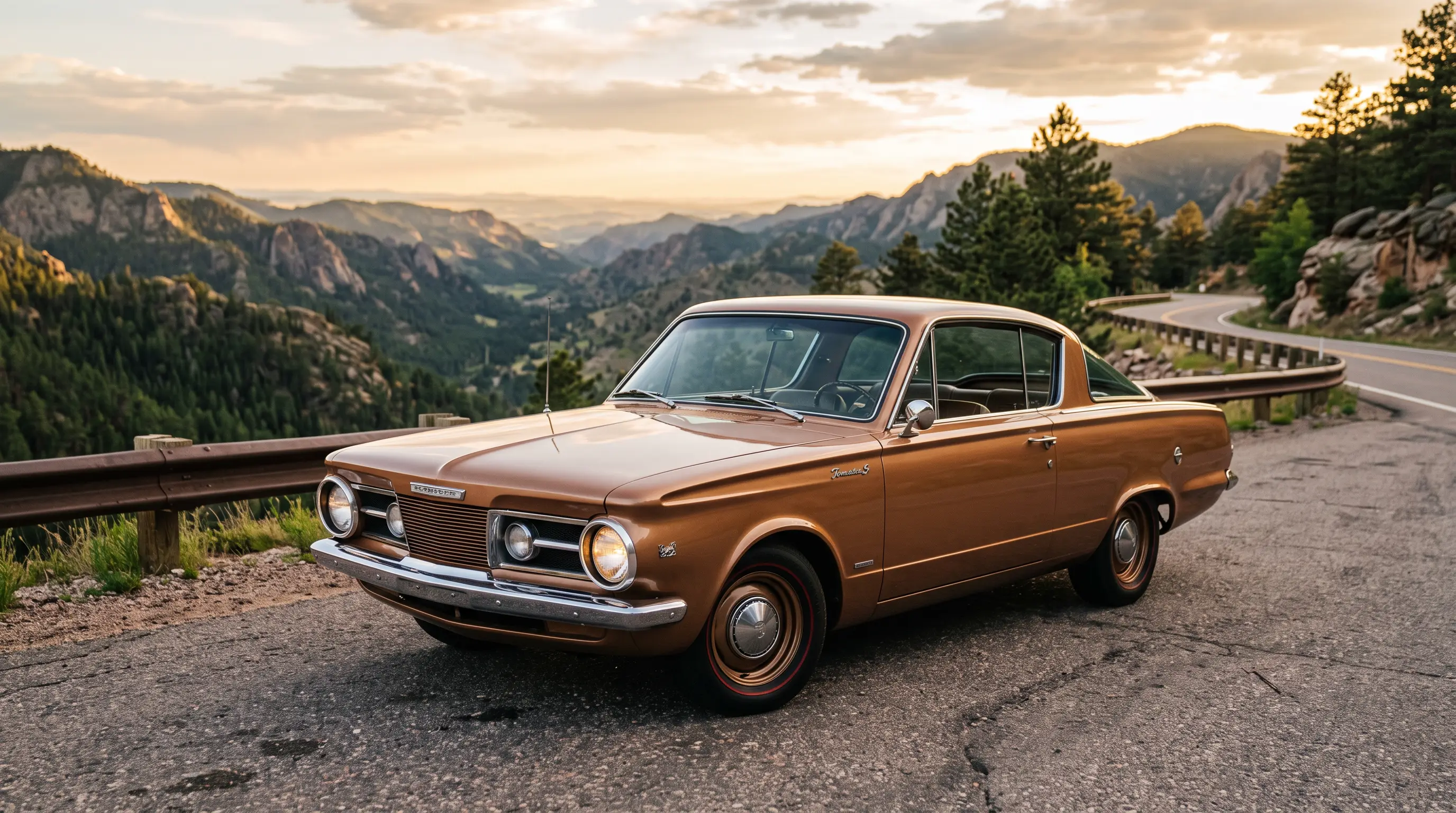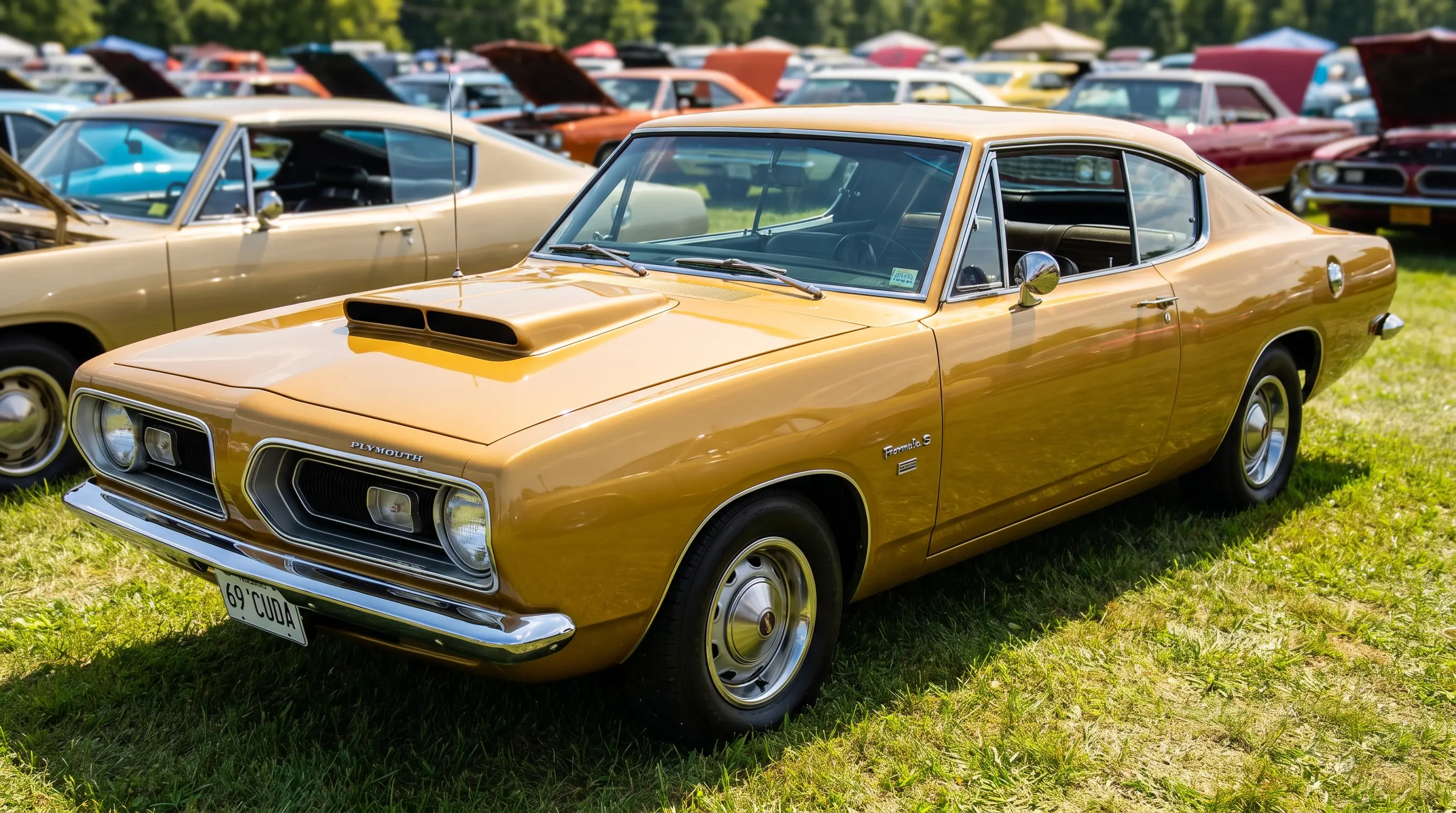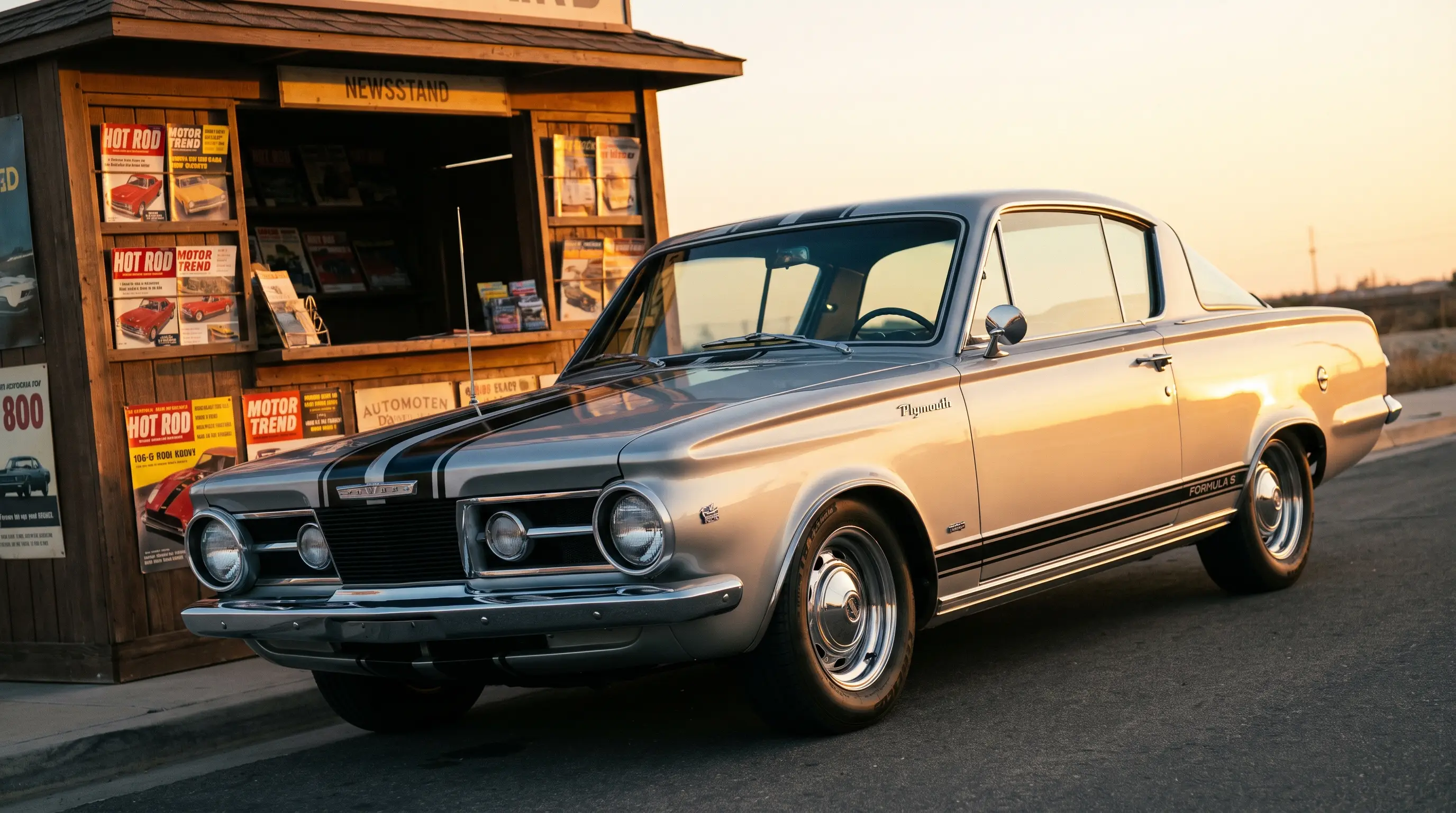
Plymouth needed the automotive press on its side in 1965. The Barracuda had beaten the Mustang to market by a couple of weeks and then watched Ford's car become a cultural phenomenon almost overnight, leaving Plymouth's fastback looking like an also ran before it had a fair chance to prove itself. The Formula S option was Plymouth's answer, and how the magazines wrote about it in the years that followed did more to shape the car's reputation than any single sales figure.
The tone shifted fast
Early press coverage of the plain Barracuda had been polite at best, noting the clever fold down rear seat and the enormous curved backlight glass while gently pointing out that a Valiant based economy car was not exactly a fighting response to the Mustang. Once the Formula S arrived with its four barrel 273 V8 and heavy duty suspension, the tone of the coverage changed noticeably. Writers who had been lukewarm on the base car suddenly had something worth testing on a real road instead of a parking lot, and they said so.
That shift mattered more than it might seem in hindsight. Automotive journalism in this era carried real weight with buyers who could not test drive every option combination themselves, and a magazine willing to say a Plymouth performance package actually worked was valuable advertising Plymouth did not have to pay for directly.
What specifically won them over
The recurring theme across period coverage was balance rather than raw speed. Nobody claimed the Formula S was the fastest thing on the road, and a few writers were blunt about faster options existing from other manufacturers for similar money. What kept showing up in the copy was praise for how composed the car felt through a corner, a direct result of the suspension package Plymouth bundled with the engine upgrade. Writers noted the firmer springs, the larger front sway bar, and the general sense that the car had been sorted as a whole rather than treated to a horsepower bump and left otherwise unchanged.
The Mustang comparison nobody could avoid
Every Formula S review from this period ends up, directly or indirectly, being a comparison to the Mustang, and it is worth being honest about how that comparison usually landed. The Mustang had the sales numbers, the cultural momentum, and a far wider range of body styles and options. The Formula S rarely won a head to head on those terms. What it did win, according to several contemporary writers, was a case for being taken seriously as a driver's car rather than dismissed as a follower. That is a narrower kind of praise, but it is a real one, and it followed the car through the rest of its production run. The Barracuda Formula S story covers how that reputation held up as the car evolved through later model years.
Advertising versus editorial
Plymouth's own advertising for the Formula S leaned hard on youth culture and competition imagery, autocross courses, timed runs, young drivers in driving gloves. The editorial coverage in the buff books was more measured, and the two do not always line up neatly. Reading period magazine reviews alongside period print ads is a useful exercise for anyone trying to separate marketing language from what independent testers actually experienced behind the wheel. The ads promised excitement. The reviews, for the most part, delivered a more specific and more credible verdict, one grounded in suspension tuning and quarter mile figures rather than pure image.
"An ad tells you what a company wants you to feel. A road test tells you what a stranger with no stake in the sale actually felt behind the wheel. With the Formula S those two things were closer together than with most cars from this era, which is rarer than people assume."
- Patrick Walsh
Regional and specialty press told a fuller story
National buff books were not the only voices covering the Formula S, and it is worth remembering the regional and specialty automotive press had its own take, often less constrained by the same national advertising relationships that shaped the bigger magazines. Local motoring columns and smaller enthusiast publications sometimes gave the Formula S a more critical read, pointing out where the four barrel 273 struggled against stiffer competition once a car was loaded down with options and passengers, or where the interior trim felt cheaper than the exterior badges suggested it should. That more mixed coverage rarely gets quoted today, because it is harder to find and less flattering to the car's modern reputation, but it is a useful corrective against treating every period review as uniformly glowing. The Formula S earned real praise. It did not get a completely free pass from every publication that tested it.
Why the reception outlasted the sales numbers
The Barracuda, Formula S included, never outsold the Mustang during its production run, and pretending otherwise would be dishonest. But sales figures and press reputation are not the same measurement, and the Formula S built a reputation among road testers that survived long after the sales race was decided. That reputation is a large part of why the model still draws serious collector interest today, decades after the last one left a Chrysler assembly line. The full story of the broader Barracuda lineage puts the Formula S chapter into context against the model's entire run, from the original 1964 fastback through the very different third generation cars that came after.
For anyone whose interest in the Formula S has been rekindled by its press history, there are genuinely well documented examples among the classic Barracudas on the market right now, cars that carry the same suspension tuning and engine work that impressed those skeptical magazine writers sixty years ago.
What a modern reader should take from those old columns
Reading period magazine coverage today requires a bit of translation work, since the writers were addressing an audience comparing the Formula S against cars that have long since vanished from the road. A modern reader benefits from treating those old reviews less as a verdict on how the car stacks up against anything available now and more as a snapshot of engineering priorities at a specific moment. What the writers valued, composure over raw numbers, a sorted chassis over a headline spec, still tells a buyer something useful about what to look for in a well kept example today. A Formula S that still exhibits the balance those testers praised, tight steering response, controlled body motion through a corner, is a car that has been maintained close to its original specification. One that feels vague and soft has likely lost some of the very qualities that earned it those reviews in the first place, whether through worn bushings, sagged springs, or a suspension that has quietly drifted out of factory tolerance over decades of use.
Sources and notes
- Vintage C&D Road Test: 1965 Mustang, Barracuda, Corvair - Barracuda Formula S - Curbside Classic
- 1965 Plymouth Barracuda S Road Test - Car Life Magazine (reprint)
- Vintage CL Road Test: 1968 Plymouth Barracuda 340-S - Curbside Classic
- Plymouth Barracuda - Wikipedia
- Car of the Week: 1966 Plymouth Barracuda Formula 'S' - Old Cars Weekly