
Ask who drew the Mustang II and you will usually get one of two answers: "Ghia did it" or "some committee in Dearborn." Both are partly right and both miss the interesting part. The Mustang II design came out of a studio fight inside Ford, with the Ford-owned Ghia shop in Turin feeding ideas into it, and two production designers ended up with their names on the finished car. One drew the fastback. The other drew the notchback. And the boss picked the winners himself, twice.
Car Features
7 min read
Who Designed the Mustang II, and Where Ghia Came In
Buck Mook drew the hatchback, Dick Nesbitt the notchback, and Ford's Ghia studio in Turin set the theme. How the Mustang II body was really chosen.
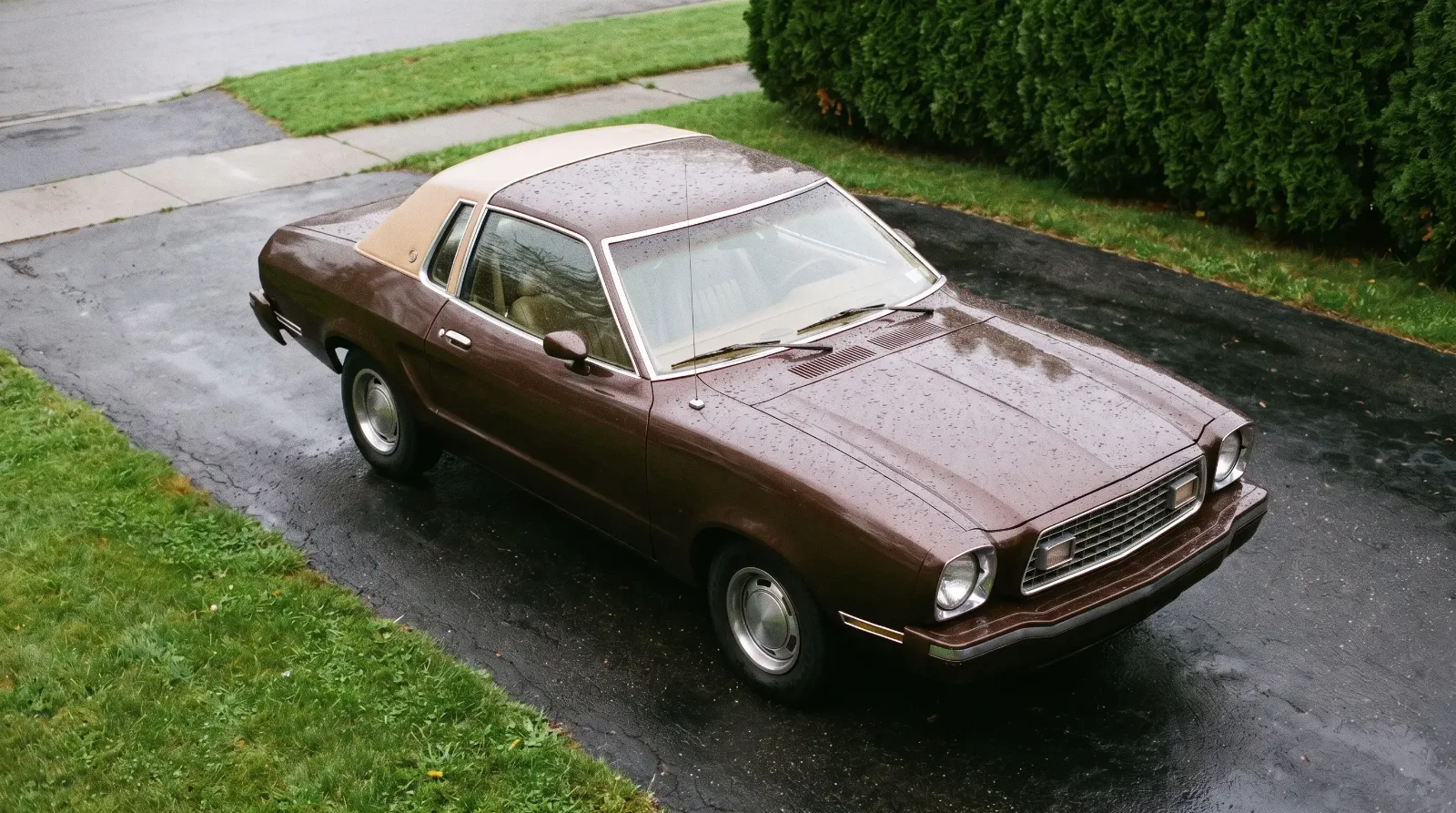
The program behind it, from the downsizing decision to the Car of the Year win, gets the full story elsewhere. Here I want to stay on the body: who put the lines on it, and why the car looks the way it does.
The brief the designers were handed
Lee Iacocca pushed for a smaller Mustang at a management meeting in November 1969, and his directives were simple to state and hard to execute: launch it as a 1974 model, and make it an upscale "little jewel." In July 1971 Ford settled the platform question, picking the Pinto-based program, code-named "Arizona," over a Maverick-based one called "Ohio." Stuart M. Frey was the chief engineer.
That platform choice set the box every designer had to work in. The Mustang II rode a 96.2-inch wheelbase and measured 175.0 inches long, about 19 inches shorter than the 1973 car and roughly 4 inches narrower. From a body man's point of view, that is the whole problem. The classic Mustang look is long hood, short deck, and you need wheelbase to pull it off. Shrink the wheelbase and the long hood starts to eat the cabin. Every proposal for this car was really an argument about how to fake proportions the chassis did not have.
Where Ghia came in
Ford bought the Ghia design house in Turin in 1970. The exact terms of that deal, how much of the company changed hands and when Ford took the rest, are something I have only seen in passing and would not quote. What matters for this car is what Ford did with its new Italian studio.
In mid-1971 Ford asked Ghia for two Mustang II proposals, a fastback and a hardtop. The Ghia hatchback is the one that moved the needle. It set a sleeker theme for the whole program, and it is where the molded-in faux side scoop came from, the little sculpted cove on the side of the production car that nods back to the 1960s Mustangs without doing anything. Tom Tjaarda, the Ghia designer best known for the De Tomaso Pantera, has "Mustang II proposals (Ghia)" in published lists of his work, but those lists date the entry to 1979, years after this body was settled. I have found nothing that puts him on the 1971 proposals. If someone has a drawing that does, I would like to see it.
By November 1971 a hardtop model existed with a front end almost identical to the 1974 production car. So the face of the Mustang II was close to settled within months of Ghia's involvement, even though the fight over the body behind it had a long way to go.
The August 1971 Mustang II design competition
Gene Bordinat, Ford's design chief, ran the program the way Ford had run the original Mustang: studios against each other. In August 1971 he set four teams to work, with about three months to produce their proposals and presentations due in November. First place went to a fastback from Al Mueller's Lincoln-Mercury studio. The designer credited with drawing that fastback is Howard "Buck" Mook of the Lincoln-Mercury staff, and it is his fastback that Iacocca approved.
That settled the hatchback. It did not settle the notchback. In February 1972 Iacocca went back to a proposal that had not won, a notchback from Don DeLaRossa's Advanced Design studio, itself inspired by the Ghia work, and revived it. Dick Nesbitt developed that formal notchback into the production car. So the two Mustang II bodies came from two different studios, chosen months apart, by the same man.
| When | Who | Studio | What it led to |
|---|---|---|---|
| Mid-1971 | Ghia design staff | Ghia, Turin (Ford-owned) | Fastback and hardtop proposals; the sleeker theme and the faux side scoop |
| August 1971 | Gene Bordinat (organizer) | Ford Design | Internal competition between four studio teams, presentations due in November |
| Late 1971 | Al Mueller (studio head), Howard "Buck" Mook (designer) | Lincoln-Mercury | Winning fastback, approved by Iacocca as the 2+2 hatchback |
| November 1971 | Not credited in the sources | Not stated | Hardtop model with a near-production front end |
| February 1972 | Don DeLaRossa (studio head), Dick Nesbitt (designer) | Advanced Design | Ghia-inspired notchback revived by Iacocca, developed into the production hardtop |
"People like to say a committee designed the Mustang II, like that's an insult. Every good car I have ever worked on had more than one set of hands in it. The trick is somebody with taste deciding which hands to listen to. Iacocca picked the fastback from one studio and the notchback from another, and honestly, the notchback was the better call."
Jim Vasquez
Reading the body: what each hand left on the car
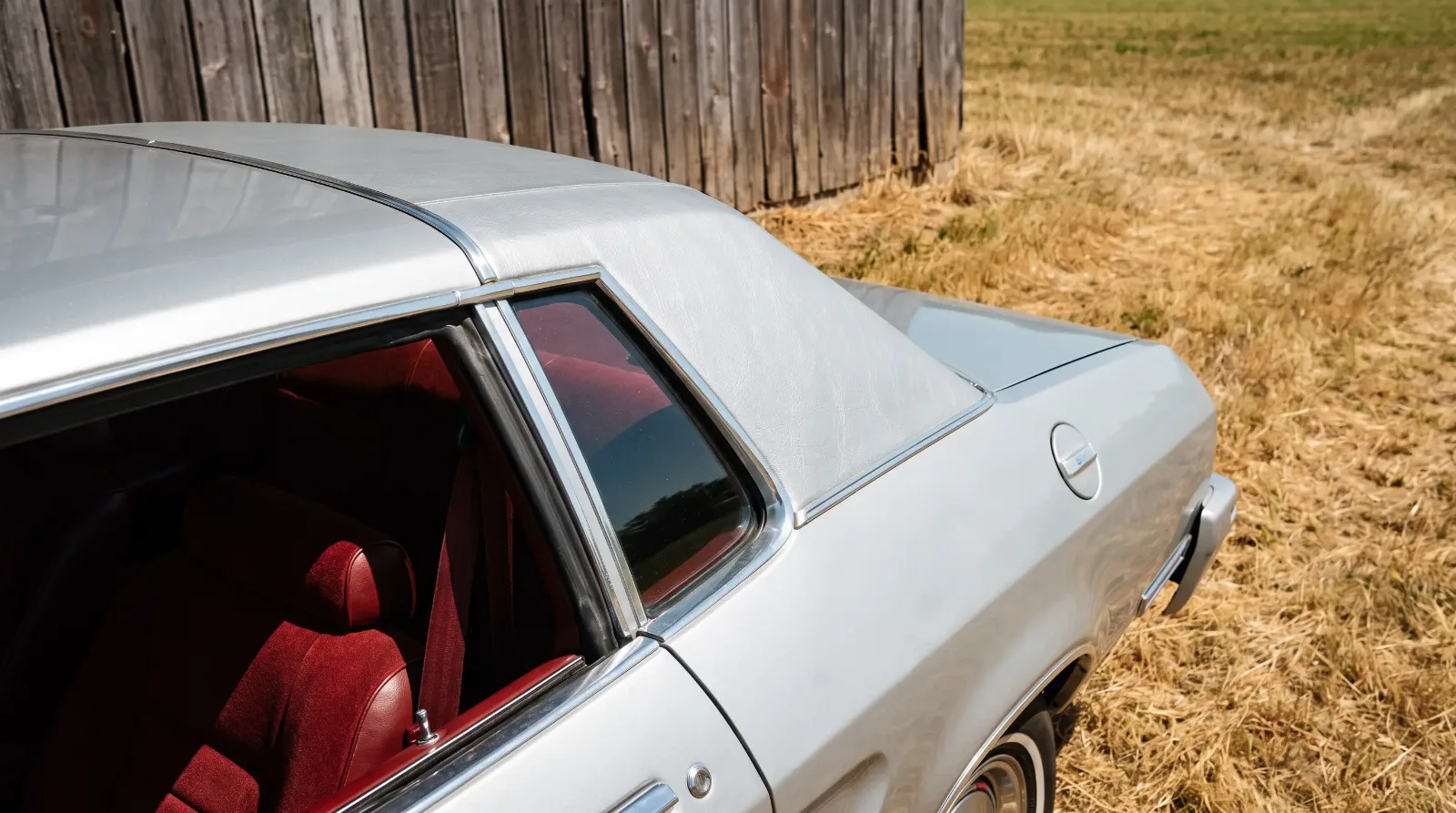
Walk around a 1974 car and you can see the split. The 2+2 hatchback is the Lincoln-Mercury fastback: the roof runs all the way back in one long sweep, and that sweep is doing the work the short wheelbase cannot, stretching the car visually. The faux scoop sits low on the side, molded right into the sheet metal. It is a cue, not a duct. I have no problem with that. A scoop that tells you what family the car came from is honest enough, as long as nobody pretends it feeds anything.
The notchback is a different animal. Nesbitt's formal roofline reads as a small personal-luxury coupe, and that is exactly what Iacocca's "little jewel" brief asked for. The luxury model, the Ghia, used the notchback body. The Ghia trim is its own subject, but my read from the design side is simple: the body that grew out of a Ghia-inspired proposal is the one that got the Ghia badge.
There was no factory convertible, just the two-door notchback and the three-door hatchback. Before launch, Ford also showed a targa-roofed concept, the Mustang Sportiva II, built from a preproduction 1974 car. And the design did not sit still after 1974. To fit the V8 that returned for 1975, Ford reworked the front fenders, engine bay and header panel, and the grille opening got thinner and the grille itself shallower on every model. If you want the mechanical side of why that front end had to change, read up on the engines. On the body, that thinner grille is the easiest way to tell a 1974 nose from a later one.
So who designed the Mustang II?
If you need one name per body, it is Buck Mook for the hatchback and Dick Nesbitt for the notchback. If you need the full credit list, add Al Mueller and Don DeLaRossa as the studio heads, Gene Bordinat as the man who set up the contest, the Ghia studio in Turin for the theme and the scoop, and Lee Iacocca for making both final calls. That is a crowded byline, but it is an accurate one.
What Ghia did not do is design the Mustang II on its own, and that is the myth worth retiring. Ghia shaped the direction. Dearborn studios drew the production bodies. The badge on the luxury model has led a lot of people to assume more than the record shows. There is more on the Mustang design cars and studio contests elsewhere, and the Mustang II sits in a long line of them.
Put the car next to its relatives across every classic Mustang era and it is easy to call it the odd one out. From the design side I see it differently. It was a body built around a chassis nobody would have picked for a Mustang, by people who knew it, and they still got a recognizable pony out of it. That takes more skill than drawing a long-hood car on a long wheelbase.
Sources and notes
Related Reading
Have a
Ford Mustang
for Sale?
Reach thousands of serious classic car collectors across the US.
Sell It Here →
Selling a classic? Here's how: compare the places to sell classic cars
Are You a Classic Car Dealer?
List your full inventory and connect with targeted classic car buyers.
Join as a Dealer →
#Ford Mustang
#mustang ii
#ford design
#car design history
#classic Mustang history
#Mustang II Ghia
#Ghia
About the author
Jim Vasquez
Southern California hot rod and custom car builder with roots in the traditional kustom kulture scene.
Related Listings - Ford Mustang
Comments
Be the first to comment on this article.