
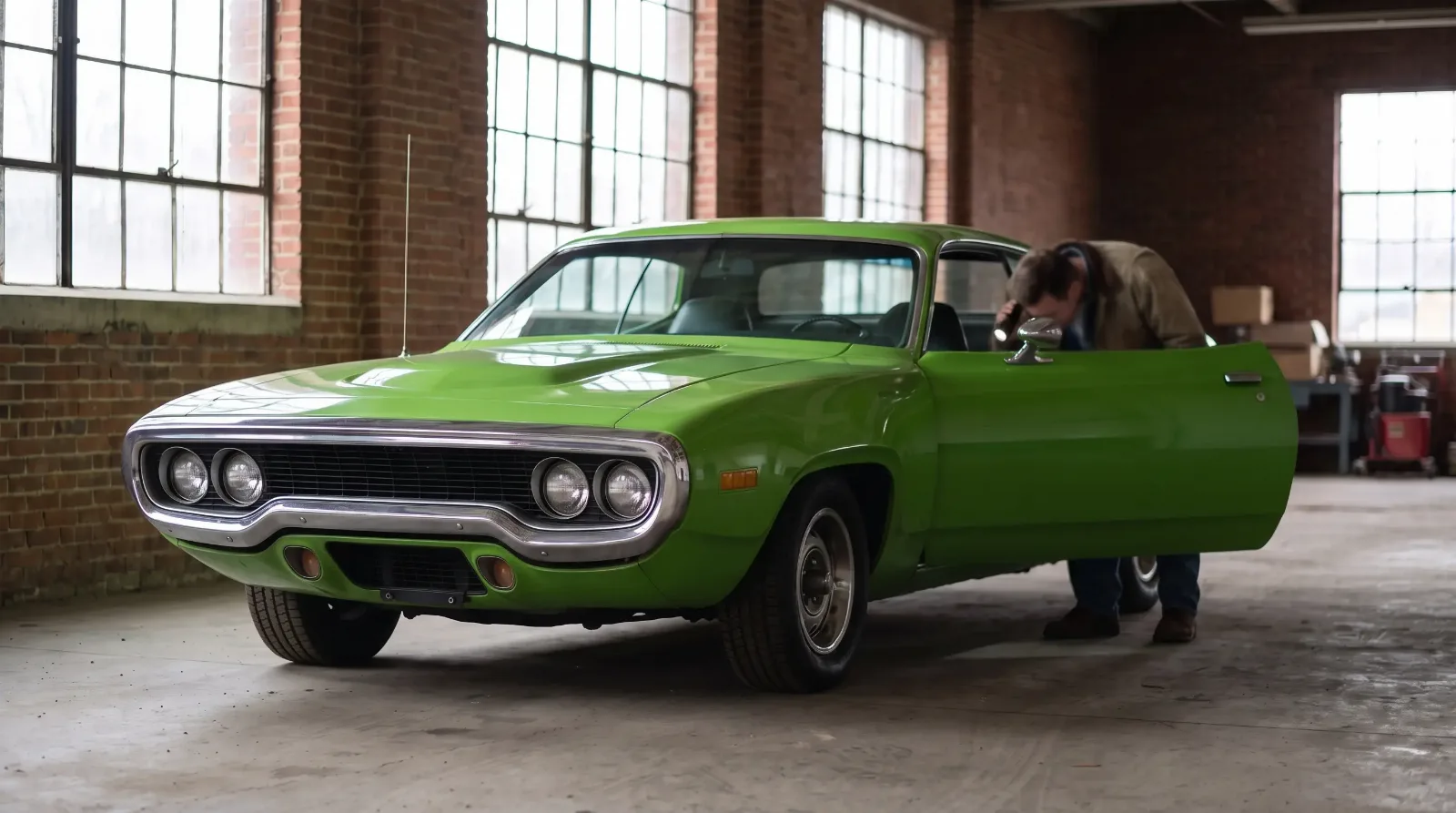
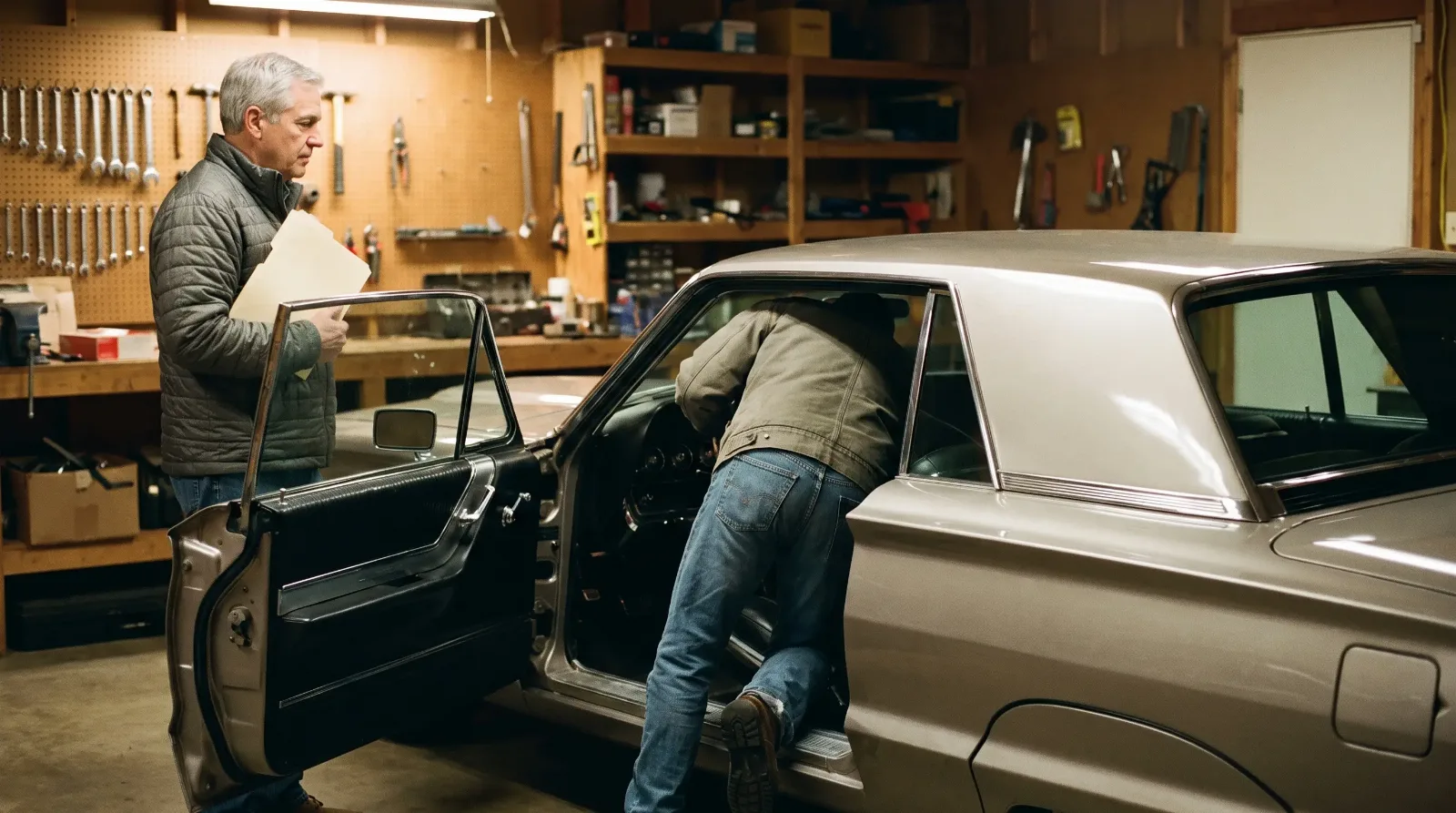
Two consignment dealers look at the same 1971 Plymouth Road Runner, a 383 four-speed car in honest driver condition with a decent folder of receipts. One suggests listing it at $62,000. The other says $54,000. Neither number is a lie, and neither is a valuation in the sense an appraiser would use the word. Each is a pricing strategy, built from the same raw materials and bent by what the dealer wants to happen next. If you want to understand how dealers value classic cars when they take them on consignment, start with that idea: the suggested asking price is an opening position, and the figure that matters to you is the one left after the sale and the fees.
Market & Values
8 min read
How Consignment Dealers Price Your Classic Car
Sold comps, condition tier, paperwork and price guides: how a consignment dealer sets an asking price, and how to find your real net figure.
This article walks through how a consignment dealer gets to its numbers and how to test them. If you are still deciding whether consigning a classic is the right route at all, the parent guide covers the contracts and the alternatives.
Three numbers, not one
A consignment conversation produces three figures, and owners often hear them as one. The asking price is what appears on the listing. The floor, sometimes called the reserve or the minimum, is the lowest sale price you have authorized in writing. The net to seller is what reaches your bank account after commission and any charges. A dealer can be generous on the first, quiet on the second and vague on the third, and the third is the only one you can spend.
Here is how the three relate on an illustrative Road Runner, using an 8% commission. These are example figures for the arithmetic, not a market valuation.
| Figure | Example | What sets it | Who controls it |
|---|---|---|---|
| Asking price | $58,000 | Comps, condition, documentation, plus room to negotiate | Set jointly; the dealer usually proposes it |
| Likely sale price | $54,000 | Where serious buyers actually land after inspection | The market |
| Floor (written minimum) | $51,000 | Your lowest acceptable sale price | You, in the agreement |
| Commission at 8% | $4,320 on $54,000 | The contract | Negotiable before signing |
| Net to seller | $49,680 at $54,000; $46,920 at the floor | Sale price minus commission and charges | The result of all of the above |
Run that calculation before you sign, and run it at the floor, not at the asking price. A dealer quoting a high asking price to win the consignment does not change what you net if the car sells near the floor. The commission rate and any per-month charges do, which is why it pays to understand what the fee schedule adds up to over 30, 60 and 90 days.
How dealers value classic cars: the comps first
A competent dealer starts with sold comparables, meaning completed sales of the same model in similar specification and condition. Sold prices matter. Asking prices do not, or at least not much. The internet is full of Road Runners listed at numbers nobody has paid, and a dealer who prices off asking comps is pricing off other people's optimism. Ask which comps the dealer used and whether each one actually sold. Auction results are public and easy to verify. Dealer sales and private sales are harder, which is where an experienced dealer's own records earn their keep.
Specification narrows the field quickly. On a 1971 Road Runner, the engine is the first sort. The 383 was the standard engine, with the 340, the 440 Six Barrel and the 426 Hemi as options, and those cars trade in very different ranges. Transmission, rear axle, factory air, color and whether the drivetrain is original all shift the comp set further. A dealer who quotes you a number from a Hemi sale for a 383 car is either careless or flattering you.
Then the dealer adjusts for time. A comp from three years ago reflects a different market. In my reading, sales from the last 12 to 18 months are the usable core, with older data used only to show direction.
Condition tier and the paper file
After the comps, the biggest adjustment is condition. Most price guides use the Hagerty scale, from #1 concours down to #4 driver, and Hagerty adds #5 for a project and #6 for a parts car. Hagerty also says the vast majority of collector cars are #3. That last point is the one owners resist. A clean, well-kept car with an older restoration is usually a #3, not a #2, and the price difference between those tiers is large enough to decide whether a listing sells in weeks or sits for months.
Price guides are a cross-check, not the answer. A dealer will usually look up the guide value for your car's tier, compare it with the recent sold comps, and trust the comps where they disagree. Guides lag fast-moving segments and can run ahead of soft ones.
Documentation moves the number within a tier. A build sheet, broadcast sheet or fender tag decoding, original sales paperwork, ownership history and receipts for major work all reduce a buyer's risk, and buyers pay for reduced risk. On a muscle car with an optional engine, paper that proves the drivetrain is original can be worth more than a fresh coat of paint. A dealer reading your file is asking one question: how much of this car's story can a buyer verify without taking our word for it.
The dealer's own room in the number
A consignment dealer's suggested asking price includes space for negotiation, because almost every buyer of a classic expects to negotiate. How much space depends on the segment and the dealer's habits. A dealer who routinely accepts, say, 6% to 8% under asking will price accordingly. Ask what the last few comparable consignments listed at and what they sold for. The gap between those two figures is the dealer's negotiating habit, expressed in dollars.
The commission structure shapes the advice too. On a percentage commission, a faster sale at a slightly lower price can earn the dealer nearly as much as a slow sale at a higher one, with less floor time and less effort. That is a mild pull toward realistic pricing, which is not a bad thing. On a net-price arrangement, where the dealer keeps whatever the car brings above your figure, the pull runs the other way: the dealer wants your net low and the asking price high, and you should look hard at both.
A consignment price is also different from a dealer's cash offer. When a dealer buys a car outright, it prices in its reconditioning cost, holding cost and margin, which is why how a dealer builds a cash offer instead leads to a lower number than a consignment estimate on the same car. If a consignment dealer floats a figure that looks like a cash offer, it may be telling you something about how it expects the car to sell.
"The asking price is marketing. The floor is a promise you make to yourself. The net is the only figure I would put in a spreadsheet, and it is the one most consignment conversations skip."
David Mercer
How to push back on a suggested price
Arrive with your own comps. Three to five recent sold results for the same specification, with condition noted, change the conversation from the dealer's opinion to a shared set of facts. If the dealer's number is higher than your evidence, ask for the sales behind it. A high number with no sold comps is a sign the dealer is pricing to win the consignment and plans to suggest a reduction in a month.
Ask the dealer to state your net in writing at three points: the asking price, its expected sale price and your floor. Set the floor as a written number, and require your written approval for any sale below it. Agree in advance when a price review happens, for example after 30 days with no serious inquiries, so a reduction is a planned step rather than a phone call that catches you off guard.
Shop the number. Talking to two or three classic car dealers about the same car costs nothing and shows you quickly whether one estimate is an outlier. If the estimates cluster and the fees still leave less than you want, the other path is to list your classic yourself and keep the commission, accepting that the screening, showings and payment handling become your job.
For the Road Runner owner with two quotes eight thousand dollars apart, the useful question is not which dealer likes the car more. It is which one can show sold comps that support its number, and what each one's contract leaves in the owner's account at the floor.
Sources and notes
Related Reading


Have a
Classic Car
for Sale?
Reach thousands of serious classic car collectors across the US.
Sell It Here →
Selling a classic? Here's how: compare the places to sell classic cars
Are You a Classic Car Dealer?
List your full inventory and connect with targeted classic car buyers.
Join as a Dealer →
#classic car values
#classic car consignment
#selling a classic car
#classic car dealers
#sold comps
#condition rating
#consignment pricing

About the author
David Mercer
Classic car market analyst with two decades of experience tracking collector car valuations, auction results, and investment trends.

Comments
Be the first to comment on this article.