
Classic car brake restoration is the one job on the car where a shortcut can hurt somebody. The brakes on a car that has sat for twenty years look fine from the outside and are rotten on the inside: rusted steel lines, pitted wheel cylinder bores, a master cylinder full of sludge, and hoses that have swollen shut. Treat it as the most important part of your mechanical restoration, because it is.
Restoration & Tech
6 min read
Brake System Restoration: Lines, Wheel Cylinders, Master Cylinder
Classic car brake restoration step by step: replace lines and hoses, rebuild wheel cylinders and the master cylinder, then bleed and test the system safely.
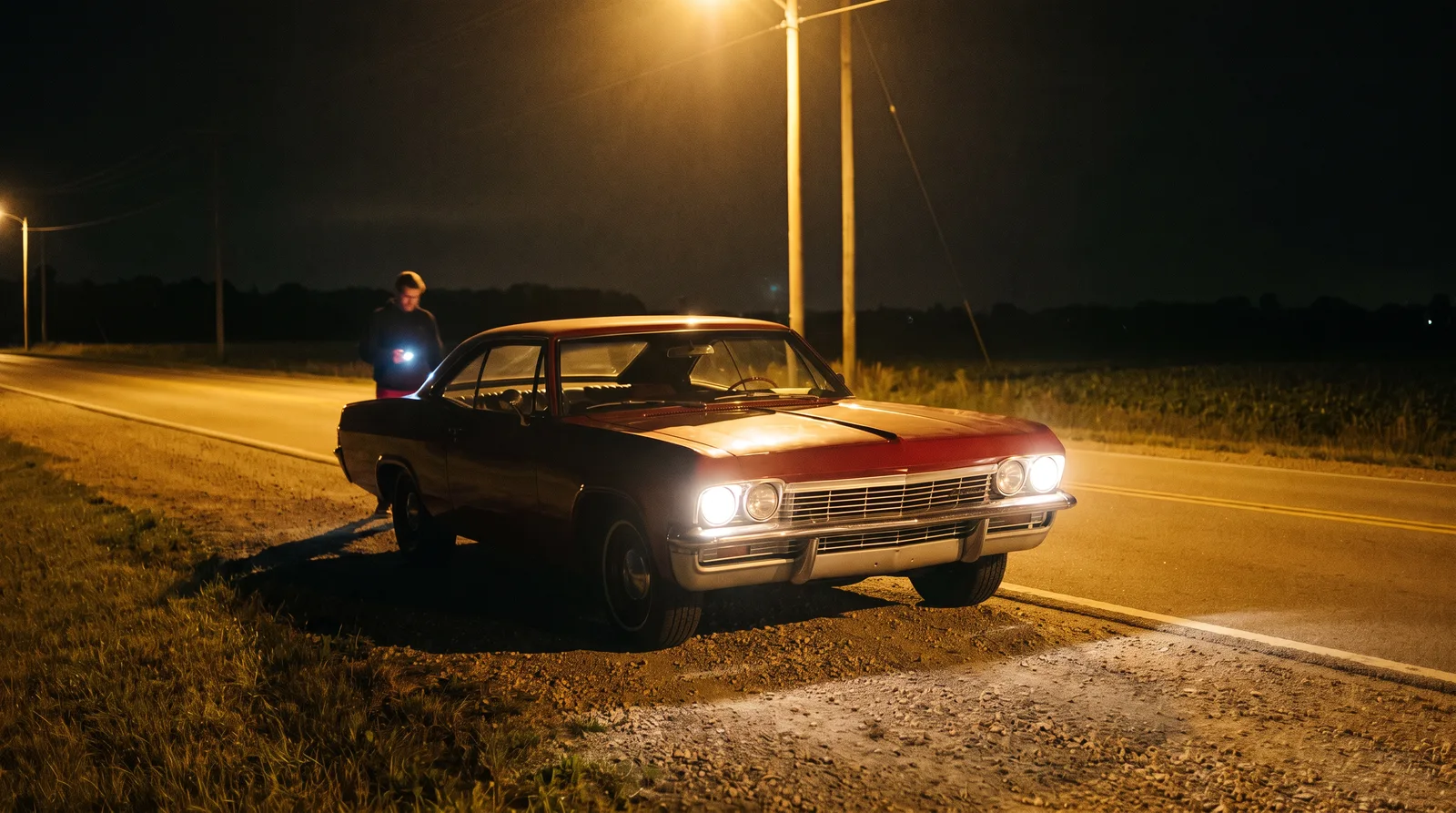
Replace the lines, do not patch them
Steel brake lines rust from the inside, where moisture sits in old fluid. A line that looks sound can burst at the first hard stop. On a restoration, replace all of them. Prebent kits exist for many popular cars and, for most cars, cost a few hundred dollars, and straight tubing with a flaring tool lets you make your own. Use the correct line material. Standard steel is original. Stainless is durable but hard to flare, and copper-nickel is easy to work and resists rust, though it is not original on a numbers-correct car.
Make double flares, or ISO bubble flares where the car calls for them, and do not mix the two. A bad flare leaks under pressure and is the most common reason a new brake job fails. Replace the rubber hoses at the same time. Hoses age from the inside and can act like a one-way valve, keeping a caliper or cylinder applied.
Wheel cylinders, calipers, and shoes
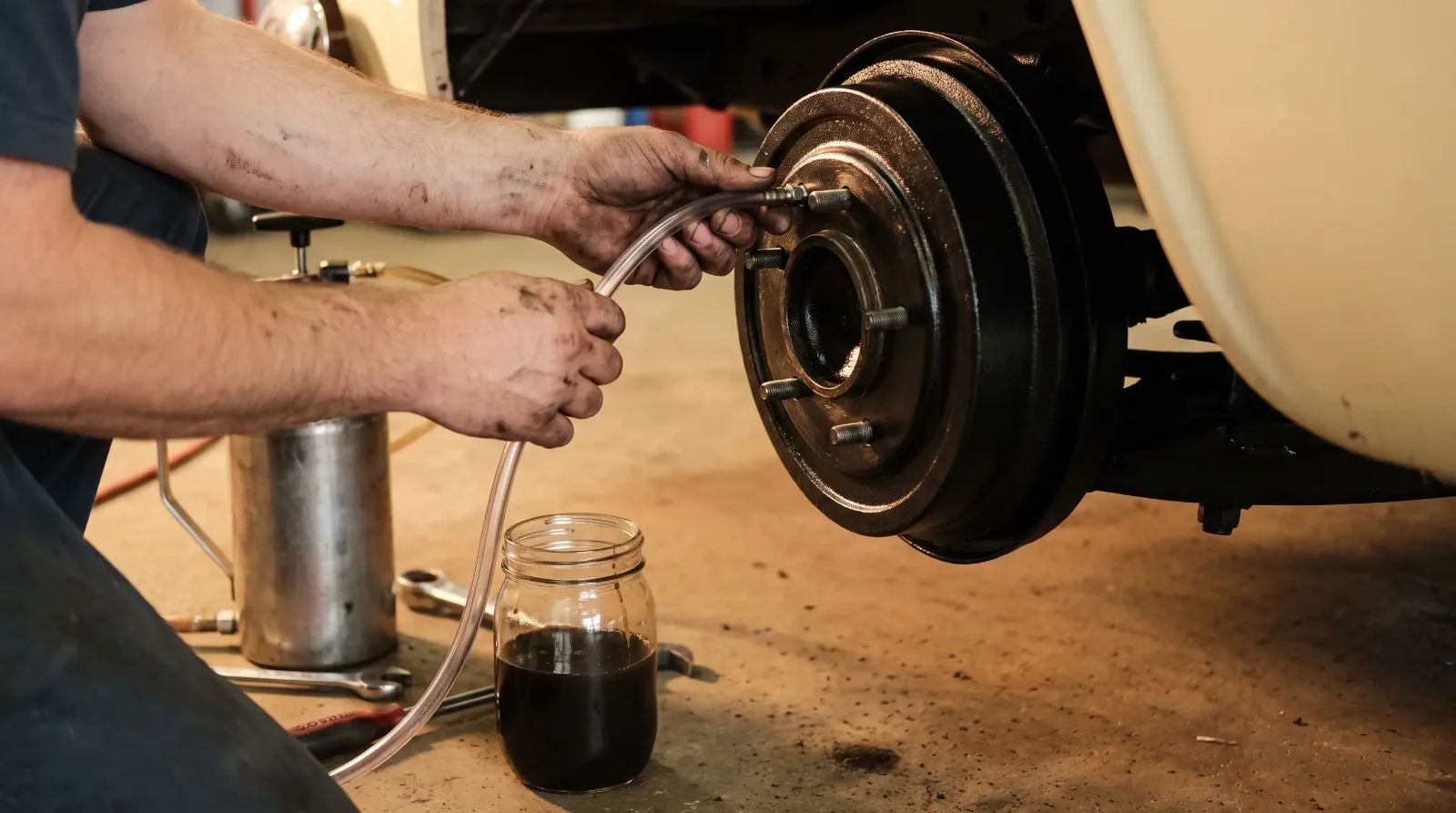
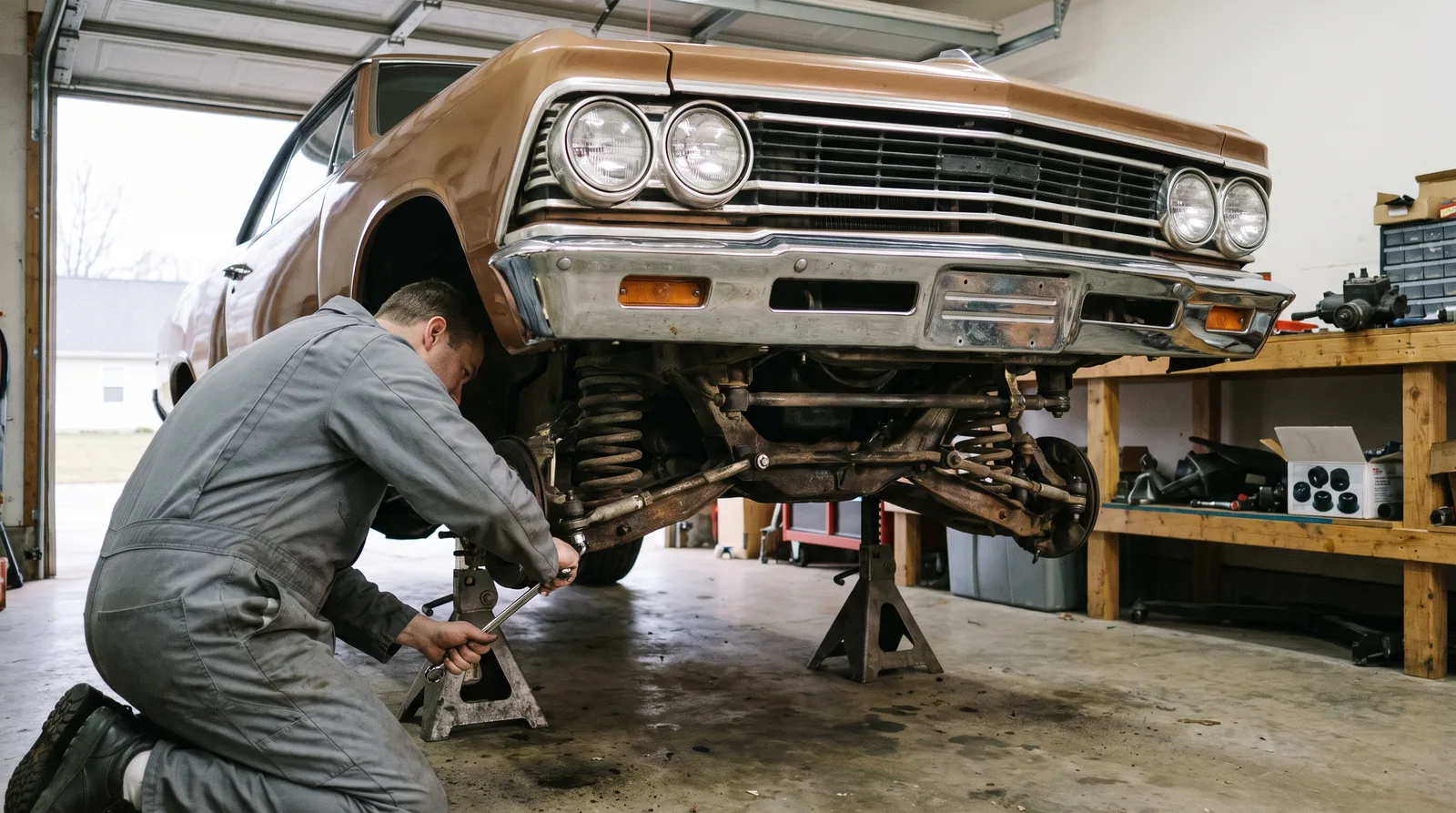
Drum brakes use wheel cylinders. A cylinder with a pitted bore leaks and will contaminate the shoes. You can hone a cylinder if the pitting is light, but replacements are cheap, inexpensive next to the cost of a failure, so replace them. Replace shoes, springs, and adjusters with the kit rather than re-using tired hardware. Have drums turned only if they are within the maximum diameter stamped on them.
Disc brake calipers can be rebuilt with seal kits or replaced with remanufactured units. Look for pitted pistons, which tear seals. Stainless or coated pistons are a good upgrade. Rotors should be measured for thickness and runout and replaced if they are under minimum.
The master cylinder and the booster
The master cylinder is the heart of the system. A rebuilt or new master with fresh seals and a clean bore is non-negotiable. Many classics have single-reservoir masters, which fail completely when one circuit leaks. A dual-circuit master adds a margin of safety, and adapter kits exist for cars that were built before the dual-circuit requirement that arrived with the late-1960s federal standard.
If the car has power brakes, test the booster. A hissing booster or a hard pedal at idle means a leaking diaphragm. Replace or rebuild the unit and fit a new vacuum check valve and hose. Check the proportioning valve and the combination valve. A bad one will lock the rear wheels first.
Drum or disc, original or upgraded
Factory drums, when set up correctly with new parts, stop a stock-weight car well. Many owners still want discs for fade resistance. Our discussion of drum versus disc brakes on classic trucks covers the tradeoffs on heavier vehicles, and the restomod disc brake upgrades article walks through kits and what they change on a street car.
Consider the plan for the whole car. If you are doing a frame-off restoration, the brake lines and hoses are easy to replace with the body off, and it is the cheapest time to do it. A car that will be judged should keep drums if drums were original.
🔧 Inspection Priorities
- Brake lines and hoses. Replace all, since failure is sudden.
- Master cylinder. Rebuild or replace and bench bleed.
- Wheel cylinders and calipers. Pitted bores and stuck pistons leak.
- Drums, rotors, and hardware. Check thickness and wear.
Do not forget the parking brake. Cables seize inside their housings, and levers rust at the pivot. A working parking brake is a safety feature and often a requirement for passing inspection. Replace the cables, clean and lube the linkage, and adjust the shoes so the parking brake holds on a hill without dragging while you drive. On cars with a drum brake in the center of the driveshaft, check that drum and shoe as well.
Expect to spend real money on a full job. Parts for a complete system, including lines, hoses, cylinders, shoes or pads, and a master cylinder, add up quickly, and shop labor comes on top. In a full professional restoration of a common American classic, suspension, steering, and brakes together typically run about $3,000 to $7,000 at driver level and $6,000 to $15,000 at show level. That sounds like a lot until you compare it with a collision. Also inspect the pedal assembly and bushings, because a worn pivot adds slop that feels like air in the lines. Clean the pedal box, grease the pivots, and check the brake light switch.
Bleeding and testing
Bench bleed the master cylinder before it goes on the car. Then bleed the wheel ends from the farthest to the nearest, often right rear, left rear, right front, left front, though you should follow the factory manual for your car. Air collects at the high points of old lines, so some builders push fluid up from the bleeder at low pressure instead. A pressure bleeder makes this faster, and a vacuum pump works too. Watch for a spongy pedal. If it stays soft, air is hiding somewhere or a drum is out of adjustment.
Test the car in an empty lot first. Check for pulling, rear lockup, and a pedal that sinks. Then drive slowly on a road and make several firm stops to seat the new shoes or pads. Recheck all fittings for leaks after the first drive.
"You can fix a lot of mistakes in a restoration with a second try. Brakes are not one of them."
Robert Halloran
With the brakes done, the next system to tackle is the front end rebuild, where worn parts change how the car stops and steers.
Sources and notes
- Brake fluid (Wikipedia), glycol-based DOT 3 and 4 absorb moisture, DOT 5 silicone must not be mixed and is unsuited to ABS
- Hydraulic brake (Wikipedia), tandem master cylinder required under the 1967-era federal standard, fluid moisture and deposits
- Drum brake (Wikipedia), wheel cylinders, shoes, self-adjusters, cable-operated parking brake
- How to bleed brakes on a classic car, trapped air at high points in old lines, reverse bleeding, catch bottle and paint warning
- Master cylinder, brake lines, hoses and park brake cable installation, real-world 1968 Road Runner line kit, hose, bleeding and parking cable job
Related Reading
Have a
Classic Car
for Sale?
Reach thousands of serious classic car collectors across the US.
Sell It Here →
Selling a classic? Here's how: the best sites to sell a classic car
Are You a Classic Car Dealer?
List your full inventory and connect with targeted classic car buyers.
Join as a Dealer →

About the author
Robert Halloran
Texas-based classic truck enthusiast with decades of experience buying, restoring, and writing about American pickups from the 1940s through the 1980s.
More in Restoration & Tech
Comments
Be the first to comment on this article.