Every rusted classic eventually forces the same question. Do you cut out the bad section and weld in a patch, or do you replace the whole panel? The answer is not a matter of pride or purity. It depends on how far the rot has spread, whether a good replacement panel exists, and where the joint will end up. I have done both on dozens of cars, and each is right in some situations and wrong in others.
This article gives you the logic I use before I light a torch. It belongs inside the broader subject of bodywork and paint, because everything you do here ends up under the finish.
Start with how far the rust goes
Surface rust is what you see. Structural rust is what you find after you probe. Poke the area with a screwdriver, and tap it with a hammer from both sides if you can. Scale on the surface of otherwise solid steel is a cleaning job. Metal that crumbles or flakes through is gone. Deep pitting, or steel that feels thin and soft under the screwdriver, means the panel has lost much of its strength.
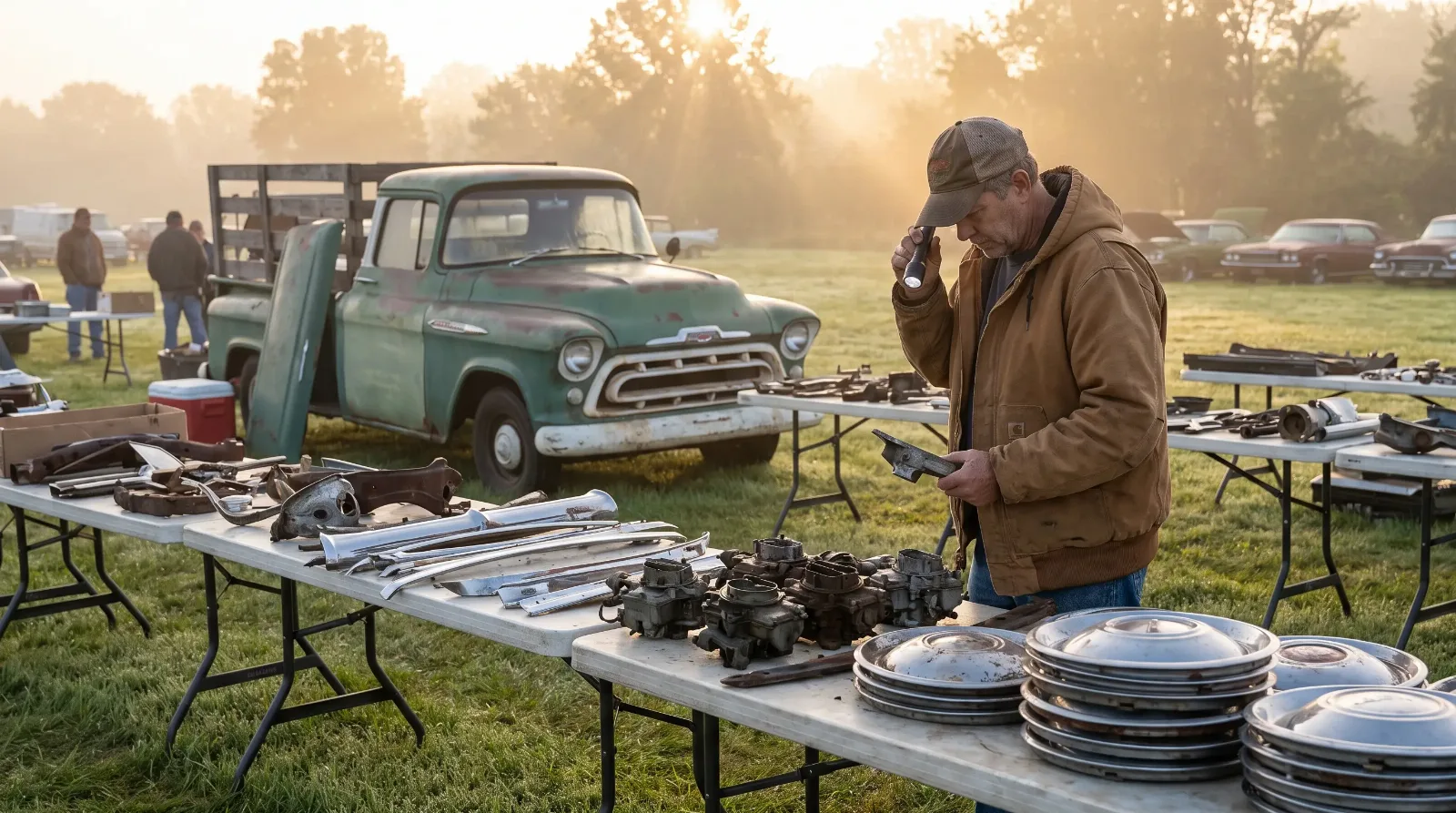
Rust nearly always starts where moisture collects and cannot dry: lower fender edges, rocker panels, floor pan seams, trunk drop-offs, and the bottoms of doors. It also starts from the inside. The bubbles you see on the outside are often the last stage. That is why a car that looks clean can need a full panel. If you are shopping for rust-bucket project cars, assume the damage is bigger than it looks, and price the project on that assumption.
When a patch is the right call
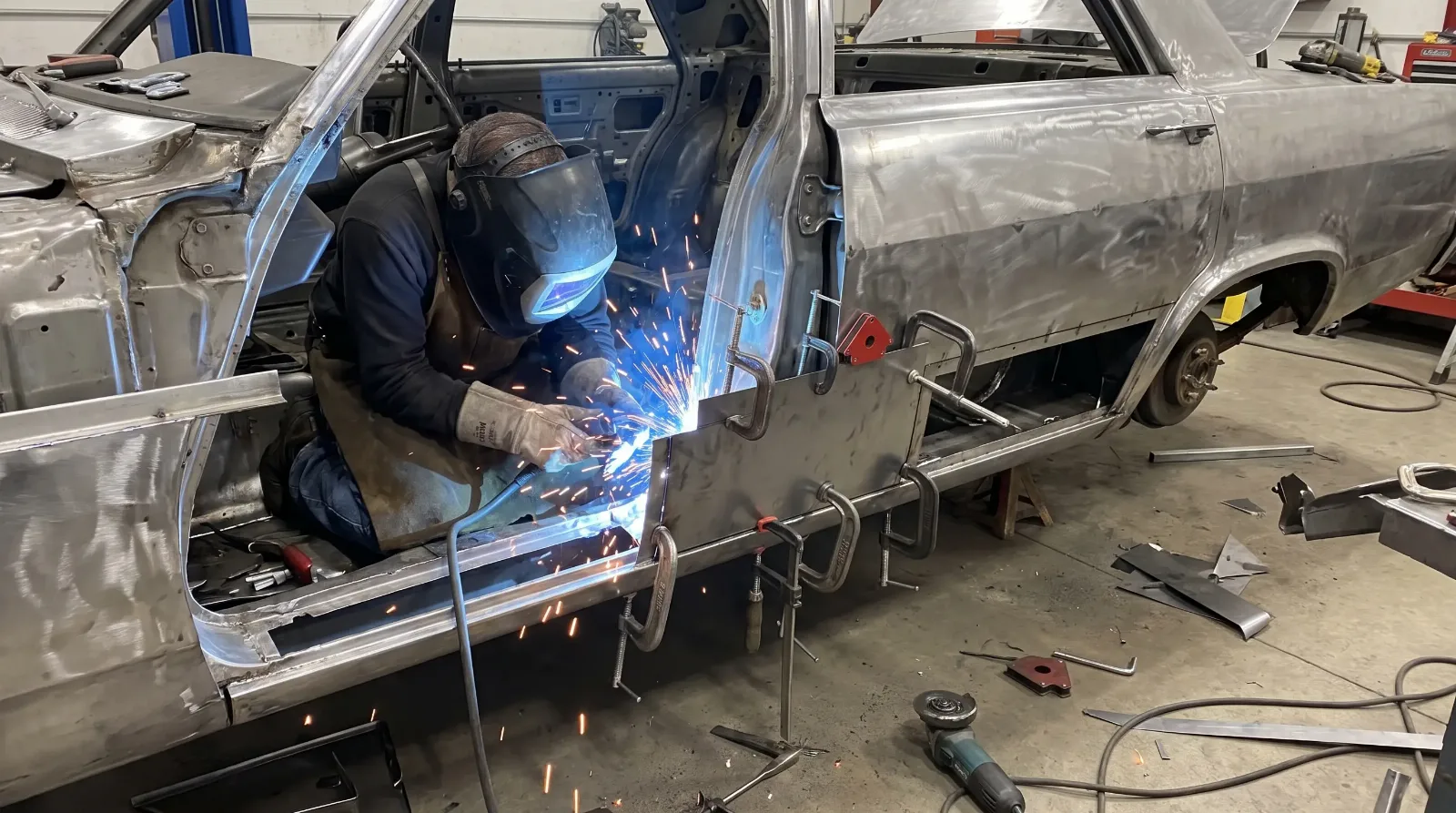
A patch panel is a small replacement piece, either bought from a catalog or fabricated from sheet steel. It makes sense when the damage is limited, the surrounding metal is solid, and the repair area is away from a prominent body line.
The advantages are clear. You keep more original metal, the cost is lower, and the job is quicker. On a car with documented originality, patching preserves factory spot welds, seams and stamping details everywhere else. Done well, patch work can be invisible.
The craft matters. Cut back to clean, bright steel, not the edge of the rust. If you weld to marginal metal, the weld will contaminate and you will have rust coming back at the joint within a few years. Use a butt joint with a small gap where practical so you do not create a lap seam that traps water. Tack in a pattern, moving around the patch to avoid heat buildup, and let the panel cool between rounds. Grind the welds flush, but do not thin the surrounding steel.
When you replace the whole panel
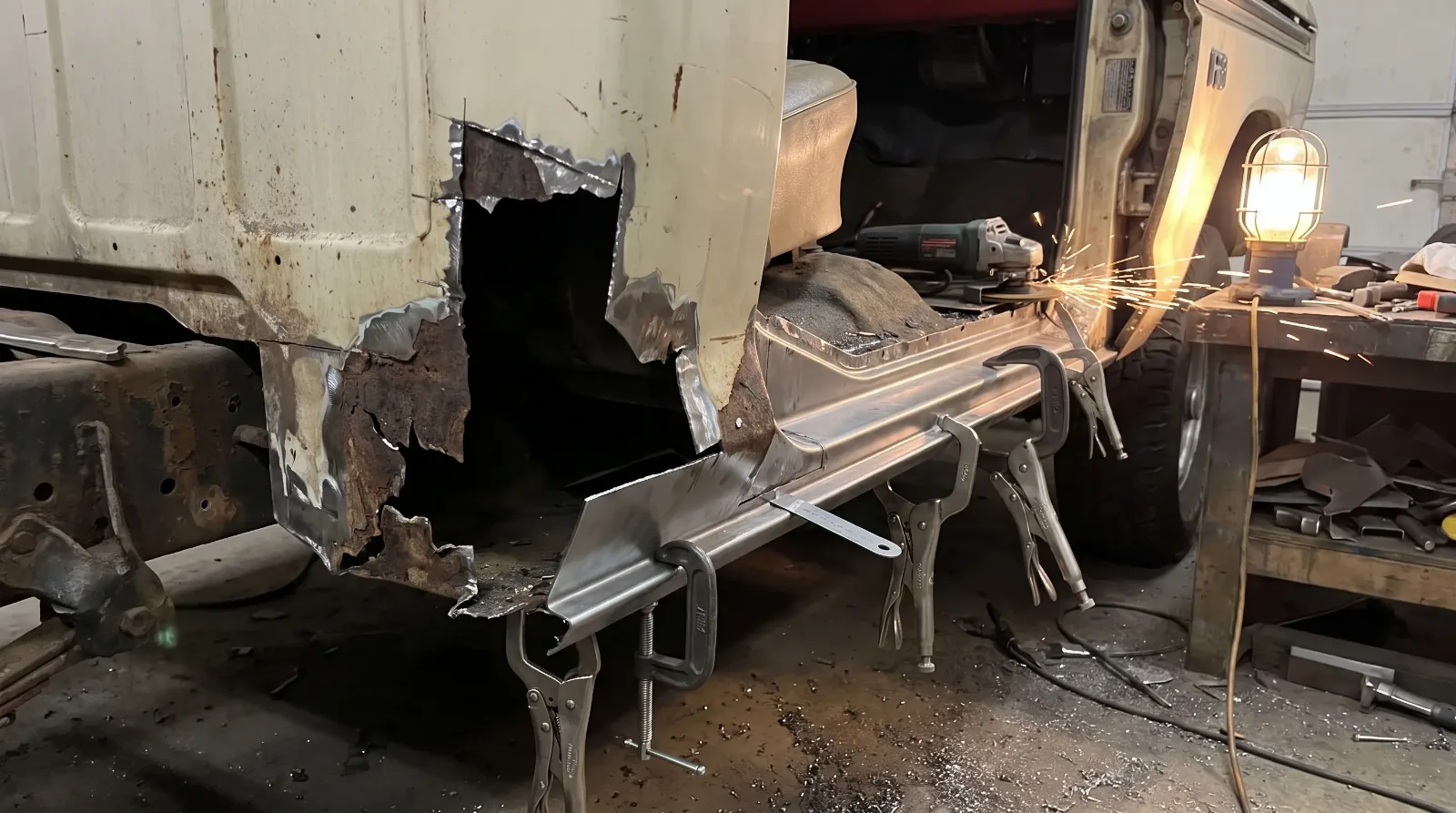
Full replacement is the better call when the damage covers most of the panel, when it crosses a character line or a complex curve, or when a patch would leave a weld in the middle of a visible, flat area. Rocker panels, quarter panel lower sections, floor pans, trunk floors and cowl sections are common candidates, and good reproduction panels exist for many popular cars.
Quality varies, and that is the catch. Reproduction panels can have poor fit, wrong gauge metal, missing stampings or inaccurate contours. Test fit before you cut anything, and clamp it in place to check gaps and alignment. A cheap panel that needs hours of massaging is not a bargain. For rarer cars with no catalog support, you may need to fabricate sections yourself or hire a metal shaper. That is slower and costlier, but sometimes it is the only way.
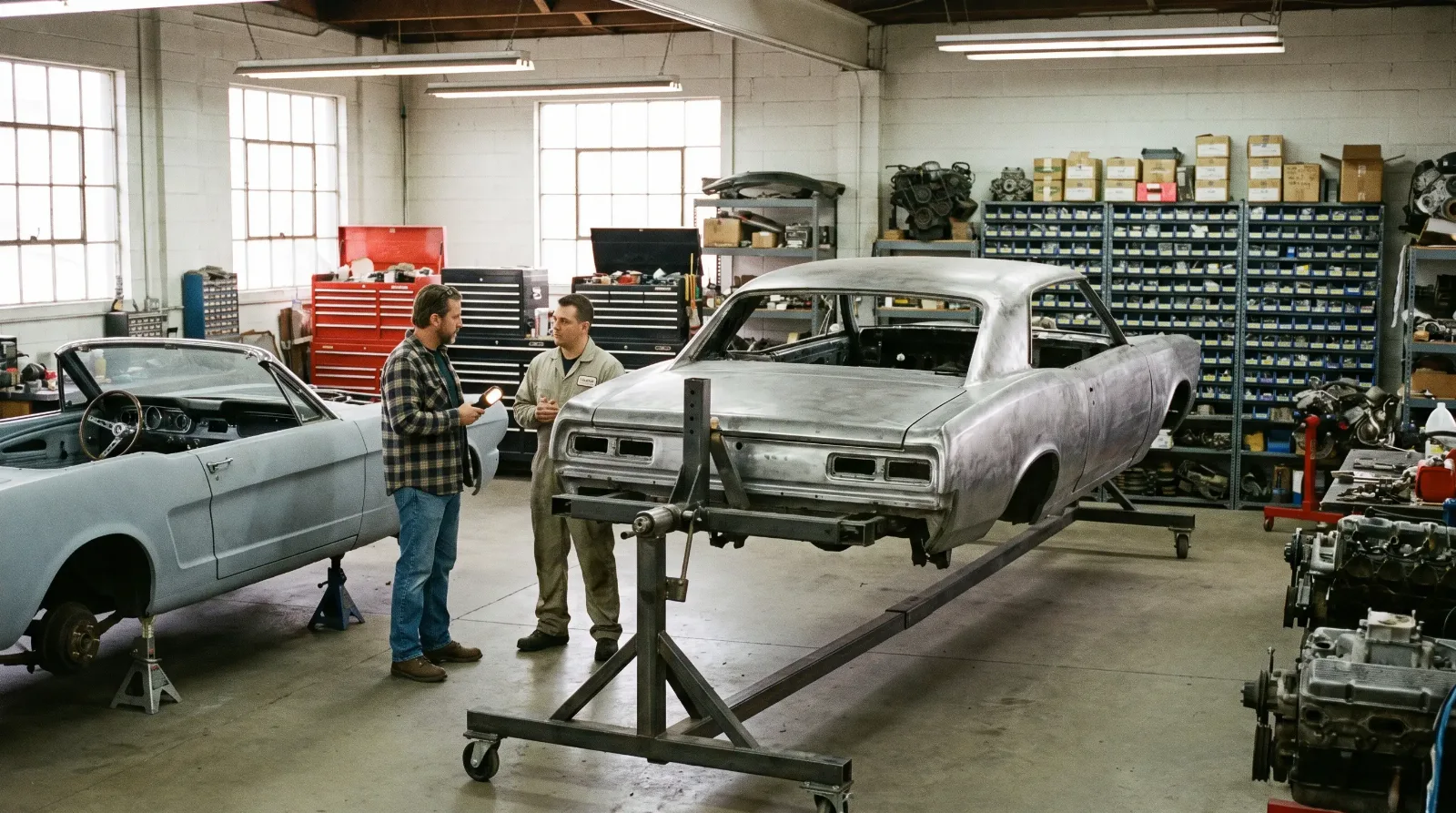
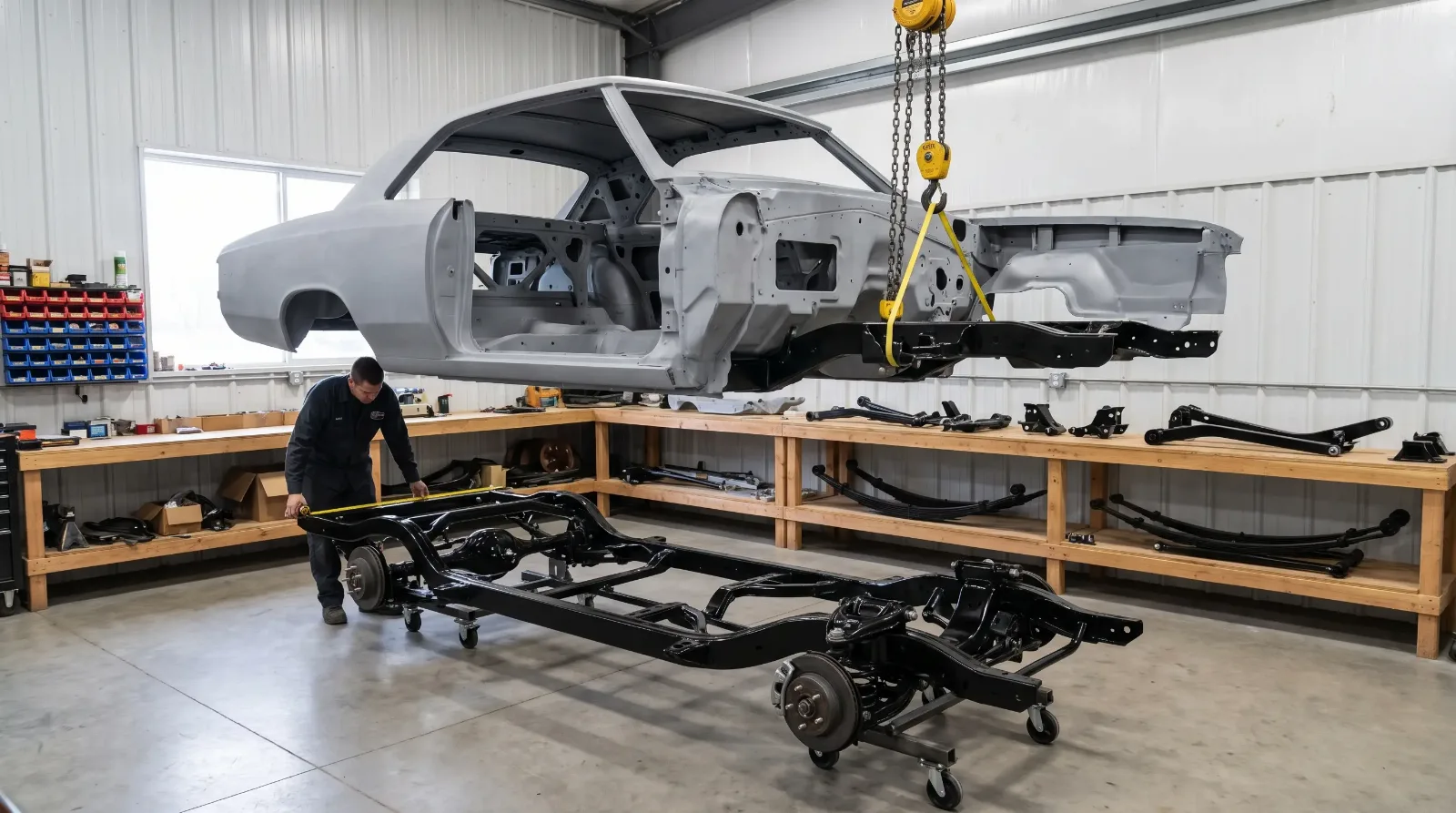
The decision also turns on access. Replacing a floor pan or rocker is far easier when the body is lifted, the interior is out and the car is on a rotisserie. For a project of this scope, you might be looking at a frame-off rather than cutting around everything in place. If you are going to open the car anyway, replacing complete panels is often more honest than patching around them.
| Situation | Patch | Full panel |
|---|---|---|
| Small perforation, solid metal around it | Best choice | Overkill |
| Damage crossing a body line | Risky | Usually better |
| Inner structure rotted (rails, supports) | Only if sections are accessible | Often necessary |
| Rare car, no reproduction panel | Fabricate sections | Fabricate whole panel |
| Show-level originality goal | Preserves original metal | Only where metal is gone |
Cost and time
Patching usually costs less in materials but takes more labor and time at the bench. Replacing a bolt-on or easily removed panel such as a fender or door costs more in materials but can take much less time. A structural panel held by spot welds, such as a quarter panel, is usually patched when you want to keep cost down, though the result will not be quite as clean as the original. A car with rust in several places can reach five figures for metalwork alone. This is a big reason a cheap car turns into an expensive one. Our article on what is fixable and what is a money pit helps frame when to walk away.
Know your car's weak spots
Every platform rots in its own places. Muscle cars tend to lose cowls, trunk floors, rear window channels and lower quarters, as covered in this guide to common rust areas on muscle cars. Trucks have their own list of cab corners, bed floors and rocker areas, and we cover those in vintage pickup rust spots and how to fix them. Knowing the pattern before you start lets you look for hidden damage in the right places.
"Don't weld new steel to bad steel. Cut back until the metal is bright and solid, then build forward from there. Shortcuts show up in three years."
Ray Delgado
Finish the repair properly
After the weld, grind it, clean it and treat the inside. Weld-through primer on mating surfaces, seam sealer on joints, and cavity wax or inner coating on interior surfaces all extend the life of the repair. Do not skip those steps. The goal is a smooth surface that needs minimal body filler, applied as a thin skim only to even out the weld. If you find yourself relying on filler to hide a poor patch, go back and fix the metal.
Sources and notes
- Body Patch Panels 101 (Classic Industries), prepping both the body and patch metal, small weld spots, grinding, and keeping filler to a thin skim
- How To Make A Patch Panel (Restore an Old Car), why lap joints trap moisture, cutting rust out and grinding to bare metal
- Replace Rusty Floor Panels (Restore an Old Car), patch vs partial vs full floor pan, butt welding, zinc-rich primer on mating surfaces
- Rust Prevention and Removal Part II: Patch Panels or Replacement (The Engine Block), when replacement or patching fits, cost and time trade-off, heat warping thin sheet metal
- Patch Panel or Full Body Panel Replacement? (V8 Speed and Resto Shop), replacing a whole panel versus welding in only the needed section