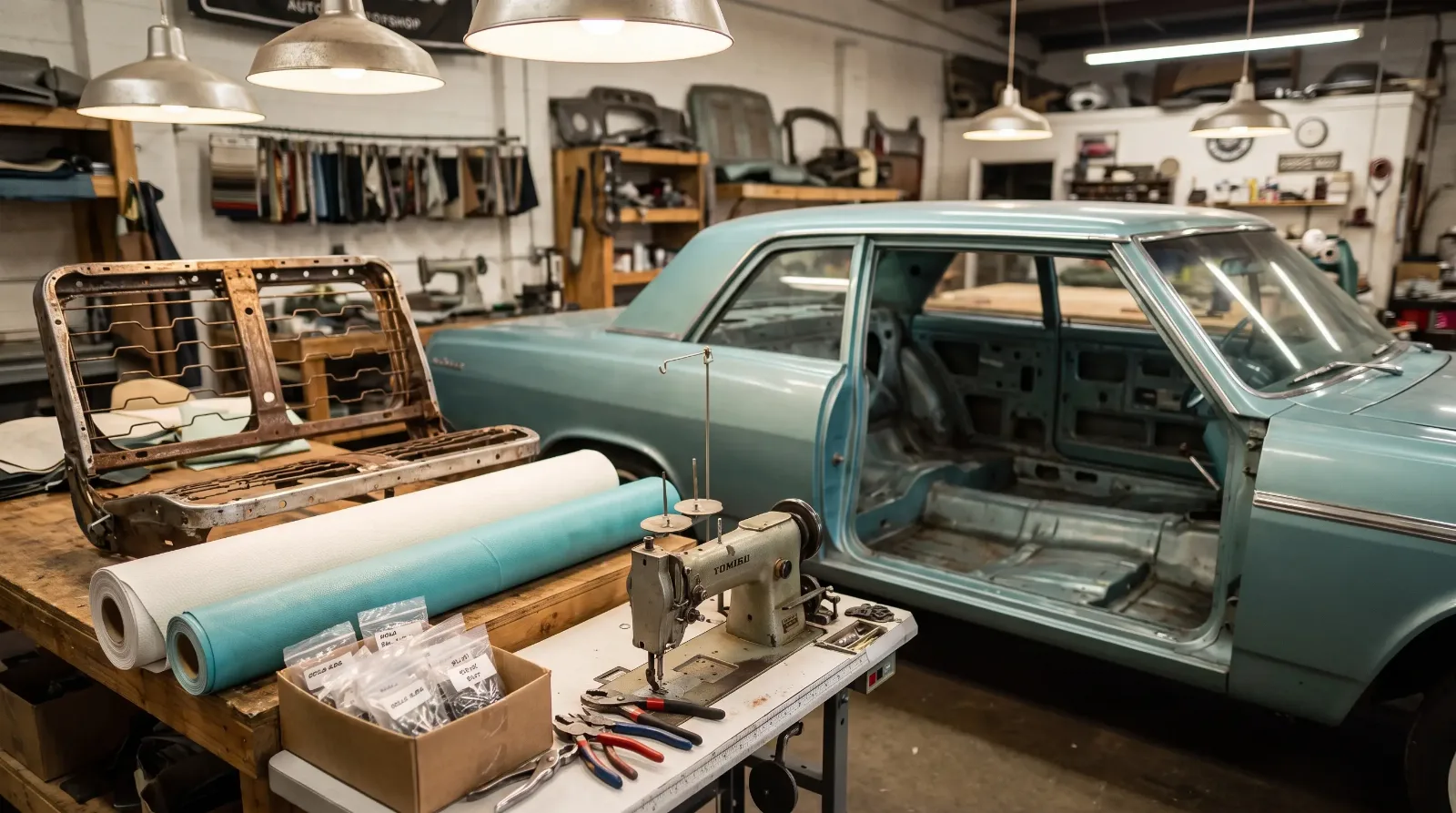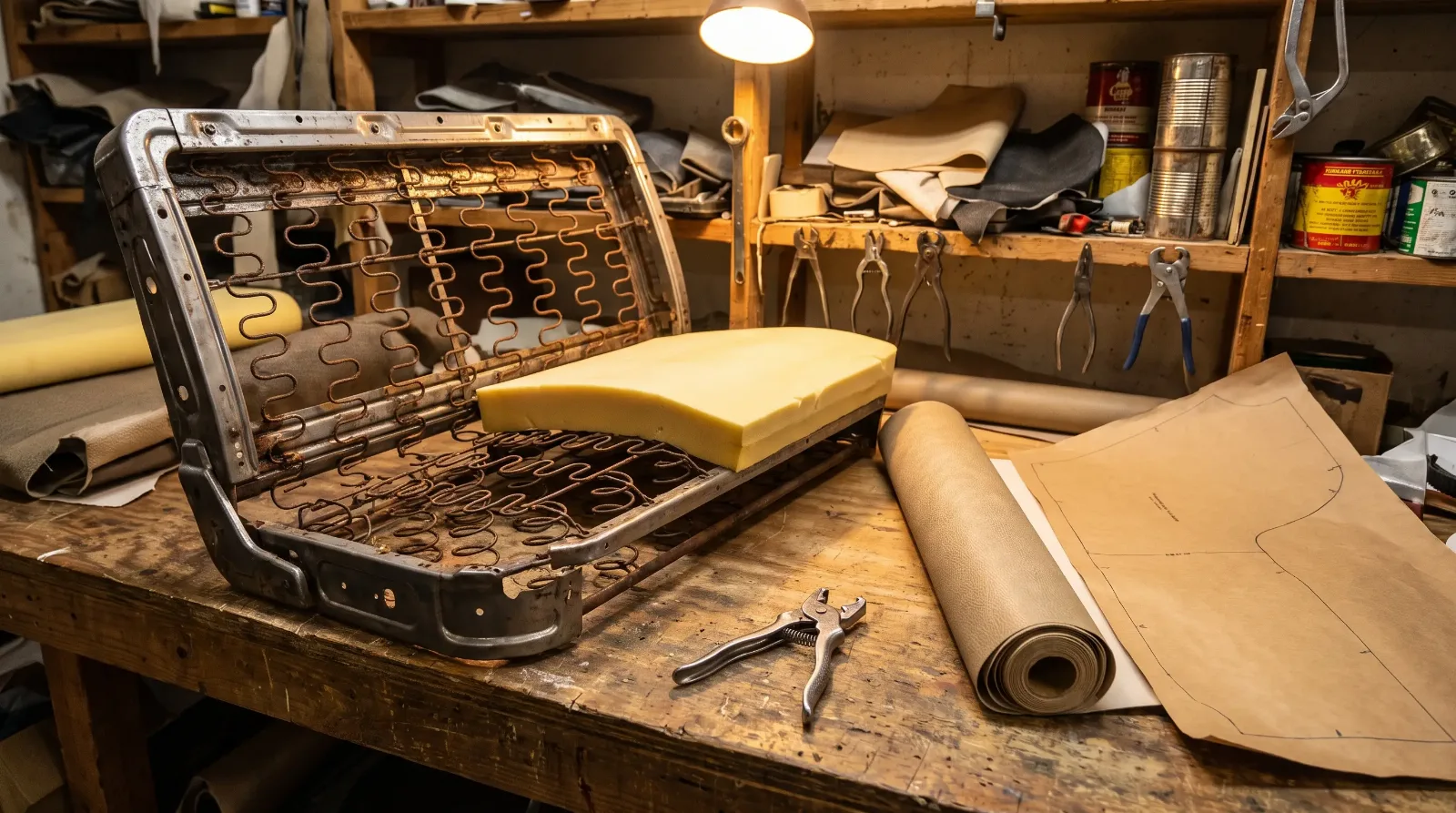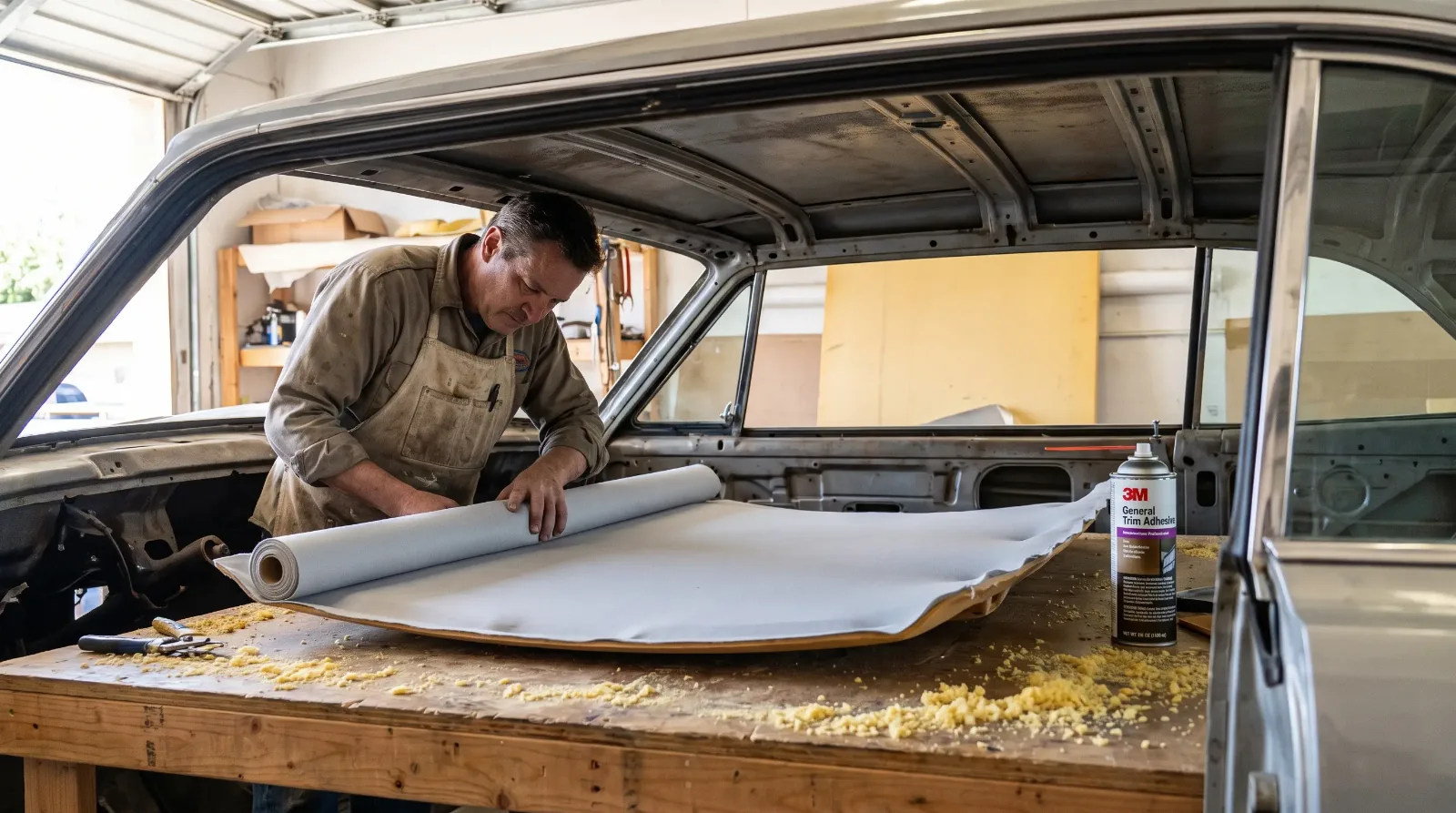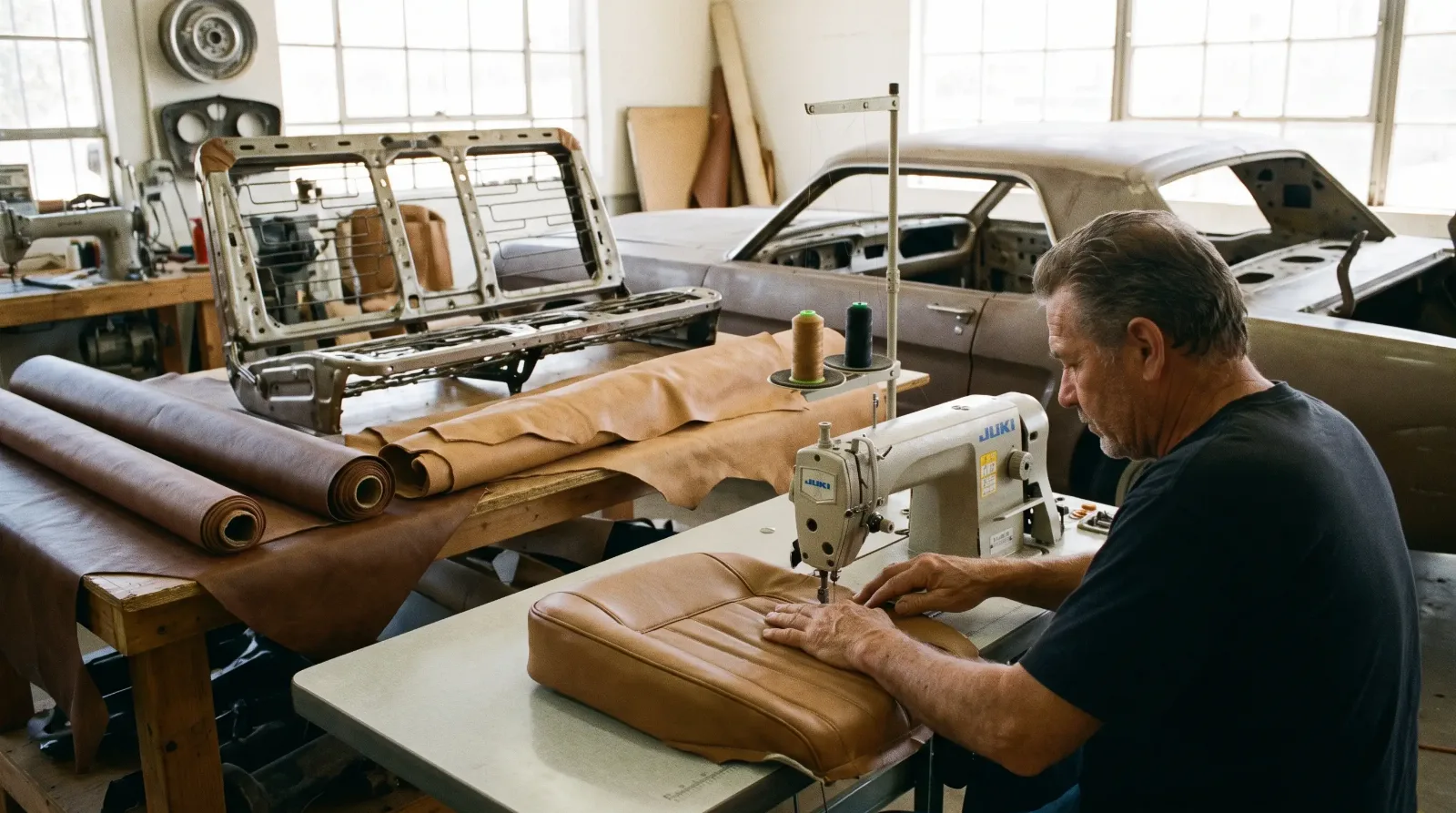
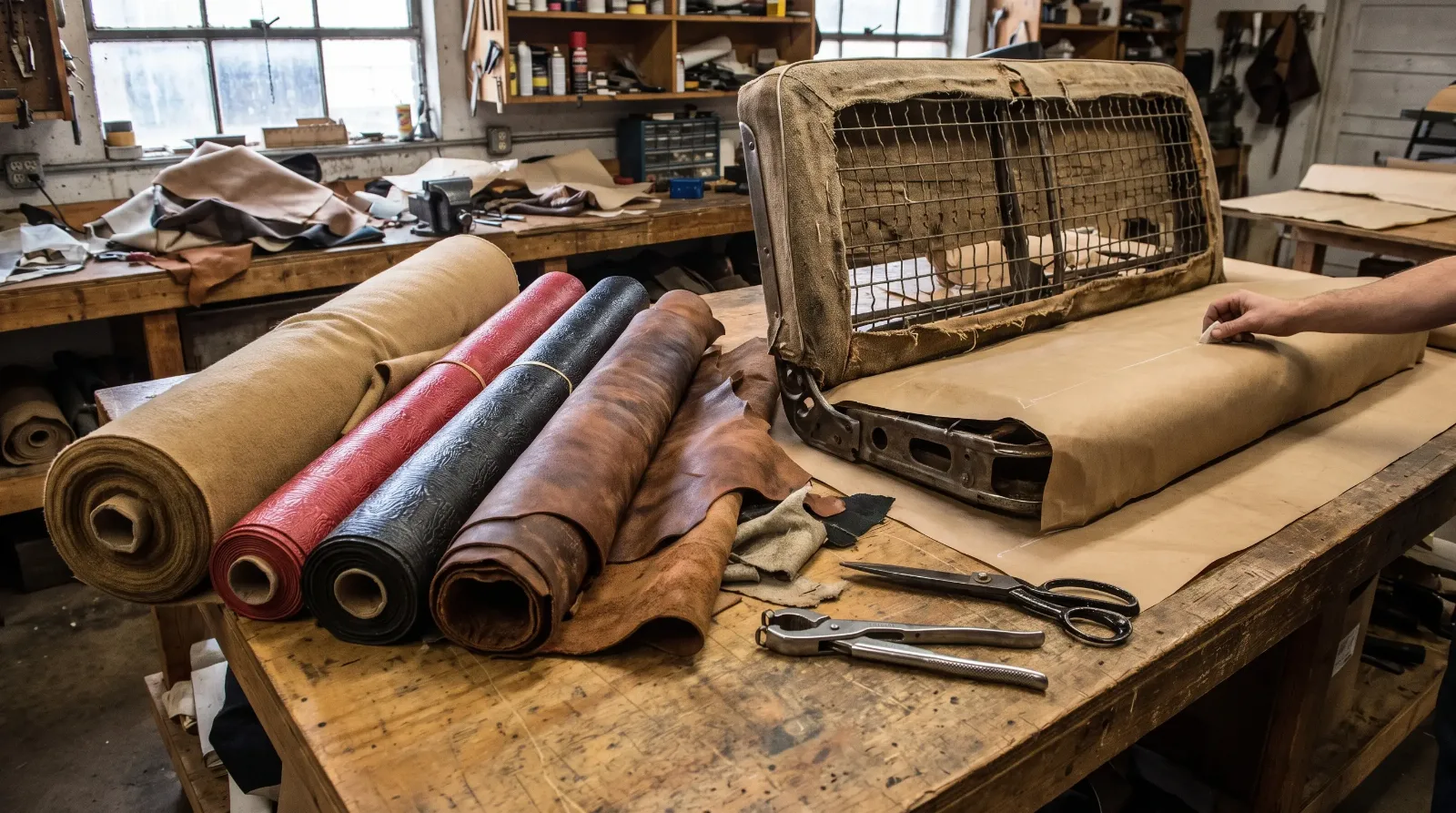
Every interior material has a decade attached to it, and a restorer who ignores that ends up with a car that looks fine and reads wrong. A 1957 sedan trimmed in modern automotive vinyl with a pebbled grain the factory never used will photograph well and lose points the moment a judge runs a thumb over it. Knowing what the factory actually installed, and why it chose it, is the first job in restoring a classic interior, well before anyone orders a bolt of fabric.
What follows is a working guide to the three families of seat and trim materials, how they were used across the decades, and what each one asks of you in 2026. Treat the dates as general patterns. Individual makes moved at different speeds, and a trim tag or build record beats any generalization.
Cloth came first and stayed longer than people think
Through the 1920s and 1930s, closed cars were typically trimmed in cloth, with mohair velvet and wool broadcloth the common choices, while open cars more often used leather. Cloth was chosen for durability and comfort in unheated, drafty bodies, and they were woven in patterns specific to the maker. Wool broadcloth in fawn, tan or gray was common through the 1940s. Mohair was the premium option, dense and hard wearing, and it is difficult and expensive to source in correct weaves today.
After the war, synthetic blends such as nylon and rayon took over much of the mainstream, and the fabrics grew brighter and more patterned. Two tone jacquards, basket weaves and tweed looks appeared on 1950s sedans and wagons, often paired with vinyl bolsters and door panels in a matching color. The pairing matters. A cloth insert with a vinyl border was a familiar factory recipe on many cars of the era, and a restorer who covers the entire seat in one material has changed the design.
Cloth returned as a primary material in the 1970s and 1980s, now as velour, crushed velour and knit fabrics, mostly on the mid to upper trim levels where it was sold as a softer, quieter alternative to vinyl. Velour is the material most likely to be unavailable in a matching color. Reproduction runs exist for popular models, but small production cars may need a custom weave, and a custom weave carries minimum order quantities that add real cost before a single cover is sewn.
Vinyl, the material that defined the postwar interior
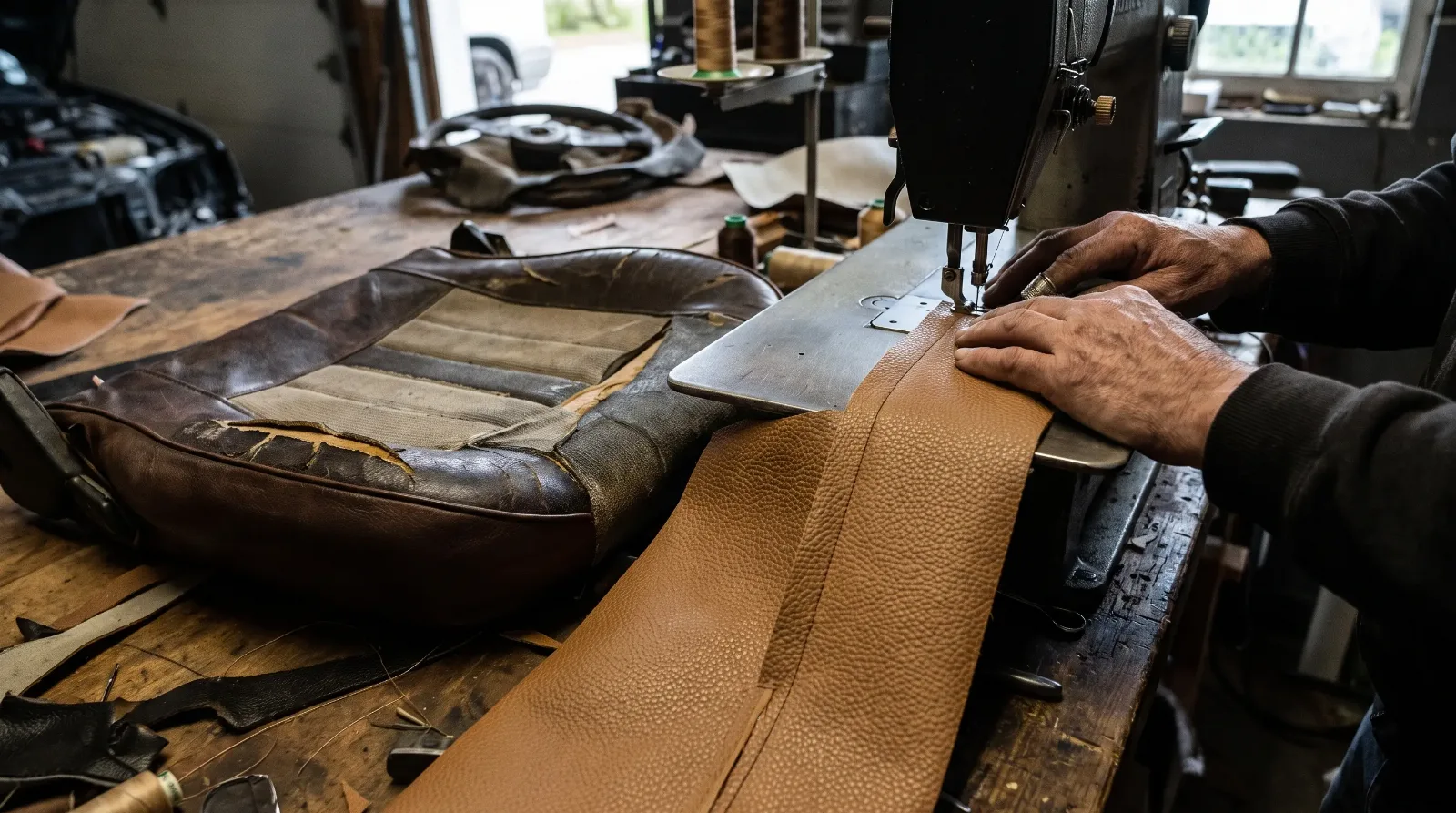
Vinyl upholstery went from novelty to default in about a decade. It began appearing in the late 1940s and 1950s, was dominant in interiors by the 1960s, and gave ground to cloth in the 1970s, when buyers came to prefer fabric that breathes and does not turn sticky in summer heat. The reasons were practical. It wiped clean, resisted spills, cost less than leather and could be embossed with a grain that imitated it convincingly from across a room. Brand names such as Naugahyde became shorthand for the whole category, though that is a trademark of one manufacturer, registered in 1936 and still owned by its successor, and not a generic name.
For anyone dealing with classic car vinyl upholstery, the grain is the detail that gives the game away. Factories used specific embossing patterns, and the pattern changed with the model and the year. Reproduction suppliers sell material sorted by the original pattern, and the right choice is the one matched to your car, not the one that looks nicest in the sample book.
Vinyl ages in a predictable way. Early formulations used plasticizers that migrate out over decades, which is why original vinyl goes stiff, shrinks and cracks along stress lines at the seat bolsters and the top of the dash. You cannot reverse that. Repair kits and dyes will hold a good original seat for a few years, and for a driver they are a legitimate choice. For a car being judged on originality, a correct reproduction cover is the standard answer, and a front bench cover set is usually a matter of hundreds of dollars before installation, with the cost climbing for rare patterns and larger cars.
Leather by era, and what the factory meant by the word
Leather was the default for prewar luxury cars, and the earliest hides were dyed and finished with simple coatings that took a deep patina. Through the 1950s and 1960s it shifted toward an option on upscale models, then returned as a selling point on personal luxury cars and performance coupes in the 1970s. By the 1990s it was a normal feature on many mid range cars, usually with a heavy protective topcoat that looks and feels different from the older leather.
The word itself needs care. Some cars sold as having leather seats used leather only on the seating surfaces, with vinyl on the sides, backs and door trim. Others used a coated or split leather that is thinner and behaves like vinyl. Before you order hides, check the factory documentation for what the original actually was. How real leather ages against its wood and trim neighbors is taken up in this comparison of leather and woodgrain luxury interiors, and it is a good read before you decide how far to restore.
Original leather is cleaned, conditioned and kept wherever possible. A seat with creases and soft color is honest, and it is worth more to a serious buyer than a freshly dyed one. Replacement is for hides that have cracked through, torn at seams or lost their finish entirely. On a basic retrim, leather typically adds around a thousand dollars over cloth, more for correct-grain hides, and the luxury end can land well above that. For how this work is carried out on wood and leather luxury cars, the market piece on trimmed luxury interiors covers costs and common errors.
| Era | Typical seat material | Restoration note |
|---|---|---|
| 1920s to 1930s | Wool broadcloth, mohair, leather on luxury cars | Correct weaves are scarce; mohair is costly |
| 1940s to early 1950s | Broadcloth, nylon and rayon blends, some leather | Pattern and color are model specific |
| Late 1950s to 1960s | Cloth inserts with vinyl, then all vinyl | Match the original embossed grain |
| 1970s | Vinyl, velour, knit cloth, more leather | Velour colors often need custom weaving |
| 1980s to 2000 | Velour, cloth, leather with heavy topcoat | Topcoats feel different from older leather |
Choosing what to put back
Three questions decide the material. First, what did the car leave the factory with? Trim tags, broadcast sheets and build records often name the interior by a code, and clubs and registries can decode it. Second, how will the car be used? A driver that sits in summer sun does well with a modern, UV stable reproduction vinyl, which is the closest correct look that survives. Third, what condition is the underlying structure in? New covers over collapsed foam and a rusted seat frame are a waste, so check springs, burlap and padding before you commit.
The details between materials need attention too. Stitch pattern, welt style, seam placement and the way a cover is hog-ringed to the frame are all part of the correct interior. Keep the original covers when you take them off. They are the pattern, and a good trim shop will copy them seam for seam. The same discipline applies to everything overhead, which is why a restorer reads the factory material on the headliner as carefully as the seats.
A last point on originality. A fabric swap is not always a sin. A car that had an unusual optional interior and now wears the common one is better served by the correct option if documentation survives. A car with a replaced, undocumented interior is a blank slate, and a period correct choice for the model and year is a sound answer. The least defensible choice is the one that ignores the era altogether.
For fabric and leather work specifically, this practical guide to restoring leather and fabric interiors walks through repair versus replacement in more detail.
"The material tells you the decade before the badge does. Get it right and the whole room stops arguing with itself."
Sarah Whitfield
Sources and notes
- Naugahyde, Wikipedia, trademark status, 1936 registration and fabric-backed PVC construction
- A second look at vinyl, Ward's Auto, vinyl rising in the 1960s and the 1970s shift to fabric
- How to restore and repair an old car dashboard, EngineerFix, why vinyl cracks: UV, heat and plasticizer loss
- Why did old cars have vinyl roofs, SlashGear, vinyl's spread from the late 1940s and 1950s into the 1960s and 1970s
- Connolly Leather, Wikipedia, the long-running automotive leather supplier, founded 1878, closed 2002, revived 2003
- Artificial leather, Wikipedia, how PVC imitation leather is made and its early history