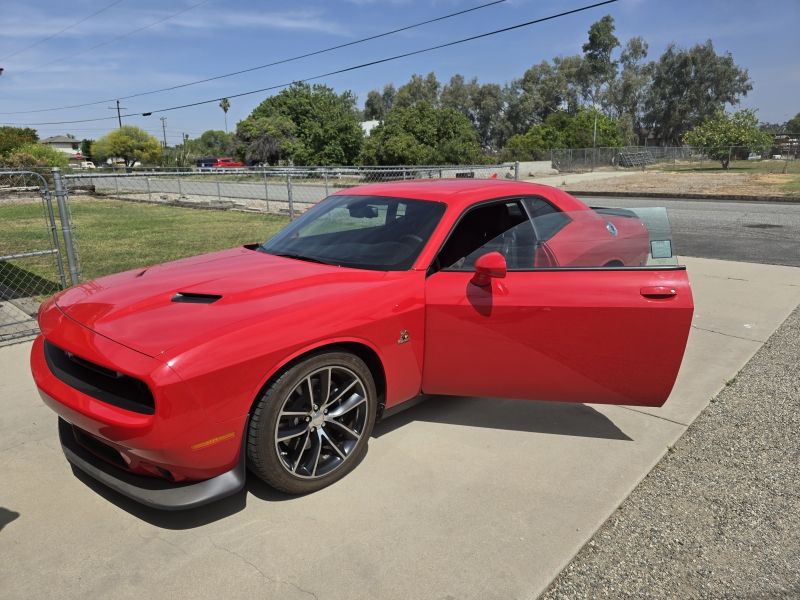
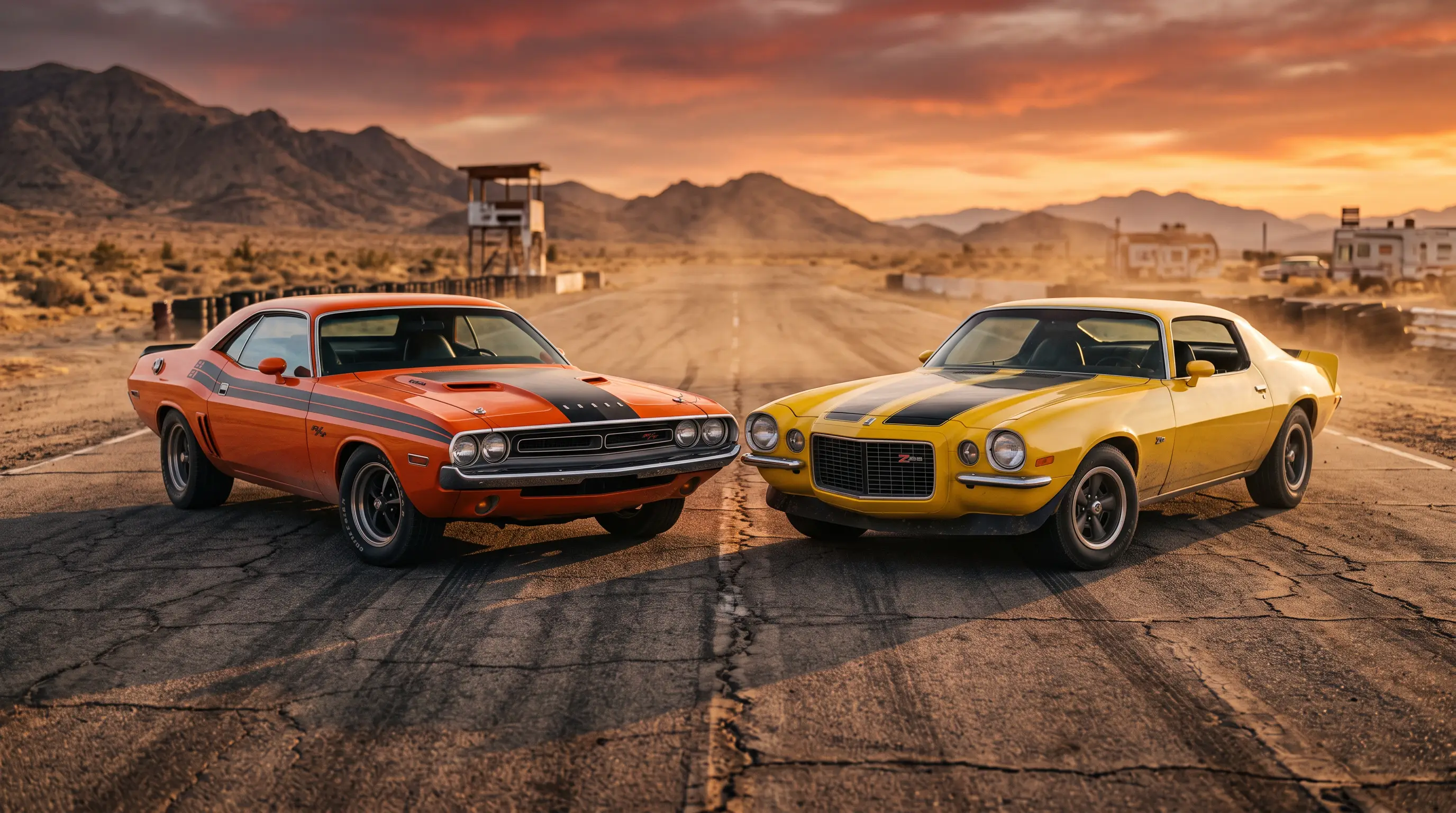
The archival record on the 1970 challenger vs camaro rivalry is richer than most casual enthusiasts realize, because both General Motors and Chrysler documented their pony car programs extensively as each company chased the same buyer with different engineering philosophies. Reading that record side by side, rather than relying on secondhand nostalgia, tells a more precise story than the usual "which one is better" debate that dominates casual conversation.
Two companies, two answers to the same brief
Chevrolet's Camaro arrived first, in the fall of 1966 as a 1967 model, built to answer Ford's Mustang directly. Dodge's Challenger came to market three years later, as a 1970 model, giving Chrysler's engineers the benefit of watching both rivals establish the segment before committing to a final design. That timing gap matters historically. The Challenger was never a first mover. It was a deliberate, researched answer, built on Chrysler's E-body platform specifically to correct perceived shortcomings in the existing pony car offerings, particularly around interior room and available engine displacement.
The Camaro's second-generation redesign, introduced for the 1970 model year, arrived at nearly the same moment as the Challenger's debut, which makes 1970 the single cleanest year for a direct comparison between the two. Both companies had fresh product on the floor, both were fighting for the same customer, and the documentation from that specific model year gives historians the clearest apples to apples comparison available anywhere in the pony car segment's history.
Specification comparison, 1970 model year
| Specification | Dodge Challenger | Chevrolet Camaro |
|---|---|---|
| Wheelbase | 110 inches (all trims) | 108 inches |
| Base engine | Slant six | Inline six |
| Top factory engine | 426 Hemi V8 | 396/402 big block V8 |
| Body styles offered | Hardtop, convertible | Hardtop, convertible |
| Platform | Chrysler E-body | GM F-body |
The engine displacement gap in that table is the detail archival researchers point to most often. Chrysler's decision to offer the 426 Hemi in the Challenger gave Dodge a displacement and output ceiling that Chevrolet's contemporary big block options couldn't match on paper, even though real world performance depended heavily on specific configuration, gearing, and driver skill rather than raw published figures alone.
"Every archive tells you the same thing if you read closely enough. These two cars weren't copying each other. They were solving the same problem with different tools, and the paper trail proves it."
- Sarah Whitfield
Sales figures and market reception
Period sales data shows the Camaro consistently outselling the Challenger across most of their overlapping production years, a gap researchers attribute to the Camaro's three-year head start building dealer network familiarity and brand loyalty before the Challenger even reached showrooms. That sales gap does not reflect on either car's quality. It reflects on market timing, and Chrysler's own internal documentation from the period acknowledges the disadvantage of entering an established segment as the newer competitor.
What the documentation also shows is that the Challenger carved out genuine loyalty despite the sales deficit, particularly among buyers who valued the Hemi option and the E-body's distinct proportions over the Camaro's more established reputation. Dealer records and period magazine circulation data both point to a passionate, if smaller, ownership base that formed around the Challenger almost immediately, a loyalty that has only strengthened as the collector market matured over the following decades.
Racing records settle some of the on-track debate
Trans-Am racing gave both cars a documented competitive record rather than relying purely on showroom specifications. The Challenger T/A and Camaro Z/28 both campaigned in the series during the 1970 season, and race results from that year, preserved in period racing publications, show a genuinely competitive field rather than a lopsided contest. Neither car dominated outright, and the closeness of that competition is well documented across multiple independent sources from the era, which lends real credibility to the rivalry beyond marketing claims.
That documented parity on track reinforces what the broader historical record shows about the two cars generally. This was a legitimate rivalry between two well-engineered answers to the same market question, not a case of one manufacturer clearly out-executing the other. For readers wanting the fuller picture of the Challenger's own origin rather than just this comparison, where this started traces the car's full development history. And if the Challenger's closer sibling interests you more than its GM rival, more on the challenger vs cuda covers that comparison in full.
Design philosophy documented in period interviews
Chrysler and GM designers gave interviews at the time that reveal genuinely different priorities behind the two cars, and those primary source accounts are worth more to a researcher than any amount of secondhand retelling. GM's design team, working from the established Camaro platform, focused their 1970 redesign on refining an already successful formula, tightening proportions and updating the nose and tail treatments without reinventing the car's fundamental character. Chrysler's team, starting essentially from a blank sheet with the E-body, had more freedom to chase a distinct silhouette, and period interviews with the design staff describe a deliberate effort to make the Challenger read as longer and more substantial than its direct competitors.
That documented difference in design philosophy, refinement versus reinvention, explains a lot about why the two cars feel so different to drive and to look at despite competing for the same buyer. It is not a case of one approach being correct and the other mistaken. The record shows two engineering and design cultures solving the same brief with genuinely different instincts, and that primary source material is exactly the kind of evidence a careful researcher should lean on rather than relying on modern nostalgia to fill in the gaps.
What the record means for collectors today
Archival clarity on this rivalry benefits today's buyers directly. Understanding that the Challenger entered a market Chevrolet had already shaped for three years explains why certain Challenger configurations remain rarer, and therefore more valuable, than comparable Camaro trims from the same model year. Production numbers documented in factory records back this up consistently across nearly every engine and trim combination researchers have cross-checked.
If this documented history has you leaning toward Chrysler's answer to the pony car question, you can browse classic Challengers on the market and compare real listings against everything the archival record establishes here. Whichever nameplate you choose, both cars earned their place in this rivalry through genuine engineering effort, not marketing spin, and the surviving documentation from the period backs that up clearly.