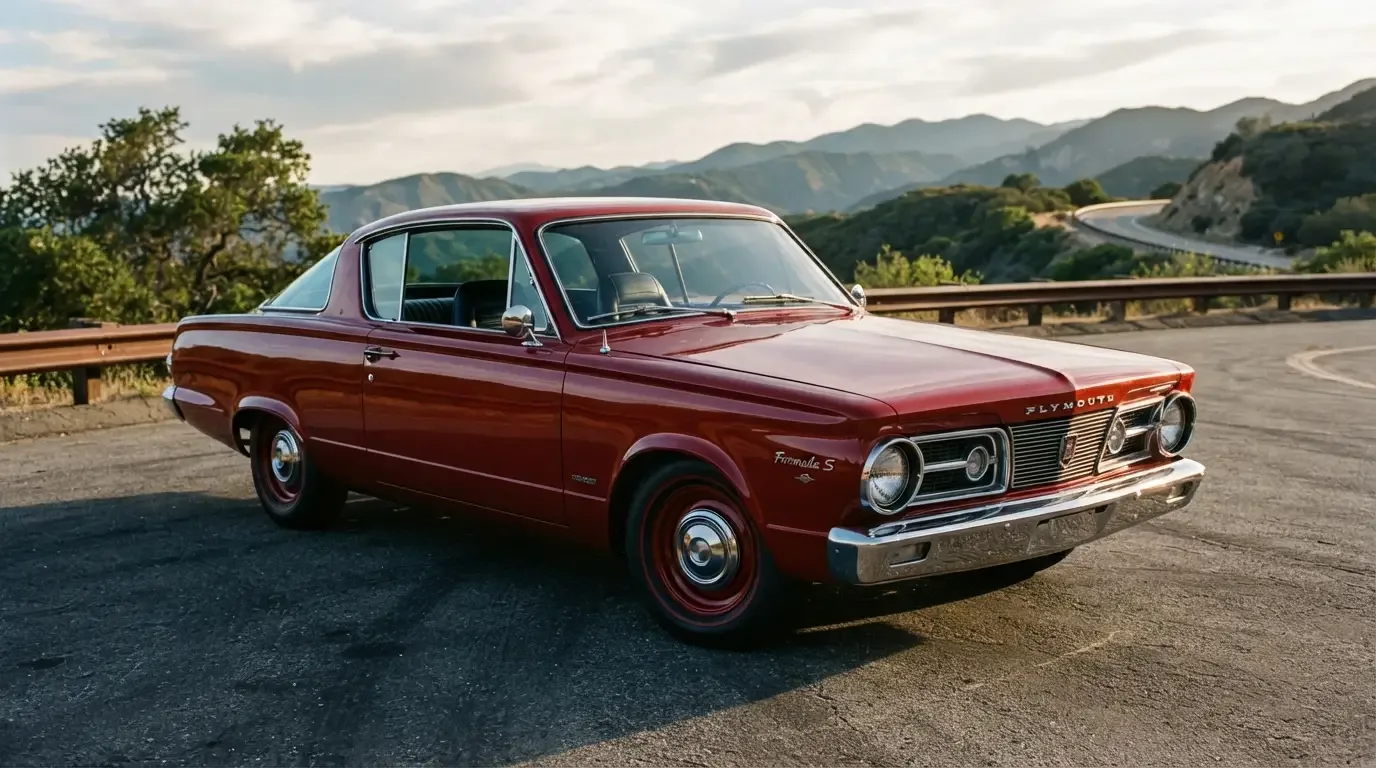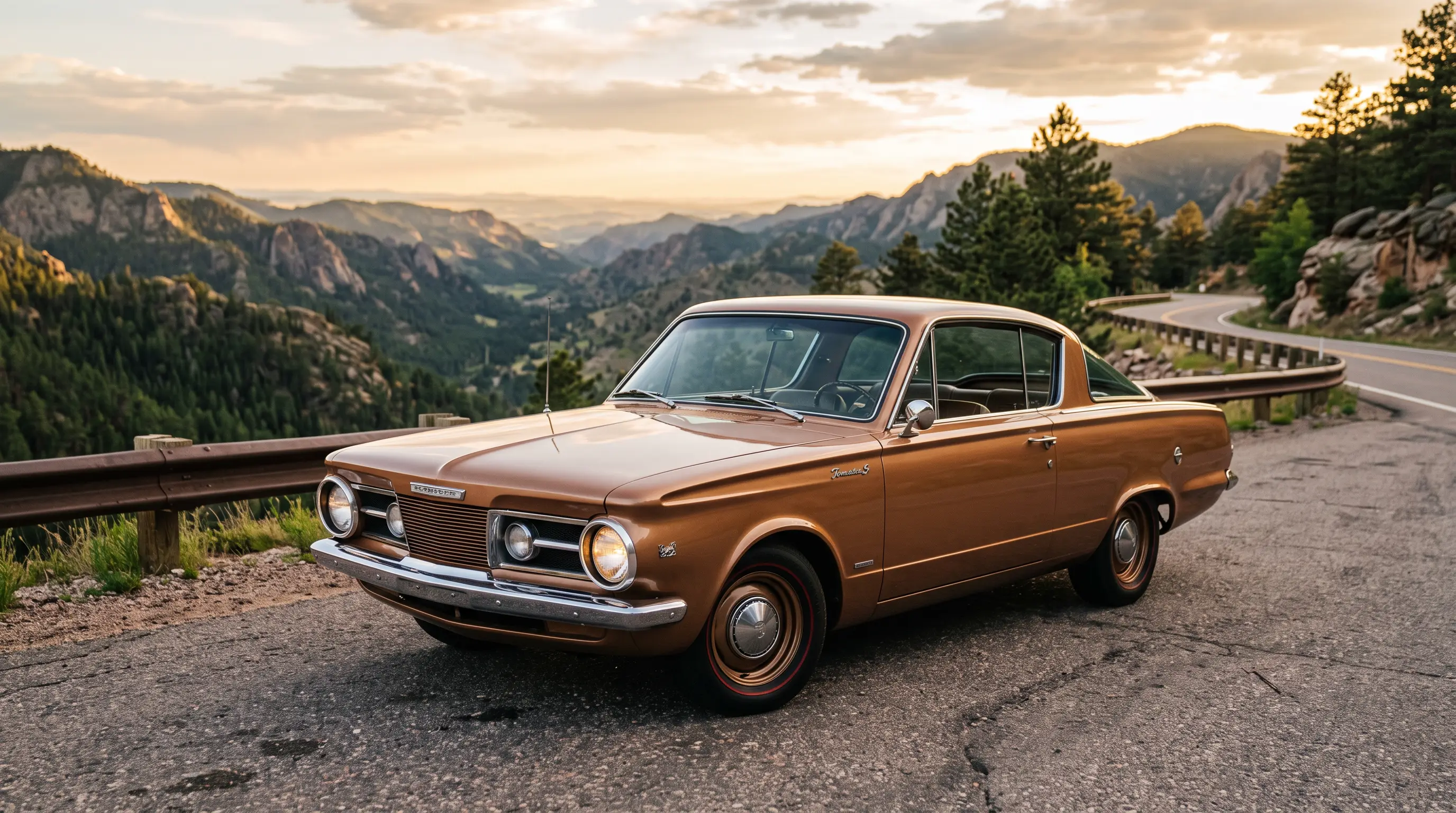
Production figures for the Plymouth Barracuda Formula S are frustratingly incomplete by modern standards, and anyone doing serious research on the model has to accept that up front. Plymouth tracked total Barracuda output carefully enough, but the breakdown between base cars and the Formula S option package was not always recorded with the same discipline the factory applied to engine codes or paint. What survives is a patchwork of dealer records, factory broadcast sheets, and later research by marque historians, and it is enough to sketch a reliable picture even where exact totals remain elusive.
The 1965 introduction and its numbers
The Formula S arrived partway through the 1965 model year as a mid cycle option, which immediately complicates any attempt to state a clean annual total. Total 1965 Barracuda production ran to roughly 64,600 units, and the Formula S package accounted for a minority of that figure, since it launched after the model year was already underway and carried a price premium over the base car. Precise documentation from Plymouth on how many of those cars left the factory with the Formula S option specifically has never been published in full, which is part of why period build sheets and fender tag decoding remain essential tools for anyone trying to verify a specific car's originality.
Second generation figures, 1967 to 1969
The redesigned 1967 Barracuda gave the Formula S a full model year from the start, and Plymouth offered it across the notchback, fastback, and convertible body styles. Production totals across the three body styles for Formula S equipped cars in this era were modest relative to the broader Barracuda line, reflecting the option's status as a performance upgrade rather than the default configuration most buyers chose. By 1968 and into 1969, the Formula S was available with the 340 cubic inch V8 as well as the larger 383, and documented survival rates suggest the 340 became the more common Formula S engine choice among enthusiasts, in part because it fit the engine bay with fewer of the clearance issues that came with the 383.
Why exact totals stay elusive
Plymouth's own record keeping practices in this period were built for manufacturing logistics, not historical preservation. Broadcast sheets, the factory paperwork that traveled with a car through assembly specifying its exact build configuration, were often discarded once a vehicle left the plant, and dealer invoices rarely survived past the original sale. What historians rely on now is a combination of surviving broadcast sheets, Chrysler's build code system stamped into the fender tag, and registry work done by owner clubs over the past several decades. That kind of research is slow, and it is why serious documentation on a specific Formula S, especially rarer engine and body style combinations, adds real value at the point of sale.
Read the background on how the Formula S package evolved model year to model year for the fuller context behind these production figures, since the option content changed enough between 1965 and 1969 that comparing raw totals across years without accounting for those changes tends to mislead more than it informs.
What the fender tag actually tells you
For a car claiming Formula S status, the fender tag is the primary piece of factory documentation a researcher can check without disassembling anything. The tag encodes the trim level, engine, transmission, and a series of option codes that, read correctly, either confirm or contradict a seller's claims. A car with a Formula S badge but a fender tag showing a base trim code and a six cylinder engine designation is not a real Formula S regardless of what has been bolted on since. This is not a rare problem. Cosmetic Formula S clones, built up from base cars using reproduction parts, have circulated in the hobby for decades, and the fender tag remains the fastest way to separate an original from a tribute.
"A car can wear every Formula S badge Chrysler ever stamped and still not be one. The fender tag does not care what parts were added later. It only records what left the factory, and that is exactly why it matters more than anything bolted on afterward."
- Sarah Whitfield
| Model year | Body styles offered | Formula S engine options |
|---|---|---|
| 1965 | Fastback | 273 V8 (four barrel, high output) |
| 1967 | Notchback, fastback, convertible | 273, 383 V8 |
| 1968 to 1969 | Notchback, fastback, convertible | 340, 383 V8 |
Regional variation adds another layer
Production research on the Formula S is further complicated by regional distribution patterns that were never centrally documented in a way modern researchers can simply look up. Dealers in different parts of the country ordered different mixes of engine, color, and body style based on what they expected local buyers to want, and that means survival rates today skew unevenly by region for reasons that have nothing to do with how many were originally built. A researcher working from surviving registry data in one part of the country can get a misleading picture of national production patterns if they are not careful to account for that regional skew. Owner clubs have done real work over the decades cross referencing registry submissions against known dealer territories, and that cross referencing is part of why club research, not just factory paperwork, has become such a valuable secondary source for anyone trying to establish how common or rare a specific configuration actually was.
What this means for buyers and researchers today
Given how thin the factory paperwork trail is, anyone researching or purchasing a claimed Formula S should treat documentation, not just visual condition, as the deciding factor in valuation. A well restored car with a verified fender tag and surviving broadcast sheet is a meaningfully different asset than a visually similar car missing that paper trail, even if the two look identical in photographs. That gap in documentation is exactly what drives price divergence between comparable looking cars at auction, and it is unlikely to narrow as original paperwork continues to age and, in some cases, disappear entirely.
For readers looking to find a classic Barracuda with credible factory documentation, patience during the research phase pays off far more reliably than urgency at the point of purchase. The production numbers behind these cars are incomplete, but the tools to verify an individual example are not, and using them carefully remains the best defense against an expensive mistake.
Cross referencing beyond the tag alone
A fender tag is the primary document, but experienced researchers rarely stop there when the stakes are high enough to justify additional work. Casting numbers on the block, head, and transmission, along with date codes stamped into major components, offer a secondary layer of verification that can confirm or contradict what the fender tag claims. These codes will not always match perfectly on an honestly repaired car, since factory production sometimes mixed date codes across a build window of several weeks, but a wildly mismatched set of numbers, an engine cast years after the car's stated build date, for example, is a legitimate red flag worth investigating further before any money changes hands. None of this replaces the fender tag as the starting point. It simply adds a second and third opinion to a question worth answering carefully.
Sources and notes
- Plymouth Barracuda Production Totals discussion - Wikipedia
- 1965 Plymouth Barracuda Production Numbers - plymouthbarracuda.net
- Production Figures for Plymouth Barracuda from Chrysler Historical collection - For A Bodies Only forum
- 1964-1974 Plymouth Barracuda Production Numbers - 440magnum-network.com
- 1965 Plymouth Barracuda - Muscle Car Facts