
A convertible top is both the most visible and the most overlooked part of a classic. When it is right, the line from windshield header to deck is a clean, taut sweep that shows the designer's intention. When it is wrong, wrinkled, loose or misaligned, the whole car looks neglected, however good the paint beneath it.
Restoration & Tech
6 min read
Convertible Top Replacement on a Classic
A new convertible top transforms a classic, but fit, materials and mechanism condition decide the result. Materials, costs, frame checks and what a good installer does.
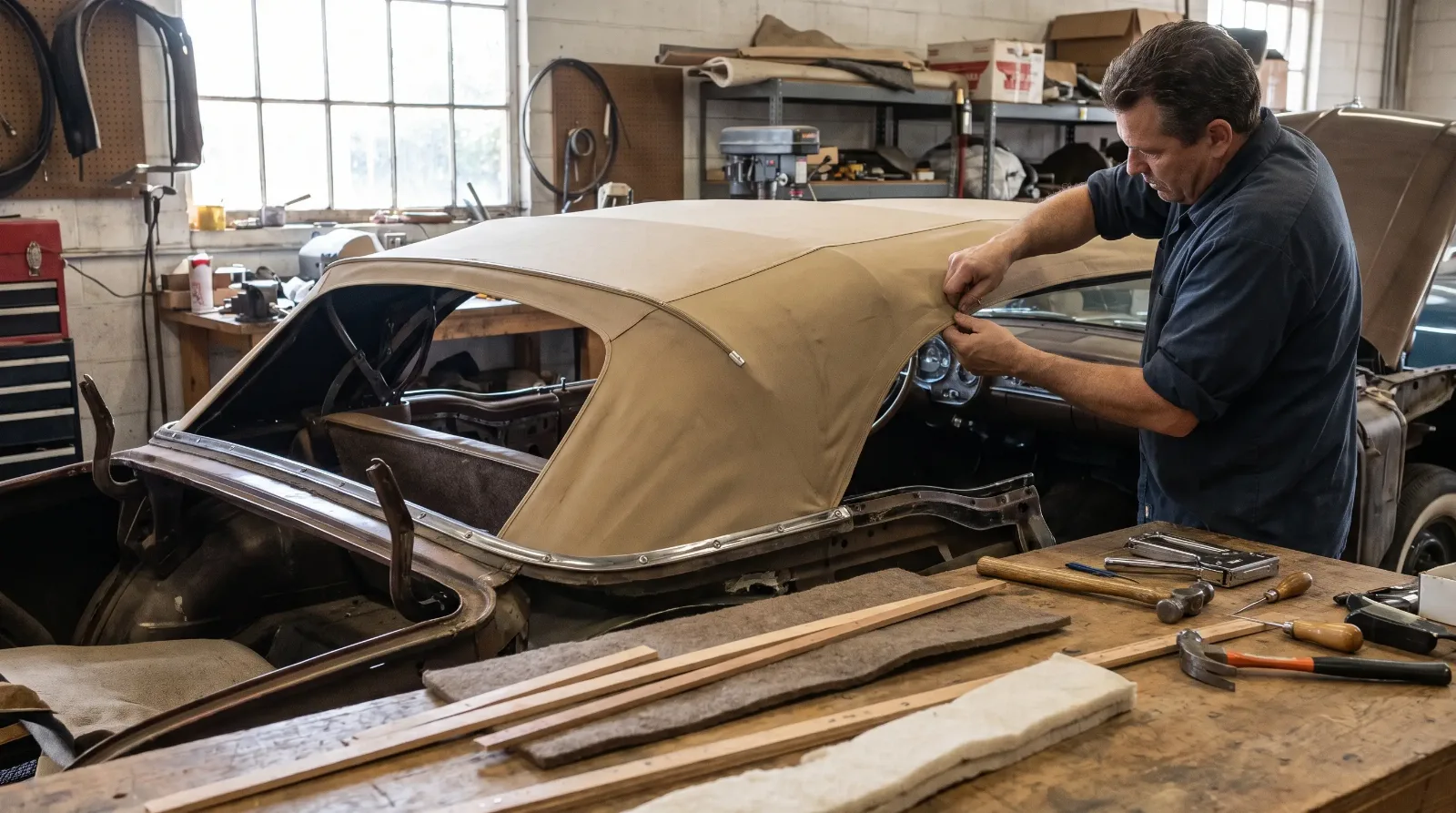
Treat the top as a system rather than a cover. It is a fabric skin, a folding frame, a set of pads and seals, and in many cars a hydraulic or electric lift mechanism. Replacing only the fabric on a tired frame is how owners end up paying twice. It belongs on the checklist for any classic interior restoration because the headliner, the bows and the interior trim all connect to it.
Choose the material to suit the car
Three fabrics cover most replacements. Vinyl is the most common and the most affordable, available in grain patterns and colors that suit mass-market convertibles. Cloth, often an acrylic or cotton blend, is quieter and looks more refined, and was the choice on many premium cars. Mohair, the name usually given to a dense, denim-like canvas rather than fiber from Angora goats, is the traditional choice on luxury and coachbuilt cars and the most expensive of the three. It is also the correct material for many period cars, and it gives the deepest, softest surface.
Correctness matters to a careful restorer. Check the original build documents, the trim tag or period brochures to learn the correct top material and color for your car and year. A vinyl top on a car that left the factory with cloth is detectable by a judge, even if it is well installed. Decide early whether the car is a concours piece, a driver or something between, because material, rear window type and even stitching pattern all follow from that.
Inspect the frame before you buy the fabric
A new top is only as good as the structure beneath it. Fold the old top and look for bent bows, worn pivot points, rusted or seized hinges, and cracked or missing pads. Raise and lower the top slowly, with a helper, and watch for binding or uneven movement. If it moves roughly with the old top on, it will move worse under a fresh, tighter fabric. Rebuild or replace worn pivots and bushings, straighten bent bows, and repair or replace the header latch hardware.
If your car uses hydraulic lift cylinders, check the pump, hoses and cylinders for leaks, and test the motor and switches on cars with power tops. Replace perished hydraulic hoses and seals before the new fabric goes on. A leaking cylinder can stain a brand new top within weeks. A top that has to be pushed into place by hand because the pump is weak is not restored, it is dressed up.
What replacement involves
A professional installer typically removes the old top and its tacking strips, cleans and inspects the frame, replaces padding, installs a new headliner and top material, and tensions the fabric across the bows, working on a warm day because cold vinyl is stiff and hard to stretch. Expect to rework a section more than once to remove wrinkles, and plan on keeping the top up for about a month afterward so it can set its shape. Rear windows, glass or plastic, are replaced or stitched in, and the seals are renewed at the header and the side rails. It is detailed work, and attention to seam placement and tension is what separates a good top from a very good one.
Costs depend on the car, the fabric and the shop. Many shops quote roughly $1,200 to $3,000 for a soft top installed, with installation labor alone often $700 to $1,500 or more. Premium fabrics, a glass rear window or a complex power top can pass $5,000, and frame and hydraulic repairs are on top of that. Do-it-yourself kits for popular cars start at a few hundred dollars for the fabric alone, and a full set from a reputable maker can run $600 to $1,000, but installation skill, two sets of hands and one to two full days are essential.
| Material | Look and feel | Typical use | Cost in general terms |
|---|---|---|---|
| Vinyl | Practical, uniform grain | Mass-market convertibles | Lowest of the three, often within the soft top range above |
| Cloth (acrylic or blend) | Quieter, refined weave | Premium and sports models | Mid to upper part of the range |
| Mohair | Soft, deep, traditional | Luxury and period-correct cars | Highest, and can pass $5,000 on premium or complex tops |
Seals, water and the rest of the body
A top that fits perfectly but leaks is a failure. Replace the header seal, the side rail seals and any rear bow rubber while the top is off, and test with a hose before you finish the interior. Good weatherstripping is the difference between a dry cabin and wet carpet after the first rain, and it is cheaper to fit now than to retrofit later.
Take the structure into account too. Convertibles flex far more than coupes, and a tired body shows it, with door gaps that change when the top is raised or lowered. If your car is being restored deeply, the sort of convertible body-off work that allows the frame and body to be straightened and reinforced can make the top fit properly for the first time in decades. Fitting a fresh top to a sagging body is a recipe for stress and early wear.
For a deeper look at why these tops were engineered the way they were, our existing feature on how luxury convertible tops were engineered explains the frame geometry and the demands on the fabric.
"A convertible top should look as if it was cut for the car, because it was. Never accept a generic pattern on a car that deserves its own."
Sarah Whitfield
Caring for the new top
Once installed, treat it kindly. Keep the car out of heavy rain until the top has settled, do not fold a cold vinyl top in freezing weather because it can crack, and clean it with products the fabric maker recommends. Do not store the car with the top down for long periods, as creases set in the material. A well-fitted, well-maintained top should last for many years, and it is the finishing touch on a restored cabin.
Sources and notes
- ThePricer: convertible top replacement cost, material and labor ranges, installation hours, DIY savings
- EngineerFix: how much does it cost to replace a convertible top, labor as the largest cost, frame and hydraulic repairs as separate jobs
- Street Tech: pro convertible install tips and tricks, warm-day stretching, frame preparation, keeping the top up 30 days, kit cost
- Wikipedia: Mohair, the denim-like canvas sometimes called mohair on convertible roofs
- Wikipedia: Convertible (car), historical top materials and reduced structural rigidity of convertibles
Related Reading
Have a
Classic Car
for Sale?
Reach thousands of serious classic car collectors across the US.
Sell It Here →
Selling a classic? Here's how: sell my classic car
Are You a Classic Car Dealer?
List your full inventory and connect with targeted classic car buyers.
Join as a Dealer →

About the author
Sarah Whitfield
Third-generation classic car collector specializing in pre-war American and European coachbuilt automobiles. Researcher and concours enthusiast.
More in Restoration & Tech
Comments (1)
R
Randy
1 week ago
Mohair's goat hair, last I reckoned.
Partly right. Period mohair top cloth did contain real mohair, woven together with other fibers. Much of what is sold as mohair today is a twill canvas that only borrows the name. For a concours car, ask the supplier for the fiber content in writing before you order.